

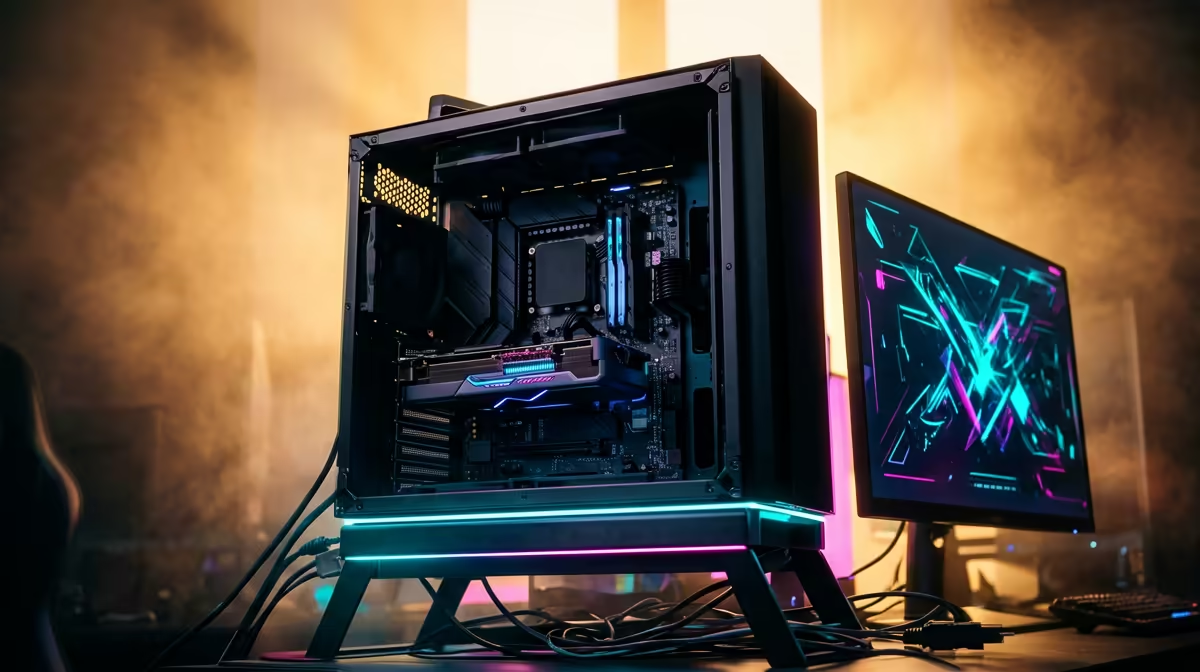
You know the feeling. It’s a sweltering summer evening in Jozi, you’re deep into a final boss fight, and the air blasting from your PC could roast a boerewors. That isn’t just your GPU working hard; it’s the South African climate turning your gaming rig into a space heater. Understanding how gaming PC heat in South Africa impacts your machine is the first step to reclaiming your frames and winning the battle against thermal throttling.
Why Gaming PC Heat in South Africa is a Real Problem
Every PC component generates heat, but the real enemy is a high ambient room temperature. When it’s already 30°C indoors, your PC’s fans are just circulating warm air, making it much harder to cool the CPU and GPU. This leads to a nasty process called thermal throttling. ⚡
Essentially, your components have built-in safety limits. When they get too hot, they automatically reduce their speed (and performance) to prevent damage. Suddenly, your smooth 144 FPS drops to a stuttery mess. The unique challenge of managing gaming PC heat in South Africa is that our baseline temperatures are simply higher, giving you less cooling headroom from the start. A PC that runs fine in a mild European winter might struggle badly during a Durban heatwave.
The Main Heat Culprits in Your Rig
Two components are responsible for most of the heat inside your case. Keeping them happy is critical for stable performance.
The Central Processing Unit (CPU)
Your CPU is the brain, and it works hard. Whether you're running one of the latest Intel gaming PCs known for their raw single-core speed or multitasking on one of the incredibly efficient and powerful AMD Ryzen systems, it needs a capable cooler. A stock cooler might be okay for light tasks, but for serious gaming in our climate, a decent tower air cooler or an All-in-One (AIO) liquid cooler is non-negotiable.
The Graphics Processing Unit (GPU)
This is the king of heat. Your GPU renders every beautiful pixel on screen, and it gets seriously hot doing it. High-end cards can easily pull over 300 watts of power, converting most of it directly into heat. Both the fantastic NVIDIA GeForce-powered rigs and the competitive AMD Radeon gaming PCs come with sophisticated cooling solutions, but they all rely on one thing... good case airflow.
Practical Tips for Cooling Your Gaming PC 🔧
Before you rush out to buy new parts, there are simple, effective ways to improve your PC's cooling and combat the effects of our climate on its performance.
Airflow is Everything
A PC case is like a wind tunnel. You need a clear path for cool air to enter, pass over your hot components, and exit.
Pro Airflow Tip 🌬️
For optimal cooling and dust management, aim for 'positive pressure' inside your case. This means having slightly more air being pulled in by intake fans (usually at the front) than being pushed out by exhaust fans (at the back and top). This helps force air out of small gaps and cracks, preventing dust from being sucked in.
Make sure your PC isn't shoved into a tight cabinet or backed right up against a wall. Give it space to breathe! Regularly cleaning dust filters with a brush also makes a massive difference.
Is It Time for a Cooling-Focused Upgrade?
If you’ve cleaned your PC, optimised your fan curves, and it’s still running hotter than you’d like, it might be time to consider an upgrade. An older case with poor ventilation or a CPU cooler that's just not up to the task will always be a bottleneck.
Even professionals using high-performance workstation PCs for rendering or data analysis know that sustained performance is impossible without robust cooling. The same principle applies to gaming. Investing in a modern chassis with a mesh front panel or a more powerful AIO liquid cooler can drastically lower your temperatures, unlocking the full potential of your components. ✨
Ready to Beat the Heat? Don't let South Africa's climate throttle your performance. An expertly built PC with optimised airflow is your best defense against the heat. Explore our wide range of custom gaming PCs and find a rig built to stay cool under pressure.











