

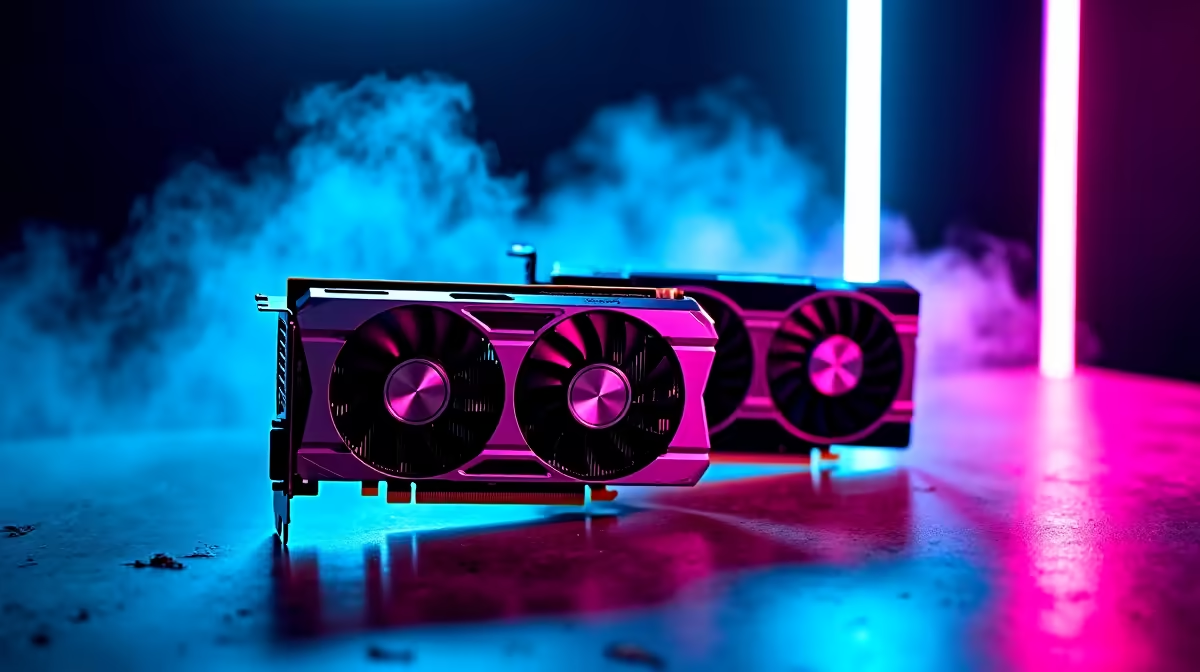
The Intel Arc B580 and NVIDIA RTX 4060 sit in a price bracket that defines what most SA gamers actually buy - and in 2026, the battle between them is closer than many expected. The B580 marked Intel's genuine comeback in the discrete GPU market, while the RTX 4060 has been NVIDIA's bread-and-butter 1080p card for over a year. Here's how they stack up for South African buyers.
Quick Answer
Intel Arc B580 vs NVIDIA RTX 4060 - which should SA gamers choose in 2026? For pure rasterisation performance per rand, the Arc B580 is competitive with the RTX 4060 and often wins at 1080p. The RTX 4060 pulls ahead in ray tracing, DLSS 3 support, and broader game compatibility. If you're building on a tight budget and primarily play well-optimised titles, the B580 is compelling. If driver stability and feature breadth matter most, the RTX 4060 remains the safer pick.
🔧 Architecture and Core Specs
The Intel Arc B580 is built on Intel's Battlemage architecture, a significant improvement over the first-generation Alchemist cards. It packs 20 Xe2 cores, 12GB of GDDR6 memory on a 192-bit bus - notably more VRAM than the RTX 4060's 8GB - and supports hardware ray tracing through Intel's Xe SS upscaling technology (XeSS). At launch, it came in meaningfully below the RTX 4060's typical street price.
The NVIDIA RTX 4060 runs on the Ada Lovelace architecture with 3,072 CUDA cores, 8GB GDDR6 on a 128-bit bus, and full access to DLSS 3 Frame Generation, one of the most impactful upscaling technologies available in 2026. Its power envelope is low - 115W TDP - making it a smart fit for smaller cases and builds where heat is a concern.
📊 Gaming Performance: 1080p and Beyond
At 1080p, both cards are well-matched in the majority of titles. The Arc B580's 12GB VRAM gives it a meaningful advantage in memory-hungry games - titles that push 8GB+ texture budgets can see the RTX 4060 throttle while the B580 maintains smoother frame delivery.
At 1440p, the RTX 4060 begins to pull ahead in raw rasterisation, and DLSS 3 more than compensates for any performance deficit in supported titles. Intel's XeSS is a capable upscaler, but the game library support for DLSS remains broader.
Ray tracing is where NVIDIA's advantage is clearest. The RTX 4060 handles RT workloads significantly better than the B580 thanks to dedicated RT and Tensor cores that Intel hasn't fully matched on Battlemage.
For SA esports players on games like Valorant, CS2, or Apex Legends, both cards push well above 144fps at 1080p - the decision here comes down to price and the rest of the build rather than GPU capability.
💡 Which Card Makes Sense for SA Builds in 2026
The critical factor in the SA market is rand pricing. At any given point in 2026, the B580's street price has undercut the RTX 4060, sometimes by R1,000–R2,000. At that price gap, the B580 offers exceptional value - especially with its 12GB VRAM advantage.
However, the RTX 4060's driver ecosystem is more mature. Intel Arc has come a long way since the initial Alchemist headaches, but edge cases and older DX9/DX11 game compatibility still occasionally surface with Arc cards. If you play a varied library including older titles, the RTX 4060 is the lower-risk option.
For a new build targeting modern games at 1080p to 1440p, both cards deliver excellent performance. The B580 is the value pick; the RTX 4060 is the safe, feature-rich pick.
❓ Frequently Asked Questions
Does the Intel Arc B580 work well in South Africa without specific software? Yes. Intel's Arc drivers have matured significantly since Alchemist. For modern DX12 and Vulkan titles - which is most major releases in 2025–2026 - Arc B580 performs reliably. Older DX9 titles can still be hit or miss.
Is 8GB VRAM enough for the RTX 4060 in 2026? For 1080p gaming, 8GB remains adequate in most titles. At 1440p with high texture settings, some newer games push against that limit. If you plan to use this card for 2–3 years, the B580's 12GB is a more future-proof VRAM allocation.
Which card is better for SA content creators? For video encoding, the RTX 4060 benefits from NVENC - one of the best hardware encoders available and widely supported in OBS, DaVinci Resolve, and Premiere. Intel Arc also offers AV1 hardware encoding support, which is excellent for streaming. Both are capable; NVENC's software ecosystem integration gives NVIDIA a slight edge.
Evetech stocks Intel Arc B580 Gaming PCs and All Graphics Cards — browse current SA pricing and availability online.
Ready to Find Your Perfect Match? Shop at Evetech











