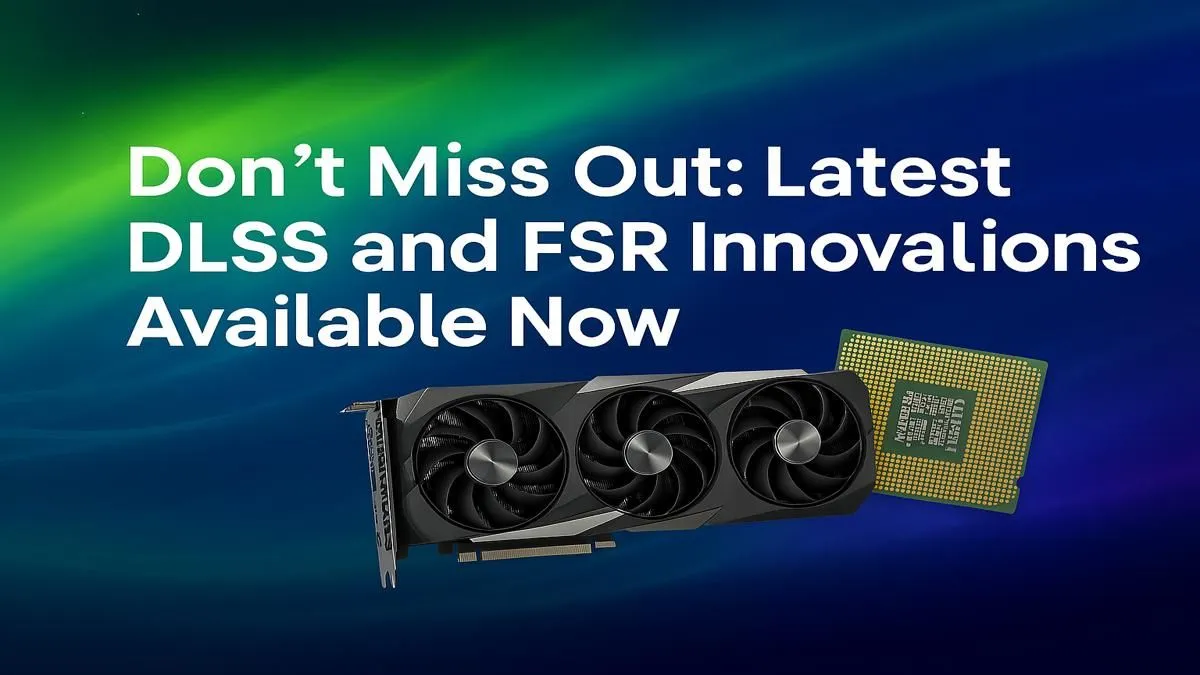
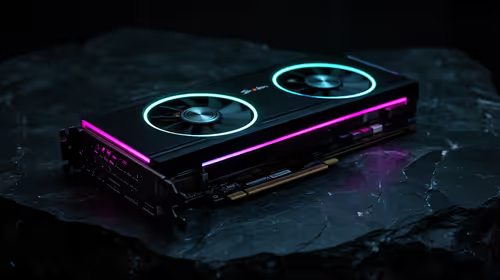
Struggling to hit that silky-smooth 144 FPS in the latest titles without your PC sounding like a jet engine? You're not alone. In South Africa, getting maximum performance for your rand is crucial. Thankfully, two powerful technologies are here to help: NVIDIA’s DLSS and AMD’s FSR. But with the latest versions out, the big question is… which upscaling tech is actually better for your gaming rig? Let's break it down.
Understanding Upscaling: What Are DLSS and FSR?
Before we dive into the latest features, let's quickly cover the basics. Both Deep Learning Super Sampling (DLSS) and FidelityFX Super Resolution (FSR) are clever upscaling technologies.
In simple terms, they allow your graphics card to render a game at a lower resolution (like 1080p) and then use sophisticated algorithms to intelligently upscale the image to your monitor's native resolution (like 1440p or 4K). The result? A massive boost in frames per second (FPS) with a minimal loss in visual quality. Think of it as getting a free performance upgrade. 🚀
Diving into the Latest DLSS Tech
NVIDIA's DLSS has been around for a while, but its latest iteration, DLSS 3.5, is a powerhouse. It combines three key technologies:
- Super Resolution: This is the core upscaling component, using AI and dedicated Tensor Cores on NVIDIA cards to reconstruct a high-resolution image from a lower-res input. It’s known for producing incredibly sharp and stable images.
- Frame Generation: Exclusive to the RTX 40 Series, this feature uses AI to generate entirely new frames between existing ones, dramatically smoothing out gameplay and boosting FPS even further.
- Ray Reconstruction: A newer feature that uses AI to improve the quality of ray-traced lighting, reducing noise and making reflections and shadows look more realistic.
The main takeaway for DLSS is its reliance on AI and specific hardware. To get the full suite of features, you'll need one of NVIDIA's latest RTX cards, but the image quality is often considered the best in the business.
Exploring AMD FSR: Open for Everyone
On the other side, we have AMD's FSR 3. The biggest advantage of FSR has always been its open-source nature. It doesn't require specific AI hardware, meaning it works on a huge range of GPUs.
- Upscaling: FSR 3 uses an advanced temporal scaling algorithm to boost performance. While not AI-trained in the same way as DLSS, its quality has improved significantly and looks fantastic in motion.
- Frame Generation (Fluid Motion Frames): Like NVIDIA, AMD now has its own frame generation technology. The best part? It can work on almost any modern graphics card, including older NVIDIA (10-series and up) and AMD Radeon graphics cards. This makes it an incredible option for gamers looking to extend the life of their current hardware.
FSR’s "works on anything" approach makes it a true hero for gamers on a tighter budget or those with older, but still capable, rigs.
DLSS vs FSR: Which Upscaler is Better for Your Gaming Rig?
So, the million-rand question: which one should you use? The answer isn't black and white... it depends on your hardware and priorities. 🤔
The Head-to-Head Breakdown
- Image Quality: In most side-by-side comparisons, DLSS often has a slight edge, especially in "Quality" mode. Its AI-trained model tends to produce a cleaner, more stable image with fewer artifacts. FSR 3 is very close, but DLSS Ray Reconstruction gives it a noticeable advantage in ray-traced games.
- Performance Boost: Both technologies provide a phenomenal FPS boost. Frame Generation on both DLSS 3 and FSR 3 can more than double your frame rates in supported games, which is incredible. The exact numbers will vary by game and your specific PC build.
- Compatibility: This is an easy win for FSR. Its ability to run on a vast array of hardware from both AMD and NVIDIA makes it the most accessible upscaling tech on the market. DLSS is a walled garden, exclusive to NVIDIA's RTX lineup.
Ultimately, choosing between the latest DLSS and FSR comes down to the GPU in your machine. If you're building a new PC, this choice might influence which brand you go for. It's always worth checking out the great graphics card deals available to see where you can get the best performance for your budget.
Pro Tip: Don't Forget 'Quality' Mode! ⚡
Both DLSS and FSR offer different presets like 'Ultra Performance', 'Performance', 'Balanced', and 'Quality'. For the best visual experience at 1080p or 1440p, always start with the 'Quality' setting. It provides the best image fidelity while still giving you a significant FPS boost. Only drop to 'Performance' if you're chasing extremely high refresh rates or gaming at 4K.
The Final Verdict: Choosing Between DLSS and FSR in SA
For South African gamers, value is everything. Here’s the bottom line:
- If you own or are buying an NVIDIA RTX 40-series card: Use DLSS 3. You have the best hardware for it, and the combination of Super Resolution and Frame Generation offers an unbeatable experience. ✨
- If you have an AMD card or an older NVIDIA card (RTX 30-series or older): FSR 3 is your new best friend. It breathes new life into older hardware, giving you access to frame generation and a massive performance uplift without needing to upgrade.
Both the latest DLSS and FSR are fantastic technologies that push PC gaming forward. They allow more people to enjoy smooth, high-resolution gaming without needing to buy a top-of-the-line R40,000 graphics card. The competition is fierce, and that's a massive win for all of us.
Ready to Boost Your FPS?
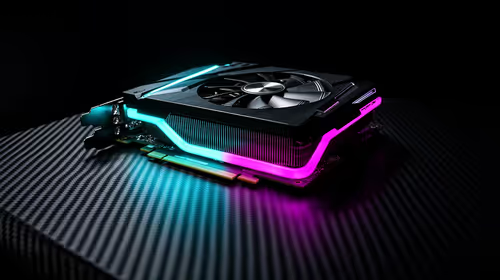
Whether you're Team Green or Team Red, the right graphics card is waiting to transform your gaming experience. Explore our massive range of graphics cards and find the perfect GPU to power up your rig today.