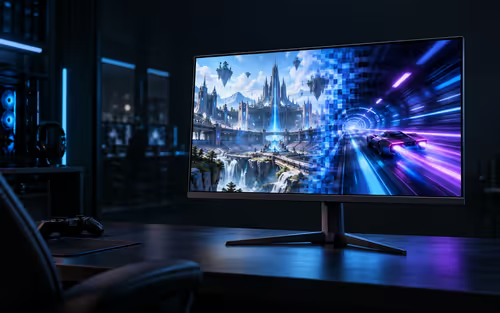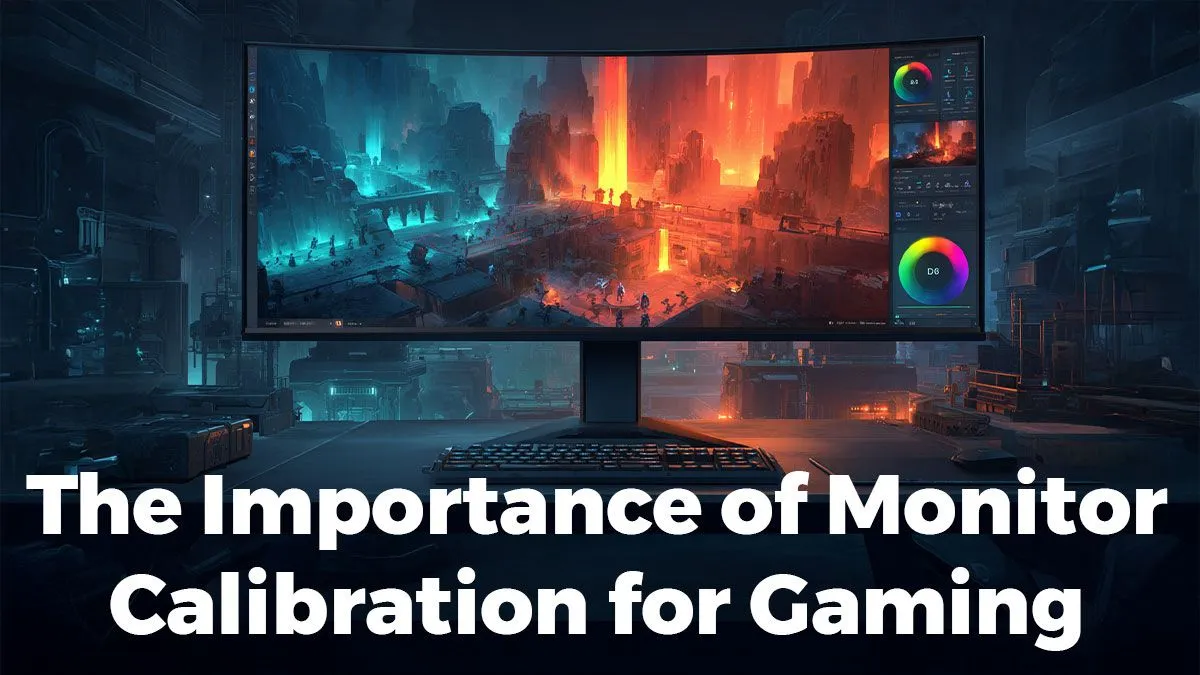
You’ve dropped serious cash on a beastly rig, but are you seeing your games as the developers intended? Are the vibrant landscapes of Tsushima looking a bit… bland? Are you getting picked off by enemies lurking in shadows that your screen just renders as a black blob? The secret weapon you’re missing is proper monitor calibration for gaming. It’s not just for pros; it’s your ticket to deeper immersion and a real competitive edge.
Why Monitor Colour Calibration is a Must
Think of an uncalibrated monitor like listening to music on cheap, tinny earphones. You get the general idea, but you miss all the detail and depth. The same goes for your display. Proper monitor calibration for gaming delivers two huge benefits:
- Visual Fidelity & Immersion: Accurate colours make game worlds come alive. The menacing red glow of a Cacodemon in DOOM Eternal or the subtle green hues of the forests in Valheim look exactly as they should, pulling you deeper into the experience.
- Competitive Advantage: This is the big one. When your monitor’s black levels are calibrated correctly, you can distinguish details in dark areas. That means you’ll spot that camper in a shadowy corner of Rust before they spot you. It’s a subtle but powerful advantage.
Even the most affordable budget gaming PCs can feel more premium when paired with a well-tuned display.
Your Quick-Start Guide to Monitor Calibration 🔧
You don’t need expensive hardware to get started. A few minutes of tweaking can make a world of difference. Here’s a simple process to follow.
Step 1: Tweak Your Monitor’s On-Screen Display (OSD)
Before touching any software, start with the physical buttons on your monitor.
- Find the Presets: Look for picture modes like “Gaming,” “Cinema,” or “sRGB.” Often, “Standard” or “Custom” is the best starting point, as “Gaming” modes can oversaturate colours.
- Set Brightness & Contrast: Use an in-game brightness calibration screen (most modern games have one) or an online test image. Adjust brightness until you can barely see the darkest shades, and set contrast so that the brightest whites are clear but not “crushing” the details.
- Colour Temperature: Most monitors offer “Cool,” “Normal,” and “Warm” settings. “Normal” or “Standard” (often targeting 6500K) is usually the most accurate for gaming.
Step 2: Use Windows' Built-in Tool
Windows has a surprisingly useful, albeit basic, calibration tool.
- Press the Windows key and type
Calibrate display color. - Follow the on-screen wizard. It will guide you through setting Gamma, Brightness, Contrast, and Colour Balance.
- The key is to make the adjustments until the on-screen examples look correct, like making the small dot in the centre of the gamma circle disappear.
This simple process works wonders for any setup, from entry-level builds to great value PCs under R20,000.
Pro Tip for Perfect Greys ✨
Use an online tool like the Lagom LCD monitor test pages. The 'Contrast' and 'Black Level' pages are fantastic for fine-tuning your monitor's OSD settings. They give you clear visual targets to aim for, helping you ensure you're not losing detail in the very brightest or darkest parts of the image.
Step 3: Dive into Your GPU Control Panel
For even more control, open your NVIDIA Control Panel or AMD Radeon Software. Under the “Display” settings, you’ll find options to adjust digital vibrance, hue, and individual colour channels (red, green, blue). Make small adjustments here after using the Windows tool. This level of fine-tuning is especially beneficial for gamers running high-end gaming rigs who want to squeeze out every drop of visual quality.
Does Monitor Calibration Improve Performance?
Let’s be clear: calibrating your monitor won’t increase your frames per second (FPS). That job belongs to your GPU and CPU, which is why having one of our powerful pre-built PCs is so important.
However, monitor calibration for gaming absolutely improves your visual performance and, indirectly, your player performance. When colours are accurate and you can see every detail in the shadows, your target acquisition improves. You react faster because the visual information your brain receives is clearer and more precise. You’ll also experience less eye strain during long gaming sessions.
Ultimately, a calibrated monitor ensures that the incredible graphics being rendered by your PC are displayed correctly. To get the most out of it, you need a system that can keep up, which is where browsing the best gaming PC deals can complete your setup.
Ready to See the Full Picture? A perfectly calibrated monitor is one half of the equation. The other is the powerhouse PC driving those pixels. If you're ready to pair stunning visuals with lightning-fast performance, we've got you covered. Explore our best gaming PC deals and build the ultimate rig to conquer any world.