Ah, South African internet. One moment you're hitting a perfect headshot, the next you're staring at a frozen screen thanks to a lag spike. While we can't magically upgrade the country's infrastructure, you can take control of your setup. Learning how to optimise your gaming PC for South Africa's internet speeds is the key to a smoother, less frustrating online experience. Let's dive into the practical tweaks that make a real difference. 🚀
First, Tame Your Network Hardware
Before you even touch your PC's software, your physical connection needs to be solid. Many online gaming issues start right here. The goal is to create the most stable pipeline for your game data, and that often means going back to basics.
The single most effective change you can make? Ditch Wi-Fi for an Ethernet cable. Wi-Fi is convenient, but it's susceptible to interference from walls, appliances, and even your neighbour's network. A direct, wired connection provides a faster, more stable link to your router, drastically reducing packet loss and jitter—the two biggest culprits behind lag. While you're at it, ensure your router's firmware is up to date. Manufacturers often release updates that improve performance and security. For a truly stable foundation, starting with a powerful Intel-based PC ensures your machine's core components can keep up with a stable connection.
Optimise Your PC's Software for SA's Speeds
With your hardware sorted, it's time to fine-tune your software. Windows is great, but out of the box, it isn't always configured for peak gaming performance, especially when dealing with the unique challenges of SA internet.
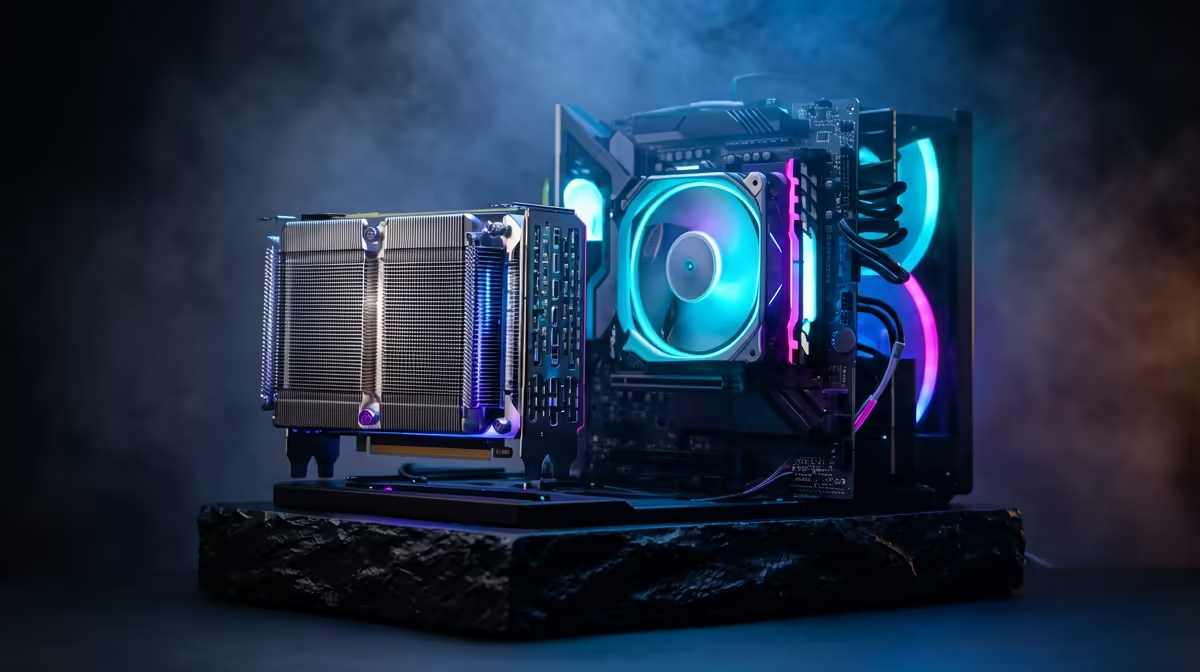
Start by shutting down any background applications that secretly devour your bandwidth. This includes cloud-syncing services like OneDrive or Dropbox, torrent clients, and even having too many browser tabs open. These apps constantly send and receive data, competing with your game for precious bandwidth. You should also ensure your network drivers are current. An outdated driver can be a hidden bottleneck that slows down your entire online experience. For gamers who stream or multitask, having a CPU that can handle these background processes without impacting gameplay is crucial, which is where modern AMD Ryzen gaming PCs truly shine.
DNS Quick-Fix ⚡
Your Internet Service Provider's default DNS (Domain Name System) isn't always the fastest. Switching to a public DNS like Cloudflare (1.1.1.1) or Google (8.8.8.8) can sometimes reduce latency by resolving server addresses more quickly. It's a simple change in your network adapter settings that can shave a few crucial milliseconds off your ping.
Fine-Tune In-Game Settings for a Smoother Experience
Every online game has a suite of network settings that can be adjusted. This is where you can directly influence how your game communicates with the server, which is vital for anyone looking to optimise their gaming PC for South Africa's internet speeds.
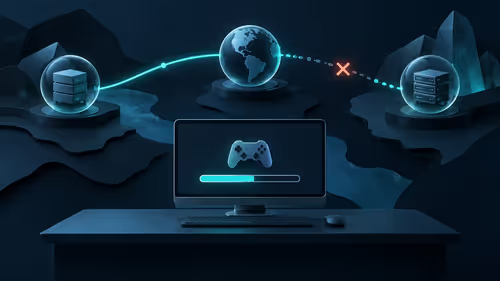
The most important setting is always server selection. Whenever possible, manually choose South African servers (usually located in Johannesburg or Cape Town). Playing on local servers will give you the lowest possible ping. If a game uses matchmaking, set your maximum acceptable ping to a low value (e.g., under 80ms) to avoid being placed in European or Asian lobbies. Some games also have settings for "Network Smoothing" or "Interpolation." Lowering these can make other players' movements seem less smooth but provides a more accurate, real-time representation of the game state, reducing the chance of "peeker's advantage." A rig built around a solid GPU is essential for rendering these fast-paced moments, and our range of NVIDIA GeForce gaming PCs are built for exactly that.
Of course, the GPU market is competitive, and many gamers find excellent performance and value with Team Red. The latest graphics technologies are just as important for a smooth online experience, making powerful AMD Radeon gaming PCs a fantastic choice for competitive play.
When Your Hardware Is the Real Bottleneck
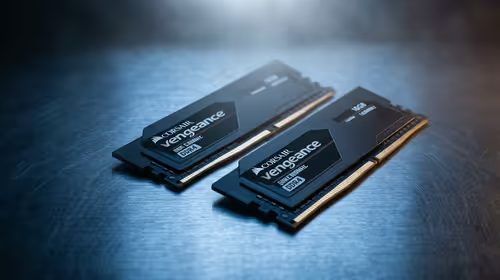
Sometimes, no amount of software tweaking can help an outdated system. If your PC is struggling to maintain a stable frame rate while processing network data, your online experience will suffer regardless of your internet speed. An old CPU can bottleneck data packets, and insufficient RAM can cause stuttering as the system struggles to load assets. ✨
Upgrading to a PC with a modern processor, at least 16GB of RAM, and an NVMe SSD won't just make your games load faster; it will make the entire system more responsive. This allows your PC to handle incoming and outgoing game data more efficiently, reducing system-induced latency. For those who are serious about streaming or content creation on top of gaming, investing in high-performance workstation PCs provides the overhead needed to game, stream, and record without a single hiccup.