Building a new rig in Mzansi? You're likely weighing up the latest tech. PCIe 5.0 promises blistering speeds for GPUs and SSDs, but what's the catch? Does it guzzle electricity and send your power bill soaring? We're diving into the real-world impact of PCIe 5.0 vs 4.0 power consumption, helping you build a smarter, more efficient PC without breaking the bank... or your power supply unit (PSU). ⚡
Understanding PCIe Power Consumption
First, let's get one thing straight. The PCI Express (PCIe) slot itself doesn't consume a massive amount of power. It's a data bus—a highway for information between your components and your CPU. However, it also delivers a baseline amount of power to the card plugged into it.
The official PCIe specification limits the power draw from the slot to 75 watts. Any component needing more juice, like a high-end graphics card, pulls the extra power directly from your PSU via dedicated 8-pin or 12VHPWR cables.
So, the debate over PCIe 5.0 vs 4.0 power consumption isn't really about the slot. It's about the components designed to use that new, faster highway.
The Real-World Impact on Your Components
This is where the discussion gets interesting. While the standard is the same, the devices built for PCIe 5.0 are often more powerful and, as a result, can be more power-hungry.
Next-Gen SSDs
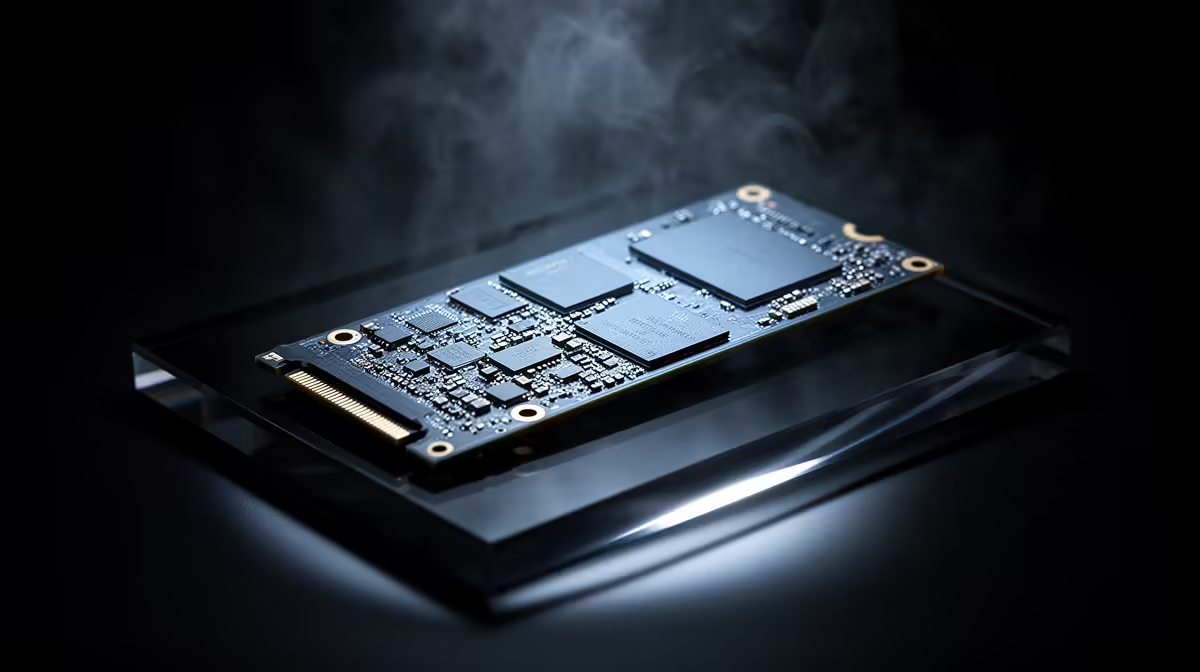
PCIe 5.0 NVMe SSDs are the first wave of true Gen5 devices hitting the market. They offer sequential read/write speeds that are nearly double their Gen4 counterparts. This incredible performance comes at a cost: higher power draw and more heat. Early Gen5 SSDs can consume over 10W under heavy load, often requiring chunky heatsinks or even active cooling to prevent thermal throttling. For most gamers, the real-world loading time difference is minimal, but for content creators moving massive files, the speed boost can be a huge win.
Graphics Cards 🚀
Here’s the big one. A high-end GPU is the most power-hungry part of any gaming rig. While new GPUs from NVIDIA and AMD support the PCIe 5.0 standard, they don't actually saturate a PCIe 4.0 x16 slot yet. The move to Gen5 is more about future-proofing. The card's overall power consumption (e.g., 450W for an RTX 4090) is determined by its own architecture, not the PCIe version. Whether you're on Team Blue or Team Red, having a solid foundation is key; choosing the right one from a wide range of Intel motherboards ensures you have the stability for these powerful components.
So, Does PCIe 5.0 Power Draw Really Matter?
For the average South African gamer in 2024, the direct impact of PCIe 5.0 vs 4.0 power consumption is minimal. The real issue isn't the slot but the total power budget of your entire system.
Your choice of motherboard is far more critical. A good board provides stable power delivery (VRMs), proper cooling for components like SSDs, and the right features for your build. Whether you are looking at the latest AMD motherboards with Gen5 support or sticking with a tried-and-tested Gen4 platform, your focus should be on quality and balance.
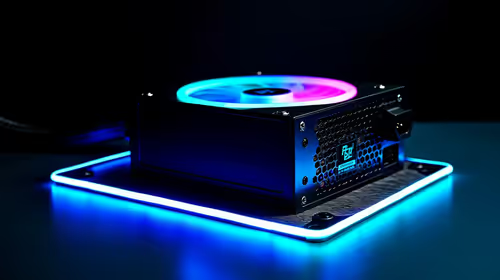
The key takeaway? Don't lose sleep over the PCIe version's power draw. Instead, focus on buying a quality PSU that can handle your chosen CPU and GPU.
PSU Pro Tip 🔧
When building a new PC, always use a reputable Power Supply Calculator online. Input your chosen CPU, GPU, and other components to get a recommended wattage. It's smart to add an extra 20-30% headroom to ensure stability and leave room for future upgrades. A good PSU is the heart of a reliable rig!
Ultimately, the increased power consumption is tied to the higher performance of new-generation components, not the PCIe standard itself. Building a powerful PC means planning for its power needs from the start. ✨
Ready to Build a Smarter Rig? Choosing between PCIe 5.0 and 4.0 is about future-proofing, not just power consumption. The right motherboard is your foundation for performance. Explore our massive range of Intel and AMD based motherboards and find the perfect backbone for your next build.