

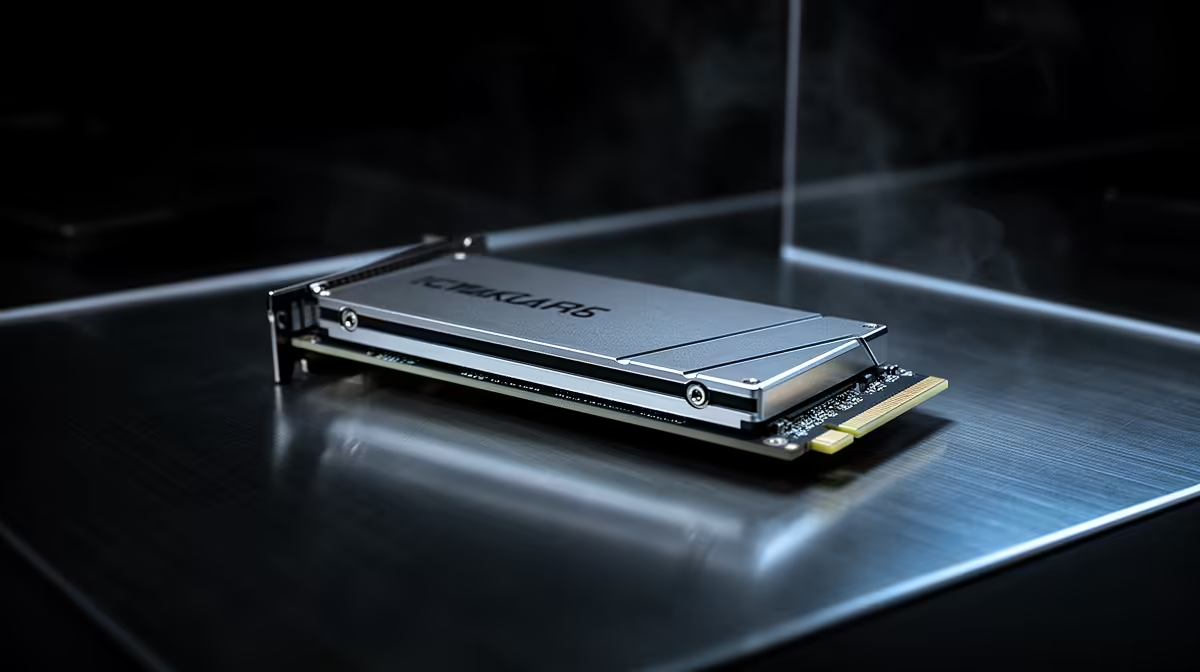
Stuttering frames in the middle of a tense firefight? Or that agonising wait for your next game level to load? We've all been there. Often, we blame the GPU or CPU, but the unsung hero... or villain... of your PC's speed is an invisible highway called PCIe. Understanding PCIe performance in South Africa isn't just for hardcore techies; it's the key to unlocking the true power of the components you already paid for.
What is PCIe and Why Should You Care?
Think of your PC's motherboard as a city grid. The components—your graphics card, your super-fast storage drive—are the important buildings. Peripheral Component Interconnect Express, or PCIe, is the multi-lane highway that connects them all. The more lanes and the higher the speed limit on this highway, the faster data can travel between your components.
This directly impacts:
- Your Graphics Card: The hungrier your GPU is for data, the more it benefits from a faster PCIe slot.
- Your Storage: Those lightning-fast NVMe SSDs? They use PCIe lanes to achieve game-loading speeds that feel like magic. ✨
- Other Hardware: Capture cards, high-speed network cards, and other expansion devices all rely on this connection.
Getting the right foundation is crucial, and that starts with choosing from the wide range of cheap Intel & AMD based motherboards available today.
Understanding PCIe Generations: Gen 4 vs. Gen 5
The "generation" of your PCIe slot is like its speed limit. Each new generation roughly doubles the bandwidth of the previous one.
- PCIe 3.0: The old standard. Still fine for many budget to mid-range builds, but can bottleneck modern high-end components.
- PCIe 4.0: The current sweet spot. It offers a massive performance uplift for NVMe SSDs and gives modern graphics cards plenty of breathing room. You'll find this on most current AMD motherboards.
- PCIe 5.0: The latest and greatest. While GPUs that can fully saturate this bandwidth are still emerging, PCIe 5.0 SSDs offer truly mind-blowing speeds for content creators and those who want to future-proof their builds. This cutting-edge tech is featured on premium boards.
Don't Create a Bottleneck! 🔧
Always match your components. Plugging a new PCIe 4.0 GPU into an old PCIe 3.0 motherboard will work, but the card's performance will be limited by the slower slot. Check your motherboard's specs before you upgrade your graphics card to get the full speed you're paying for!
How PCIe Performance Boosts Your Rig 🚀
So, what does better PCIe performance actually mean for your daily use in South Africa?
For gamers, a PCIe 4.0 or 5.0 slot ensures your powerful graphics card gets all the data it needs without delay. This can lead to smoother frame rates, especially at higher resolutions like 1440p and 4K. It also helps with technologies like DirectStorage, which allows the GPU to load game assets directly from your SSD, slashing loading times.
For content creators, the difference is even more stark. Editing 4K video or working with massive project files? A PCIe 4.0 or 5.0 NVMe SSD can cut your file transfer and project load times from minutes down to seconds. This boost in speed is available on the latest platforms, so it's worth checking out the newest Intel motherboards to see what they offer.
The Verdict: Is it Time to Upgrade?
For a new PC build in 2024 and beyond, a motherboard supporting at least PCIe 4.0 is a no-brainer. It provides the best balance of price and performance, ensuring your new components can run at their full potential.
If you're an enthusiast who demands the absolute fastest speeds for creative work or wants a rig that will be relevant for years to come, investing in a PCIe 5.0-ready motherboard is a smart move. The improved PCIe performance gives you a future-proof platform ready for the next wave of GPUs and SSDs. The choice starts with your motherboard—the heart of your PC's data highway.
Ready to Unleash Full Speed? Understanding PCIe is the first step. The next is finding a motherboard that won't bottleneck your beastly GPU or lightning-fast SSD. Explore our massive range of motherboards and build the rig you deserve.











