Quick Answer
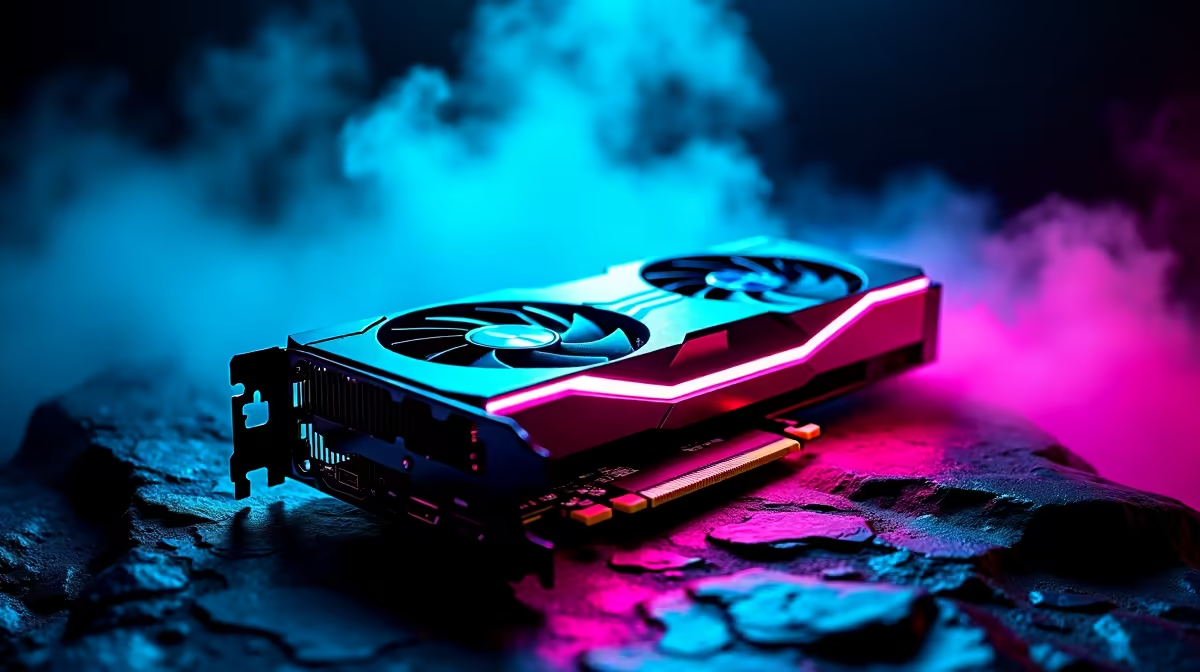
The RX 7800 XT supports AMD Fluid Motion Frames (AFMF), AMD's driver-level frame generation technology, in 2026. In real-world testing, frame generation roughly doubles the displayed frame rate in supported titles, though it introduces a small amount of additional latency compared to natively rendered frames. Results vary by game and scenario.
How Frame Generation Works on the RX 7800 XT
AMD Fluid Motion Frames generates intermediate frames between natively rendered ones using motion vector analysis. The GPU renders real frames at its native rate, and the driver inserts generated frames between them. If the card natively renders 80fps, AFMF can produce an output closer to 160fps on your display. The generated frames are not fully rendered frames and introduce a small degree of visual artefacting during fast motion, rapid camera panning, or UI elements.
For gaming in cinematic or exploration contexts, the visual difference between native and generated frames is minimal. In fast-paced competitive gameplay with frequent direction changes, motion artefacts around moving objects become more apparent. South African players choosing whether to enable AFMF should consider what type of game they are playing and whether their target frame rate is already achievable natively.
Real-World Frame Generation Benchmark Results
In practice on the RX 7800 XT, AFMF delivers its strongest results when the native frame rate is comfortably above 60fps. Frame generation builds on native performance; it does not rescue a poorly performing game. In titles where the 7800 XT natively runs at 70 to 90fps at 1440p, AFMF brings the displayed rate into the 130 to 170fps range depending on the scene. In heavier scenes where native performance drops, generated frame quality and consistency also dip.
Latency is the trade-off. Frame generation adds display latency because generated frames are inserted after the GPU renders ahead. In competitive multiplayer, this added latency can make input feel slightly less responsive. For single-player and co-op titles, most players find the smoothness benefit of doubled frame rates outweighs the latency cost.
When to Enable vs Disable Frame Generation
Enable AFMF for single-player games where your native fps is in the 70 to 100fps range and you want a smoother visual experience. Disable it for competitive multiplayer where input latency directly affects aiming and reaction time. Most SA gamers who use the RX 7800 XT for a mix of single-player and competitive play will toggle this setting per game, which AMD's driver software makes straightforward.
FAQ
Does AMD frame generation require specific games to work?
AFMF is a driver-level feature and works across a broader range of titles than game-specific implementations. In-game FSR 3 Frame Generation offers better artefact handling in supported titles.
Does frame generation increase GPU temperature on the RX 7800 XT?
Yes, slightly. The GPU does additional processing for frame interpolation. Ensure your case airflow and cooler can handle the minor additional thermal load, particularly during extended South African summer gaming sessions.
Is AMD frame generation as good as Nvidia's DLSS Frame Generation?
Both technologies deliver similar uplift in output frame rate. Nvidia's implementation has had longer refinement time and tends to produce fewer artefacts in competitive testing. AMD's AFMF advantage is its broader driver-level compatibility across games that do not natively support FSR 3.
Ready to Find Your Perfect Match? Explore the latest AMD and Nvidia graphics card options available for delivery across South Africa. Shop Graphics Cards