Quick Answer
For SA gamers in 2026 the RX 7800 XT delivers the best price-to-performance at 1440p, sitting around R12,999 versus the RX 7600's R5,999. The 7800 XT is roughly 70 to 80 percent faster but costs only about 117 percent more, making it the smarter long term buy for anyone gaming at 1440p high or planning to upgrade their monitor.
Raw Performance: Where Each Card Lands
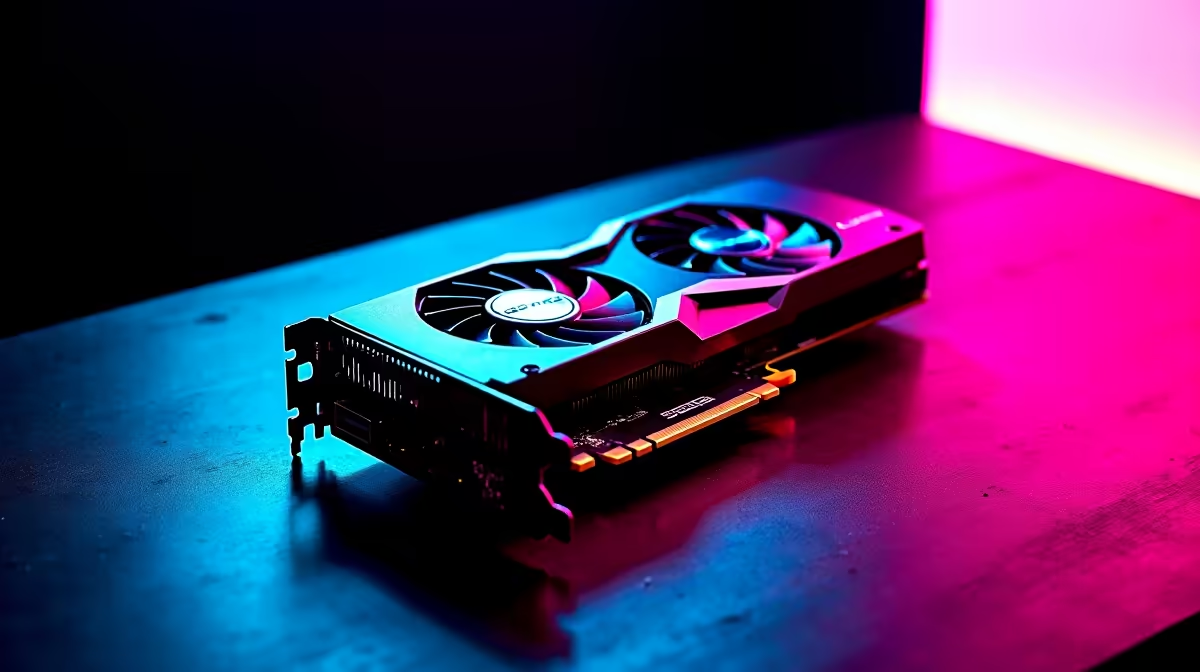
The RX 7800 XT pushes 60 Compute Units, 16GB of GDDR6, and a 256-bit memory bus, putting it on par with a previous-gen RX 6800 XT and trading blows with the RTX 4070 in raster. The RX 7600 runs 32 CUs, 8GB GDDR6 on a 128-bit bus, aimed squarely at 1080p high settings. In titles like Cyberpunk, Hogwarts Legacy and Starfield at 1440p ultra, the 7800 XT typically averages 90 to 110 fps while the 7600 sits around 50 to 65 fps at the same settings. At 1080p the gap narrows but the 7800 XT still produces noticeably smoother frametimes, especially in CPU bound multiplayer titles.
Price-to-Performance in ZAR
The RX 7600 at around R5,999 gives you roughly 60 fps per R1,000 spent at 1080p ultra in modern AAA games. The RX 7800 XT at around R12,999 lands closer to 75 fps per R1,000 at 1440p ultra. On a pure rand-per-frame basis the 7800 XT actually wins at higher resolutions, while the 7600 only edges ahead if you're locked to a 1080p panel and never plan to upgrade. Considering a 27 inch 1440p monitor goes for R3,499 to R4,999 in SA, the 7800 XT path is realistic for builders with R20,000 plus to spend.
Power, PSU and Total Build Cost
The 7800 XT pulls about 263W under load and asks for a 700W PSU, while the 7600 sips 165W and runs comfortably on a 550W unit. That PSU difference is roughly R600 to R900 in SA pricing, narrowing the practical cost gap a touch. Both cards are dual or triple slot 8 pin power designs without the 12VHPWR connector drama, so older PSUs don't need adapter dongles. For loadshedding-prone homes, the lower draw of the 7600 also means a smaller UPS keeps the rig alive through stage 2 and stage 4 cuts when paired with a 650VA to 850VA unit, although the 7800 XT only needs a step up to 1500VA.
Which Card Suits Your Setup
Pick the RX 7600 if you're on a 1080p 144Hz panel, your budget caps at R6,000 for the GPU, and you mostly play esports titles like Valorant, CS2 or Rocket League. Pick the RX 7800 XT if you have or plan a 1440p monitor, run AAA games at high or ultra, dabble in 4K with FSR upscaling, or want a 3 to 4 year lifespan before next upgrade. Both ship with free SA delivery on qualifying orders and carry standard manufacturer warranties handled locally.
Frequently Asked Questions
Can the RX 7600 handle 1440p gaming at all?
The RX 7600 manages 1440p in older or lighter titles like Overwatch 2, CS2 and Fortnite at 60 to 90 fps, but it struggles in modern AAA games at 1440p ultra, often dropping to 35 to 50 fps. FSR Quality mode helps but the 8GB VRAM caps texture settings.
Is the RX 7800 XT overkill for a Ryzen 5 5600 system?
No, the Ryzen 5 5600 pairs well with the RX 7800 XT at 1440p where the GPU does most of the work. You'd see CPU bottlenecks at 1080p in heavily threaded games, but at 1440p ultra the combo runs smoothly without bottlenecking issues.
Which card has better long term value for SA gamers?
The RX 7800 XT has stronger long term value with its 16GB VRAM, which prevents the texture and asset issues already affecting 8GB cards in titles like The Last of Us Part 1 and Hogwarts Legacy at high settings.
Ready to Find Your Perfect Match? Find your next AMD GPU and matching PC build today. Shop gaming PC deals