Quick Answer
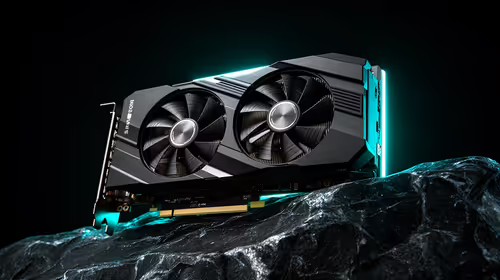
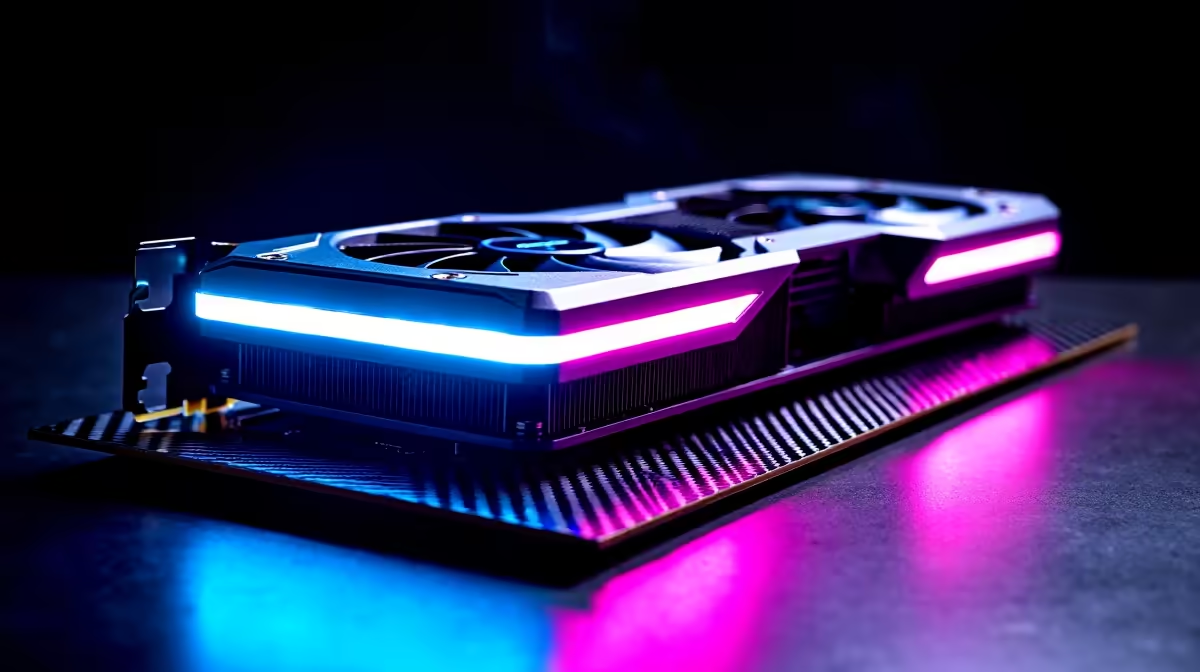
The RX 9070 performs well in Adobe After Effects for GPU-accelerated effects and previews, offering a meaningful step up from previous mid-range cards in 2026. However, After Effects remains primarily CPU and RAM dependent for most rendering workflows, so the GPU's role is most visible in GPU-accelerated effects like blur, glow, and motion blur previews.
RX 9070 and After Effects: Where the GPU Actually Matters
Adobe After Effects uses GPU acceleration selectively. Effects that are GPU-accelerated include blurs, glows, certain distortions, and the Mercury GPU Accelerator engine for preview rendering. The RX 9070, based on AMD's RDNA 4 architecture, delivers strong compute throughput and benefits from improved OpenCL and Vulkan support compared to RDNA 3. In practice, South African video editors and motion designers working with 1080p or 4K compositions will see faster preview frame rates for GPU-accelerated effects compared to running an older RX 6700 or RX 7600. The card's VRAM, at 16GB, is generous enough to hold large composition textures without falling back to system RAM, which is a real-world advantage when working with uncompressed footage.
Real-World Performance: What Editors Experience in 2026
For motion graphics work at 4K with multiple GPU-accelerated effects active, the RX 9070 handles preview scrubbing noticeably better than cards with 8GB VRAM. Final rendering in After Effects still bottlenecks at the CPU for most effects, so pairing the RX 9070 with a Ryzen 9 7950X or Intel Core i9 processor is important for export speed. The GPU shines most when using effects like Camera Lens Blur or Element 3D, where it processes data in parallel rather than handing the work to the CPU. For SA creative professionals billing by the hour, reducing preview wait times and scrubbing lag has a direct impact on productivity. Loadshedding is a relevant concern for editors: the RX 9070's power draw is lower than equivalent Nvidia cards in compute workloads, meaning a UPS can sustain a workstation for longer during a power outage.
After Effects Optimization Tips for RX 9070 Users
In After Effects preferences, confirm that the GPU is listed under the Mercury GPU Accelerator setting and that it is enabled. Increase the RAM allocated to After Effects to at least 32GB of your system RAM to complement the GPU. Enable disk cache and set it to a fast NVMe SSD. When exporting, use Adobe Media Encoder and leverage the export queue to keep After Effects responsive while renders complete in the background. For SA freelancers rendering overnight during off-peak electricity hours to avoid loadshedding disruption, setting a scheduled export queue is a practical workflow.
FAQs
Does After Effects fully support AMD RX 9070 in 2026?
Adobe has expanded AMD GPU support through OpenCL and the Mercury GPU Accelerator. The RX 9070 is recognized and accelerated in After Effects 2026 for supported effects. Confirm your Adobe CC subscription is current to receive the latest GPU compatibility patches.
Is 16GB VRAM on the RX 9070 enough for After Effects?
16GB is more than sufficient for most After Effects workflows. Even complex 4K compositions with multiple effects layers rarely exceed 8GB of VRAM in practice, making 16GB future-proof for several years of evolving project sizes.
Should I choose the RX 9070 over an equivalent Nvidia card for After Effects?
Both work well. After Effects is not heavily optimized for CUDA over OpenCL in 2026. The RX 9070 is competitive and its 16GB VRAM at its price point is an advantage for memory-intensive creative work.
Ready to Find Your Perfect Match? Browse AMD and Nvidia graphics cards with local South African stock, fast delivery, and competitive ZAR pricing. View Graphics Cards