

How long did you wait for your PC to boot this morning? Enough time to brew a coffee? In the world of instant everything, staring at a loading screen feels like a lifetime. The culprit is often an old, slow hard drive. But how much does upgrading to a Solid-State Drive (SSD) really improve your boot time? And does a more expensive, faster SSD mean an even quicker startup? Let's dive into how SSD speed affects boot and app loading.
From Minutes to Seconds: The Basic SSD Upgrade
The difference between a traditional Hard Disk Drive (HDD) and an SSD is night and day. An HDD uses a spinning platter and a mechanical arm to find data... think of it like a tiny record player. An SSD, on the other hand, uses flash memory with no moving parts, accessing data almost instantly.
This is why the jump from an HDD to a standard SSD provides the most dramatic performance boost you'll ever feel. We're talking boot times dropping from over a minute to under 20 seconds. This single upgrade can make an old machine feel brand new. Even many affordable gaming laptops under R20k come standard with an SSD for this very reason. The impact on your daily SSD boot time is massive. ✨
SATA vs NVMe: A Game of Diminishing Returns
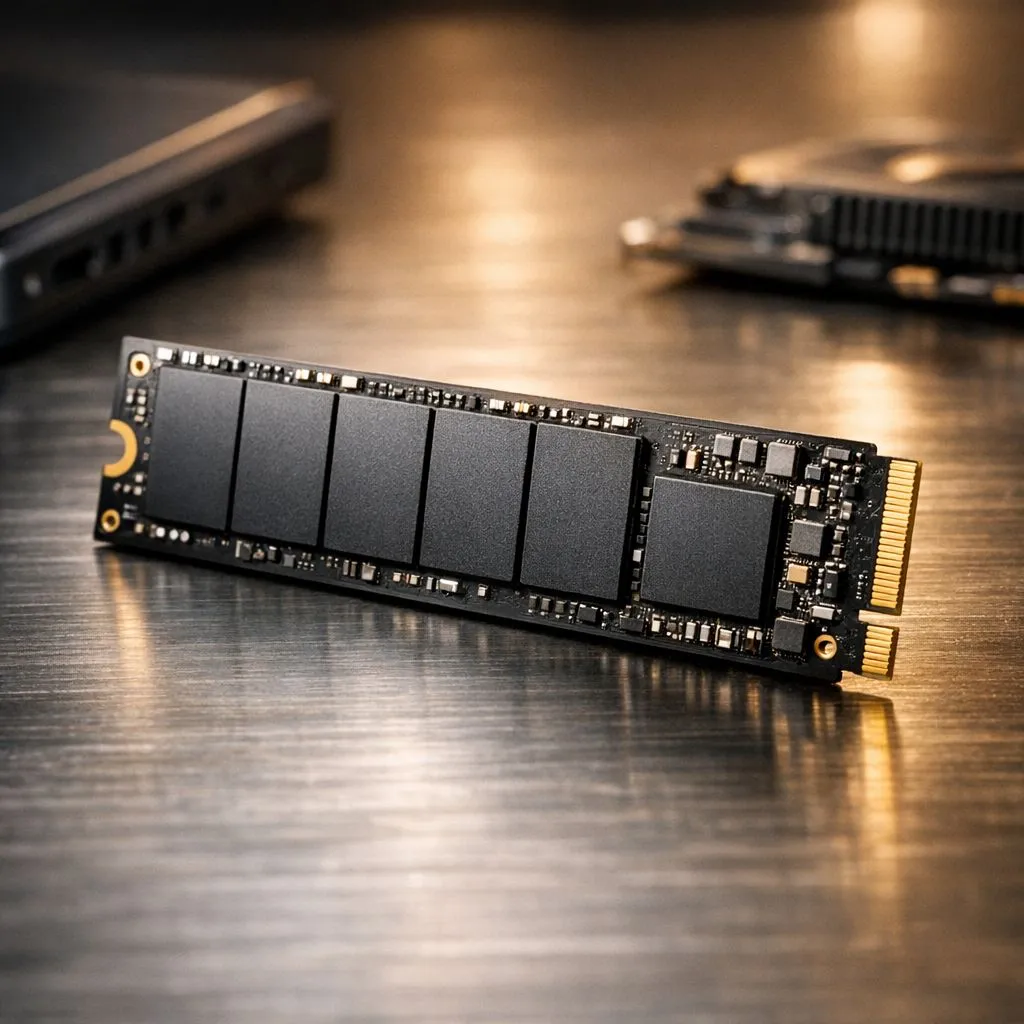
Here's where it gets interesting. Not all SSDs are created equal. You generally have two types: SATA SSDs (which top out around 550 MB/s) and NVMe SSDs (which can hit a blistering 7,000 MB/s or more).
So, a 10x faster drive on paper means a 10x faster boot time, right? Not quite.
While an NVMe drive will shave a few more seconds off your startup, the difference isn't as dramatic as the initial jump from an HDD. Why? Because booting your PC involves more than just reading files; it's also initialising drivers and starting background services. This is where the improved SSD boot time hits a plateau. Modern platforms, whether you're looking at Intel laptops on special or browsing the latest Ryzen laptop deals, are optimised to take advantage of this speed, but the bottleneck simply shifts elsewhere during the boot process.
Check Your Speed 🔧
Want to see how fast your current drive is? Download a free tool like CrystalDiskMark. It's a simple way to benchmark your read write speeds and see if a new SSD would give you a significant boost. You might be surprised by how slow your old drive really is!
Where Blazing SSD Speed Truly Matters 🚀
If the gains in SSD boot time are minimal between good and great SSDs, where's the real benefit? App and game loading.
Loading a massive project in Adobe Premiere, compiling code, or fast-travelling across the map in a game like Starfield... this is where a high-end NVMe SSD flexes its muscles. Game level loading times can be cut in half, and large files open in a snap. For serious gamers and content creators, this saved time adds up.
It's why the best gaming laptop deals often feature top-tier NVMe drives. Paired with a powerful graphics card, like those found in our GeForce RTX gaming laptops on special, it ensures you're spending more time playing and less time waiting. The effect of SSD speed here is undeniable.
Ultimately, any SSD will revolutionise your PC's responsiveness. If you're a casual user, a standard drive is perfect. But if you're a power user who hates loading screens, investing in a high-speed NVMe drive is absolutely worth it.
Ready to Leave Slow Load Times in the Dust? A fast SSD is the single biggest performance upgrade you can make. It transforms how your PC feels, from boot-up to gameplay. Explore our massive range of laptop specials and find a machine that boots in seconds, not minutes.











