

Quick Answer
Garmin GPS watches and handheld devices are an excellent choice for hiking, offering dedicated trail navigation, topographic maps, long battery life, and robust durability that smartphone apps cannot match. For South African hikers tackling routes in the Drakensberg, Cederberg, or Kruger, Garmin provides reliable offline navigation where cellular coverage is absent.
Hiking in South Africa takes you into terrain where a flat phone battery or absent cell signal can turn a challenging situation dangerous. Garmin has built its reputation on devices designed specifically for outdoor navigation, and for SA hikers who spend time on remote trails, the case for dedicated GPS hardware is strong. But is Garmin the right choice for your specific style of hiking?
What Garmin Does Better Than Smartphone Apps
Garmin devices are purpose-built for navigation in a way that general-purpose smartphones are not. Battery life is the most obvious advantage - a Garmin Fenix 7 or Instinct 2 Solar will run for 20 to 80 hours in GPS mode depending on the model and settings, compared to the 6 to 12 hours a typical smartphone manages with GPS active. On multi-day trails like the Otter Trail or Drakensberg Grand Traverse, that difference is not just convenient, it is essential.
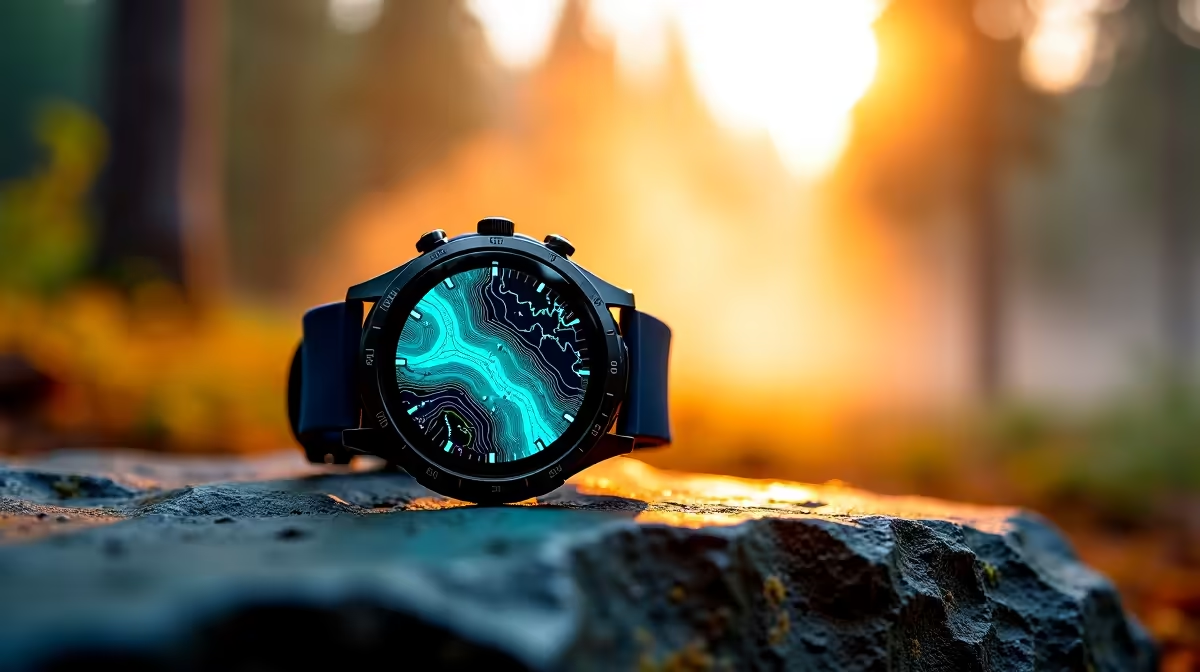
Garmin devices store full topographic maps onscreen and offline with no data connection required. South African topo maps are available for Garmin devices through the Garmin Connect ecosystem and third-party sources like OpenTopoMap, covering the major trail networks in the Western Cape, KwaZulu-Natal, Limpopo, and Mpumalanga hiking corridors. The screen visibility in direct sunlight is also significantly better on Garmin transflective displays than on OLED smartphone screens.
Which Garmin Models Suit SA Hikers Best
For day hikers and weekend trail walkers, the Garmin Instinct 2 offers solid GPS accuracy, a rugged build, and 28-day battery life in smartwatch mode. It handles the basics without the premium price of the Fenix range. In South Africa it sits around R5,500 to R6,500 at current pricing.
For serious multi-day hikers and mountaineers, the Garmin Fenix 7 series adds full colour topo maps, an altimeter, barometric pressure tracking, and the option for solar charging on the Solar variants. The Fenix 7 Solar has no practical battery limit during daylight hiking conditions in the SA sun. Pricing for the Fenix 7 in SA ranges from R10,000 to R16,000 depending on the variant.
Handheld Garmin units like the GPSMAP 67 are an alternative for hikers who prefer a dedicated navigation device separate from their watch. These offer larger screens and more detailed map interaction, which some trail leaders and group hikers prefer for route planning on the go.
Limitations to Consider Before Buying
Garmin devices are not perfect for every hiker. The user interface, while functional, has a steeper learning curve than a smartphone app. Setting up maps, waypoints, and routes before a hike takes time and familiarity with Garmin Connect and BaseCamp software. Hikers who only go out a few times a year may not invest enough time to use the device confidently in the field.
Pricing in South Africa also places Garmin firmly in the investment category rather than an impulse purchase. For casual day hikers on well-marked trails within cell range, a smartphone with an offline mapping app like Maps.me or Komoot may provide sufficient navigation capability at zero additional cost.
Frequently Asked Questions
Q: Do Garmin devices work in remote South African areas like the Drakensberg without cell signal? A: Yes, Garmin GPS devices use satellite signals independent of cellular networks. They function fully offline in the Drakensberg, Cederberg, and other remote SA hiking areas where there is no mobile coverage.
Q: Can I load South African hiking trails onto a Garmin device? A: Yes. GPX track files for most major SA trails are available through hiking communities and trail organisations. These load directly onto Garmin devices via USB or through Garmin Connect, and the device follows them as a breadcrumb trail or course.
Q: Is Garmin worth it for hiking in South Africa compared to a cheaper GPS watch? A: Garmin's accuracy, build quality, battery life, and ecosystem support justify the price for regular hikers. Budget GPS watches often cut corners on satellite reception quality and map functionality, which are the core reasons to own a GPS device in the first place.
Ready to Find Your Perfect Match? Browse Evetech's tech deals for outdoor and adventure electronics at competitive South African prices.











