

Quick Answer
SSD specs determine real-world storage performance, durability, and long-term reliability. TBW (Terabytes Written) measures endurance, DRAM cache improves sustained speeds, and the controller chip orchestrates all read/write operations. Understanding these specs helps you choose the right SSD for gaming, work, or content creation in South Africa.
Buying an SSD in 2026 means wading through a wall of specifications that manufacturers list prominently but rarely explain clearly. Sequential read and write speeds get the headlines, but TBW, DRAM cache, and controller architecture are the specs that determine how an SSD actually performs over time and under sustained workloads. Whether you''re building a gaming PC, upgrading a laptop, or setting up a content creation workstation, understanding these figures helps you avoid common purchasing mistakes.
TBW: How Long Will Your SSD Last?
TBW stands for Terabytes Written and represents the total amount of data a manufacturer guarantees can be written to the drive over its lifetime. A drive rated at 300 TBW can have 300 terabytes of data written to it before the NAND flash cells are considered to have reached the end of their rated endurance. For practical purposes, the average user writing 20–30 GB per day - including OS operations, game saves, and file transfers - will take years to approach the TBW limit on any reasonably rated drive. TBW becomes more relevant for workstation users doing heavy video editing or virtual machine work, where large sustained writes are frequent. When comparing two similarly priced SSDs, a higher TBW rating generally indicates higher-quality NAND and a more conservative warranty. As a rule of thumb, aim for at least 300 TBW on a 1 TB drive for a build you plan to keep for several years.
DRAM Cache: Why It Matters Under Load
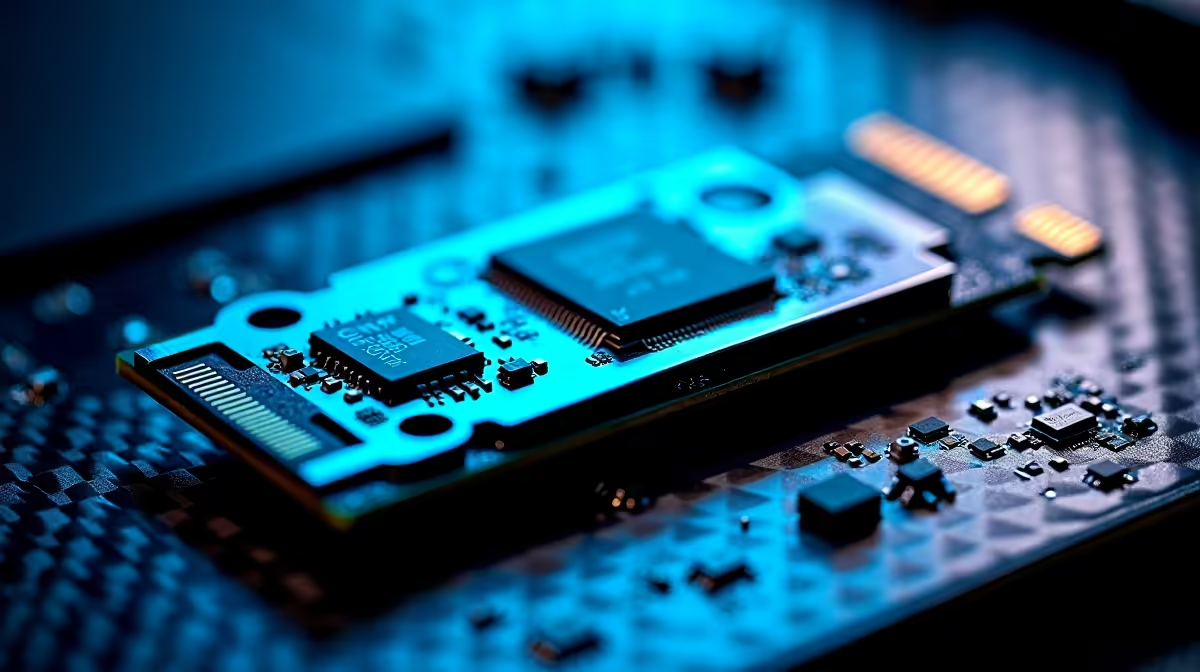
A DRAM cache is a small pool of high-speed memory on the SSD''s PCB that acts as a fast lookup table for the drive''s data mapping. Drives with a dedicated DRAM cache handle sustained read and write operations more consistently, maintaining their rated speeds over longer transfers. DRAM-less SSDs rely on the host system''s RAM through a protocol called HMB (Host Memory Buffer) or use a portion of the NAND itself as a pseudo-cache - both of which perform acceptably for light workloads but can slow significantly during large sequential transfers. For gaming, DRAM cache is less critical because game loads involve random reads rather than long sequential writes. For content creators moving large video files, or system builders installing and managing large game libraries regularly, a DRAM-equipped drive maintains more consistent performance and is worth the modest price premium.
Controller: The Brain of Your SSD
The controller is the processor inside your SSD that manages all data operations - translating logical addresses to physical NAND locations, managing wear levelling to extend flash cell life, handling error correction, and executing the garbage collection that keeps performance from degrading over time. Controller quality varies significantly between budget and mainstream drives. A capable controller with mature firmware handles queue depths and mixed workloads efficiently, delivers consistent latency under simultaneous read and write operations, and implements effective thermal management to avoid performance throttling. When evaluating an SSD, the controller manufacturer and specific model are as important as the peak speed numbers. Well-regarded controller vendors with established track records consistently deliver reliable, well-optimised firmware across their product lines.
Frequently Asked Questions
Q: Should I prioritise a higher TBW or higher sequential speed when choosing an SSD? A: For most users, TBW is the more practically meaningful spec. Sequential speeds are important for large file transfers, but TBW reflects the quality and expected lifespan of the NAND - prioritise adequate TBW for your use case, then compare speeds within that shortlist.
Q: Do DRAM-less SSDs cause problems for gaming? A: For gaming specifically, DRAM-less SSDs perform adequately because game loading is random-read dominated, which is less affected by cache absence. The performance gap becomes relevant during large sequential writes - game installations or moving large files - where DRAM-less drives can slow noticeably.
Q: What interface should I choose - SATA or NVMe? A: NVMe drives over M.2 PCIe deliver significantly faster sequential and random performance than SATA SSDs. For a new build in 2026, NVMe is the standard choice. SATA SSDs remain useful for secondary storage or upgrading older systems with only SATA slots available.
Ready to Find Your Perfect Match? Shop gaming PC deals at Evetech - South Africa''s leading gaming and tech retailer.











