

Quick Answer
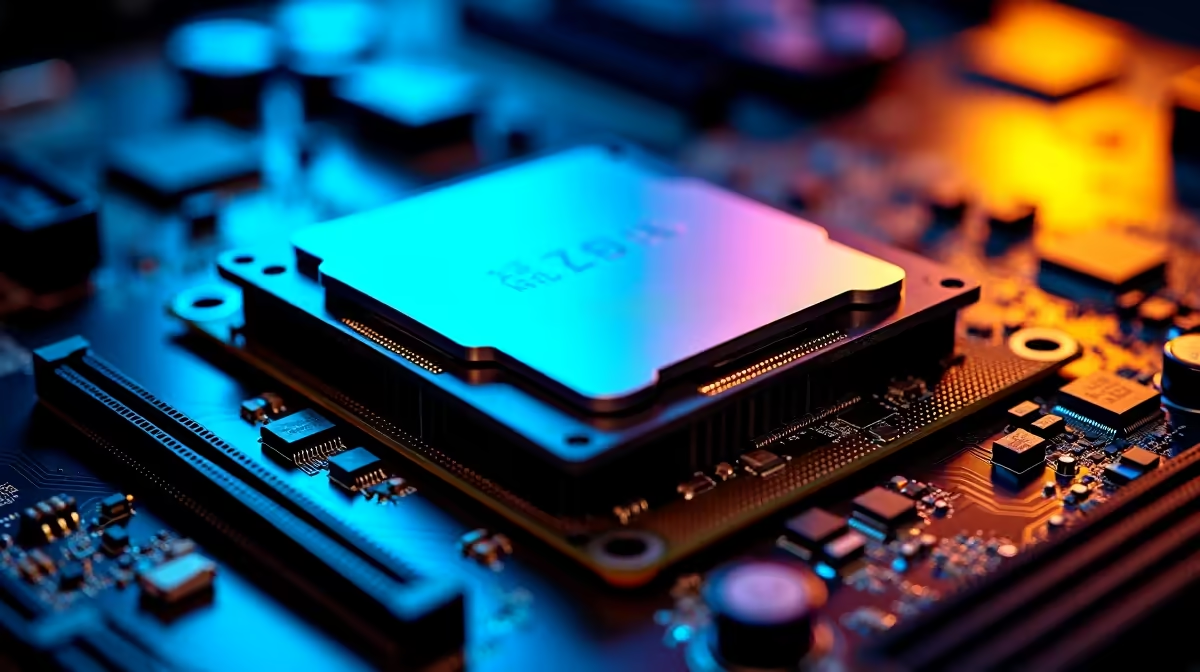
If your i7-14700K isn't being detected by the BIOS, the fix is almost always a BIOS update applied via USB BIOS Flashback, since older Z690 and early Z790 boards shipped before Raptor Lake Refresh microcode. Update the BIOS using a temporary supported CPU or the board's flashback button, then reseat the 14700K and clear CMOS.
Why the 14700K Sometimes Won't Post on Older Boards
Intel's 14th gen needs microcode released after late 2023, and any Z690 or Z790 board sitting on a shelf with old firmware will throw a CPU debug LED or simply hang at the manufacturer logo. Check your motherboard's CPU support list against the BIOS version printed on the box or visible at first POST. If your firmware predates the 14700K launch, that's your culprit.
Step-by-Step BIOS Flashback Fix
Download the latest BIOS for your exact board model, rename it per the manufacturer's instructions (ASUS uses a renamer tool, MSI just needs the .CAP file), and copy it onto a FAT32-formatted USB stick. Plug the stick into the dedicated BIOS Flashback port, plug the 24-pin and 8-pin EATX into the board with no CPU or RAM installed, then hit the Flashback button. The LED blinks for three to five minutes; once it stops, the firmware is updated.
Reseat, Clear CMOS and Final Checks
With the new BIOS flashed, install the 14700K carefully (watch the alignment notches), clear CMOS via the jumper or button, and boot with a single stick of DDR5 in slot A2. Update to the latest chipset drivers in Windows and verify Intel Default Profile is loaded for stability since aggressive AC/DC loadlines have caused well-publicised degradation issues. A UPS during all of this is wise; a load shed mid-flash will brick the board.
Frequently Asked Questions
Can I update the BIOS without a working CPU?
Yes, if your board has BIOS Flashback or Q-Flash Plus. Most mid-range and premium Z690/Z790 boards include it, but budget boards often don't.
Will clearing CMOS damage my i7-14700K?
No. Clearing CMOS only resets BIOS settings to defaults and is a safe, recommended step after a flash or detection issue.
Should I apply Intel's Default Profile after fixing detection?
Absolutely. Intel Default Profile is the recommended stability setting for the 14700K and helps avoid the long-term degradation issues seen with overly aggressive vendor presets.
Ready to Find Your Perfect Match? Skip the BIOS gymnastics with a pre-built, ready-to-game Intel rig. Shop ready-to-ship gaming PCs











