

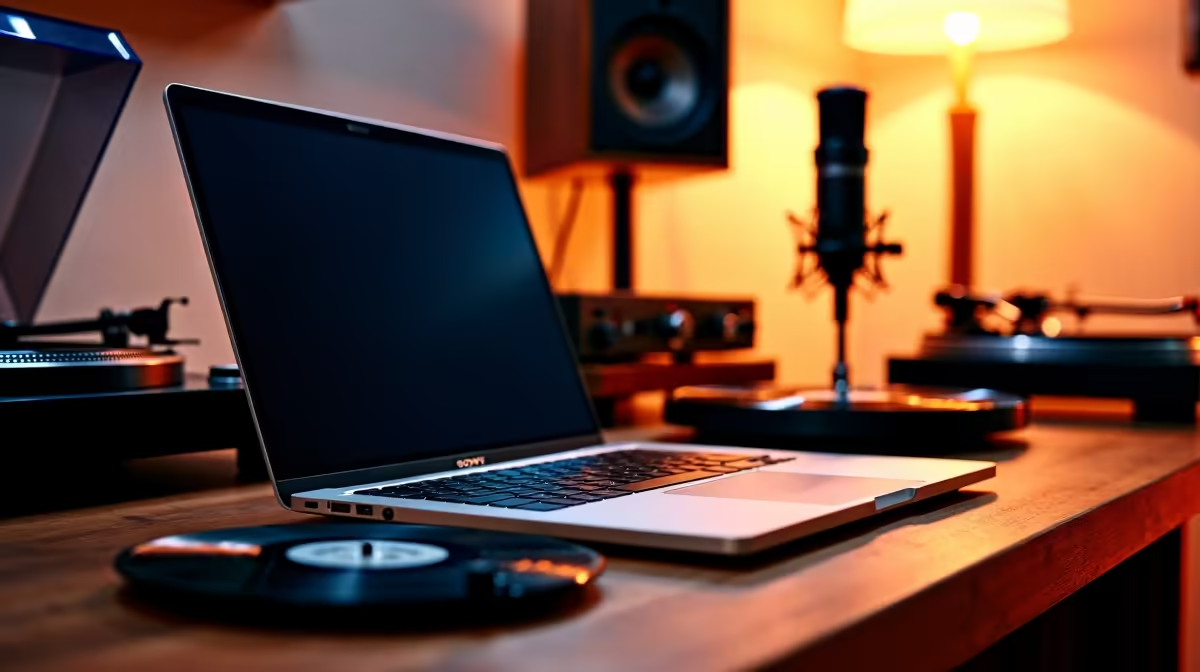
Dropping beats should never mean dropping audio frames. If you produce music in South Africa, you know the struggle. Loading heavy plugins while watching your battery drain is stressful. Using a MacBook for music production completely shifted the audio landscape. With Apple Silicon, producers can now run massive Logic Pro sessions anywhere... even during stage six load shedding. Let us explore why these unique chips transformed home studios forever.
Why Apple Silicon Redefined Audio Engineering
Before the M1 chip arrived, mobile music production required serious compromises. You either sacrificed processing power or dealt with terrible battery life. Today, the M-series processors offer incredible efficiency. The unified memory architecture means your digital audio workstation accesses data instantly. This allows massive sample libraries to load in a fraction of the time.
While many creatives still browse high-performance notebooks for sale for Windows alternatives, Apple made a massive leap. The ARM-based architecture handles simultaneous audio tracks with zero sweat. Plugins that used to crash older systems now run smoothly side by side.
Thermal Efficiency and Silent Studios 🤫
Fan noise is the ultimate enemy of a clean vocal take. Older laptops sounded like jet engines when exporting a master track. Apple Silicon runs incredibly cool. The entry-level Air models do not even have a fan... making them perfect for recording in the same room as your computer.
Unlike massive pre-built desktop rigs that need heavy cooling, these sleek machines stay silent. You get pure audio without the background hum. This is crucial for producers working in small, untreated bedroom studios across the country.
Audio Buffer Pro Tip 🎛️
Always adjust your buffer size based on your workflow. Keep it low at 128 samples for recording to avoid latency. Push it up to 1024 samples when mixing with heavy plugins to give your CPU breathing room.
Performance That Rivals Heavyweight Rigs ⚡
You might think you need one of the best gaming PCs to handle dozens of synth tracks. That used to be true. Now, even a base M2 chip can handle over 100 tracks of uncompressed audio. The single-core performance is staggering. This translates directly to how many virtual instruments you can stack.
Music production relies heavily on CPU speed and fast RAM. You do not need to buy high-end graphics cards unless you also edit 4K music videos. The integrated graphics on Apple Silicon are more than enough for any modern audio interface. This allows you to focus your budget purely on audio processing power.
The Financial Reality for South African Producers
Building a home studio in ZAR is rarely cheap. Apple gear carries a premium price tag locally. However, the lifespan of these machines makes them a solid investment. A modern MacBook for music production will easily last five to seven years of daily studio use. This lowers the long-term cost of ownership significantly.
Still, equipping your studio requires smart shopping. Always keep an eye out for tech specials and deals to stretch your ZAR further. Whether you choose macOS or stick to a powerful Windows machine, your hardware should never hold back your creativity. You need a reliable system that lets your talent shine through.
Ready to Find Your Perfect Match? The Mac vs Windows debate is complex, but for maximum power, choice, and value in South Africa, Windows is hard to beat. Explore our massive range of laptop specials and find the perfect machine to conquer your world.











