

Valorant is one of the most popular competitive shooters in South Africa's growing esports scene, and its intentionally low system requirements mean that an enormous range of PCs can run it. Riot Games designed Valorant to be accessible - but there's a significant gap between "technically runs" and "runs well enough to compete." Here's what you need to know before you jump in.
Quick Answer
Valorant's official minimum specs require a CPU equivalent to an Intel Core i3-370M, 4GB of RAM, and an Intel HD 4000 GPU. However, to actually play competitively at stable framerates, you'll want at least a modern quad-core processor, 8GB of RAM, and a dedicated GPU like a GTX 1650 or RX 580.
💻 Official Minimum vs. Recommended Specs
Riot Games publishes three performance tiers for Valorant. The absolute minimum - targeting 30fps - calls for a CPU equivalent to an Intel Core i3-370M, 4GB RAM, and Intel HD 4000 integrated graphics. The 60fps recommended spec bumps this to a Core i3-4150 or equivalent, 4GB RAM, and a GeForce GTX 1050 Ti. For 144fps competitive play, Riot recommends a Core i5-9400F, 16GB RAM, and a GTX 1080.
The gap between minimum and competitive is stark. At minimum spec, Valorant will technically launch and be playable, but dropped frames and screen tearing at critical moments will put you at a significant disadvantage against players running smoother setups.
🎮 What Hardware You Actually Need to Compete
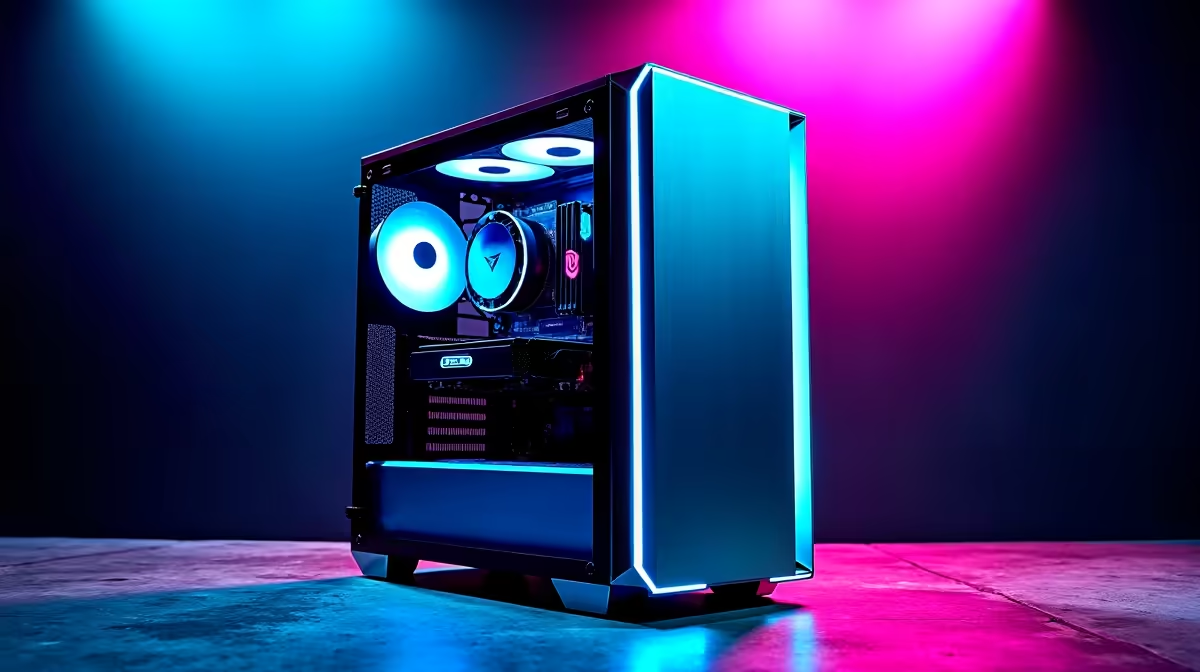
For casual-to-intermediate ranked play, aim for a system with a Ryzen 5 or Core i5 processor, 16GB of RAM, and a dedicated GPU from the GTX 1660 or RX 6600 tier. This setup comfortably delivers 144fps at 1080p with low settings - the sweet spot for competitive Valorant. Valorant is more CPU-bound than GPU-bound, so investing in a strong processor pays dividends. Pair your build with a fast gaming PC from Evetech and you'll have headroom to push toward 240fps with a high-refresh monitor.
🖥️ Monitor and Peripherals Matter Too
Valorant's quick time-to-kill means reaction times are decisive. A 144Hz or 240Hz monitor and a precise gaming mouse are as important as your GPU. If your PC can push 240fps but you're gaming on a 60Hz panel, you're leaving a major competitive advantage on the table. Getting your hardware chain right - from frame generation to display to peripherals - is what separates a capable Valorant setup from a truly competitive one.
Can Valorant run on integrated graphics?Yes, it can technically run on Intel HD 4000 or newer integrated graphics, but expect very low framerates and reduced visual quality. For any meaningful competitive play, a dedicated GPU is strongly recommended.
Does Valorant require a 64-bit operating system?
Yes. Valorant requires Windows 10 64-bit (version 1803 or later). It also requires TPM 2.0 and Secure Boot to be enabled for the Vanguard anti-cheat system.
How much RAM does Valorant actually need?
Valorant can run on 4GB of RAM at minimum, but 8GB is the practical floor for a stable experience, and 16GB is recommended if you want to run background applications like Discord or a browser alongside the game.
Evetech stocks Graphics Card Deals and Evetech Best Sellers — shop online with fast delivery across South Africa.
Ready to Find Your Perfect Match? Upgrade to a Valorant-ready gaming PC from Evetech and start competing at the framerate you deserve.











