


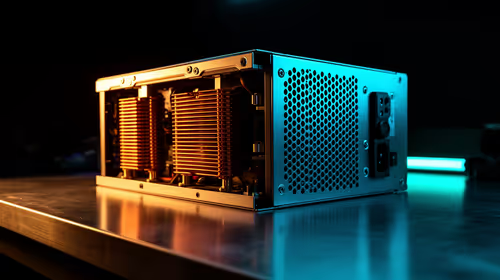
1000W PSU Planning for RTX 5090 Builds in SA
1000W for RTX 5090 needs a full-build check, not a simple yes. Review GPU guidance, CPU draw, transient load, connectors, PSU quality, and upgrade plans before deciding.
Read moreVIDEO_TDR_FAILURE Error: Causes, Diagnosis, and. Diagnosis steps, proven fixes & when to seek professional help. SA-specific support info included.
VIDEO_TDR_FAILURE is a Windows blue screen caused by your GPU driver hanging and Windows giving up on it. The fix involves updating or rolling back the graphics driver, checking GPU temps, testing RAM, and confirming your PSU isn't undersized. Most SA users resolve it in under 30 minutes with a clean driver reinstall using DDU.
TDR stands for Timeout Detection and Recovery. Windows expects the GPU to respond within 2 seconds, and when it doesn't, Windows resets the driver and throws a blue screen. The error name in the BSOD usually points at nvlddmkm.sys for Nvidia cards, atikmdag.sys or amdkmdag.sys for AMD, and igdkmd64.sys for Intel integrated. Common root causes are corrupted or mismatched drivers, GPU overheating past 85 degrees, an undersized or failing PSU, faulty system RAM, or aggressive overclocks. Less often it's a dying graphics card, especially on cards from 2018 and earlier where VRM failure is creeping in.
Start with a clean driver reinstall. Download the latest Nvidia GeForce or AMD Adrenalin driver matching your card and Windows 11 24H2 or 25H1. Boot into Safe Mode by holding Shift while clicking Restart, then choose Safe Mode with Networking. Run DDU (Display Driver Uninstaller) and pick the Clean and Restart option for your GPU brand. Once Windows boots normally, install the freshly downloaded driver. Skip Windows Update graphics drivers, they're often older and conflict with manufacturer releases. If the blue screen returns within a day, roll back to the driver from 2 versions ago since brand new releases sometimes carry regressions.
Open HWiNFO64 or MSI Afterburner and watch GPU temperatures during a 10 minute Furmark or 3DMark Time Spy run. Anything above 85 degrees on the core or 95 on hotspot points at thermal paste degradation or fan failure, common on cards 3 years and older. Next, verify your PSU wattage matches the GPU's requirement. An RX 7800 XT or RTX 4070 Super needs 700W minimum, and a tired 600W unit causes random TDR resets under load. Run Windows Memory Diagnostic or MemTest86 overnight to rule out faulty RAM, since bad sticks often masquerade as GPU failures. Loadshedding-related dirty power can also damage components over time, so a UPS with surge protection saves repair bills.
If clean drivers, fresh thermal paste, a new PSU and good RAM all check out, and TDR persists, the card itself is likely on its way out. Visual artefacts, random black screens at idle, or BSODs even in light browsing point at VRAM or VRM failure. SA gamers often nurse a card for 5 to 7 years, so an RX 580 or GTX 1070 throwing TDR errors in 2026 has earned its retirement. New mid-range options like the RX 7600, RTX 4060 or RTX 4060 Ti at R5,999 to R9,999 deliver a major lift and ship with free SA delivery on qualifying orders.
The crash itself doesn't damage hardware, it's a recovery mechanism. But repeated crashes often indicate underlying issues like overheating or bad VRMs that, if ignored, will eventually kill the card. Fix the root cause within a few weeks of first seeing the error.
Both vendors trigger TDR equally often, the cause is usually driver mismatch or hardware issue rather than brand. Recent driver releases from both Nvidia (Game Ready 560 plus) and AMD (Adrenalin 25 plus) have been stable for most SA users on Windows 11 24H2.
Undervolting can help if the crash is caused by power delivery issues or marginal silicon. Drop the core voltage by 50 to 80mV in MSI Afterburner and stress test, but if the crashes return, the issue lies elsewhere and undervolting is masking the symptom.
Ready to Find Your Perfect Match? Replace a failing GPU with a fresh build today. Shop gaming PC deals
VIDEO_TDR_FAILURE Error: Causes, Diagnos available at Evetech.co.za with local warranty and fast delivery.
VIDEO_TDR_FAILURE Error: Causes, Diagnos - check Evetech for latest stock and SA pricing.
Depends on your use case. VIDEO_TDR_FAILURE Error: Cause offers good value at current Rand pricing.
1000W for RTX 5090 needs a full-build check, not a simple yes. Review GPU guidance, CPU draw, transient load, connectors, PSU quality, and upgrade plans before deciding.
Read more
RTX 5080 Super with a 750W PSU is more comfortable than lower wattage if the unit is quality. SA builders should still confirm GPU guidance, CPU draw, connector type, airflow, and upgrade room.
Read more
How to fix FPS drops after a RX 9070 XT starts with driver cleanup, chipset updates, thermals, and power checks. For SA gaming PCs, confirm PCIe seating, monitor refresh, frame caps, and per-game graphics settings before replacing parts.
Read more
How to fix low FPS Windows 11 Wi-Fi 7 issues starts by checking whether the problem is frame rate or network lag. Test ping, drivers, power settings, Ethernet, and game FPS before adjusting visuals.
Read more
AM5 is smart for SA builders because it supports newer Ryzen CPUs, DDR5 memory, and a longer upgrade path. Compare board cost, cooling, gaming needs, and local part availability before choosing your next PC platform.
Read more
AM5 gives Randburg gaming builders a longer upgrade path. For SA buyers, DDR5 support, newer board features, and future CPU options can justify the platform. Weigh board cost, cooler support, BIOS maturity, and upgrade timing before choosing.
Read more
RTX 5090 on a 550W PSU leaves almost no practical room for OC plans. Treat the setup as constrained, with CPU draw, power spikes, cable quality, thermals, and stability checks more important than chasing extra clocks.
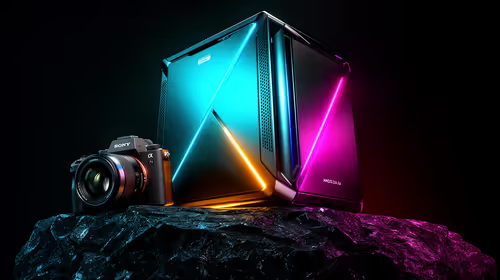
FPS drops on a Ryzen 9 9950X3D build often have a fixable cause. Check settings, drivers, thermals, background tasks, network conditions, and bottlenecks before assuming a part must be replaced.

The difference between PCIe 5.0 and PCIe 4.0 for SA gamers is mostly bandwidth headroom. Compare GPU slot needs, NVMe speed, motherboard support, and upgrade timing before paying extra for a newer platform.

Gaming PC stuck pixel checks in South Africa should confirm the monitor fault first. Use colour tests, screenshot comparison, cable swaps, display menu checks, and clear photos before deciding on support.

AMD's current driver now lists a Radeon RX 9050 4GB, while product coverage details a narrowed memory system. SA buyers should weigh the low VRAM ceiling against current local Radeon options.

Samsung Display has demonstrated a 16-inch 2.5K OLED laptop panel running at 300Hz. SA buyers should wait for a named notebook, full panel specifications and a local price before planning an upgrade.

Microsoft says some Windows 11 game crashes after recent updates are linked to RGB-related drivers. Affected SA gamers should confirm the update and driver before using the published registry workaround.
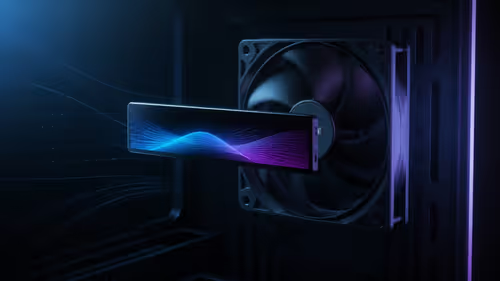
Thermalright's Fan Frame Vision-1 adds a 640x172 status screen to a standard 120mm fan. SA builders should check clearance, USB routing and local support before treating it as an easy upgrade.
1000W for RTX 5090 needs a full-build check, not a simple yes. Review GPU guidance, CPU draw, transient load, connectors, PSU quality, and upgrade plans before deciding.
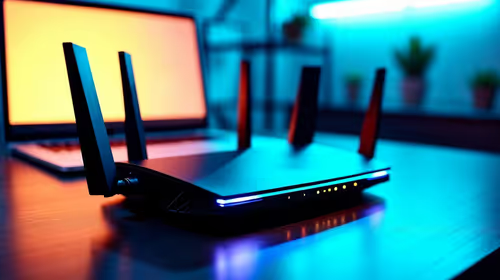
Wi-Fi 6E vs Wi-Fi 6 matters for 4K video editing when files move across a network. The real-world difference between Wi-Fi 6E and Wi-Fi 6 for video editing in 4K depends on NAS access, cloud uploads, router range, and SA creator workflows.
RTX 5080 Super with a 750W PSU is more comfortable than lower wattage if the unit is quality. SA builders should still confirm GPU guidance, CPU draw, connector type, airflow, and upgrade room.
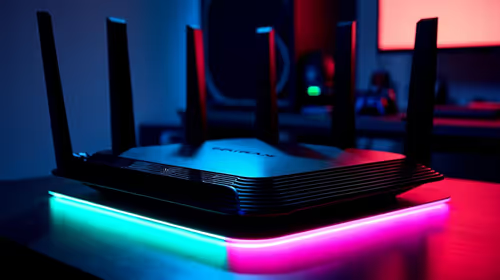
Wi-Fi 6E vs Wi-Fi 6 for Video Editing in 4K comes down to router support, latency, client devices, band support, and home network layout. SA buyers should match the choice to their setup instead of assuming one option always wins.