

Quick Answer
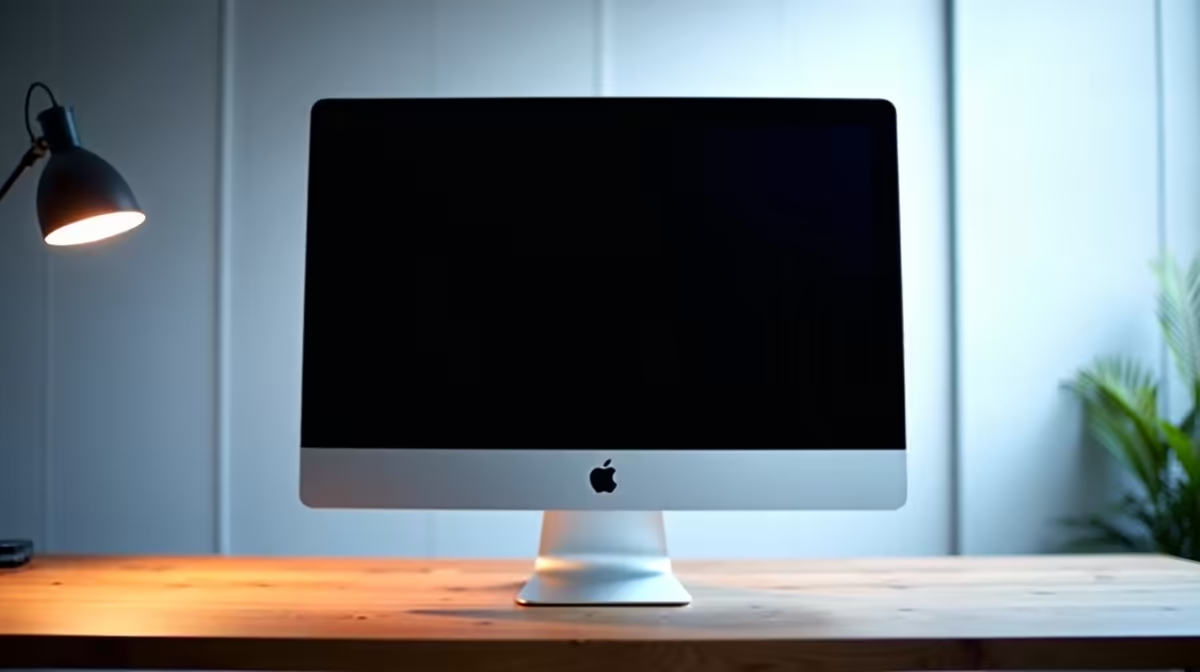
The Apple Studio Display retains a 60Hz refresh rate in 2026 because Apple designed it primarily for creative professionals - photo editors, video editors, and designers - who prioritise colour accuracy, brightness, and resolution over high refresh rates. For these workflows, 60Hz is entirely sufficient and has never been a meaningful limitation.
It is a question that comes up regularly in tech forums: why does a display that costs as much as the Apple Studio Display still ship with 60Hz in 2026 when monitors at a fraction of the price offer 144Hz or even 240Hz? The answer lies in Apple''s philosophy and target audience.
Apple''s Pro Display Philosophy
Apple designs the Studio Display for a specific user: someone who spends their day in Final Cut Pro, Logic Pro, Adobe Lightroom, or Xcode. For these users, the display''s 5K resolution, P3 wide colour gamut, True Tone technology, and 600 nits of brightness matter far more than refresh rate. A video editor working at 4K or 5K needs every pixel to be accurately rendered - they are examining colour grading, fine detail in shadows, and skin tone accuracy. A 60Hz panel with Apple''s calibration and colour science serves this workflow better than a higher-refresh panel with inferior colour accuracy.
Why 60Hz Is Not a Problem for Its Target Audience
Refresh rate primarily matters for motion clarity - fast-moving content, gaming, and cursor responsiveness in general use. For still image editing, document work, or video playback at standard frame rates, 60Hz is entirely adequate. macOS is also tuned to make 60Hz feel smooth in everyday use - Apple''s animation and scrolling interpolation at 60Hz looks polished in ways that some Windows 60Hz displays do not.
Why Gamers Should Look Elsewhere
If you are a South African gamer or someone who uses their display for both creative work and gaming, the Apple Studio Display is not the right tool. There is no shortage of excellent monitors designed for high-refresh gaming that also offer good colour coverage for creative work. The Studio Display''s 60Hz ceiling means it will not take advantage of high frame rates produced by powerful GPUs, and it does not support adaptive sync (G-Sync or FreeSync), which eliminates screen tearing. For gaming use cases, a monitor designed with gaming in mind will serve you significantly better.
Frequently Asked Questions
Q: Will Apple ever release a higher refresh rate version of the Studio Display? A: Apple has not announced any such update. Given the target audience, a high refresh rate version is possible but not guaranteed - Apple''s Pro Display XDR also remains at 60Hz, reinforcing the pattern.
Q: Is the Apple Studio Display worth buying in South Africa in 2026? A: For professional creative workflows where colour accuracy and resolution are paramount, it is an exceptional display. For gaming or general high-refresh use, it is not the right purchase.
Q: Does 60Hz affect productivity on macOS? A: For most productivity tasks, no. macOS handles 60Hz elegantly. Users who have experienced high-refresh displays for extended periods may notice the difference in scrolling smoothness, but it does not impair workflow.
Ready to Find Your Perfect Match? Explore monitor and display options at Evetech.











