Quick Answer
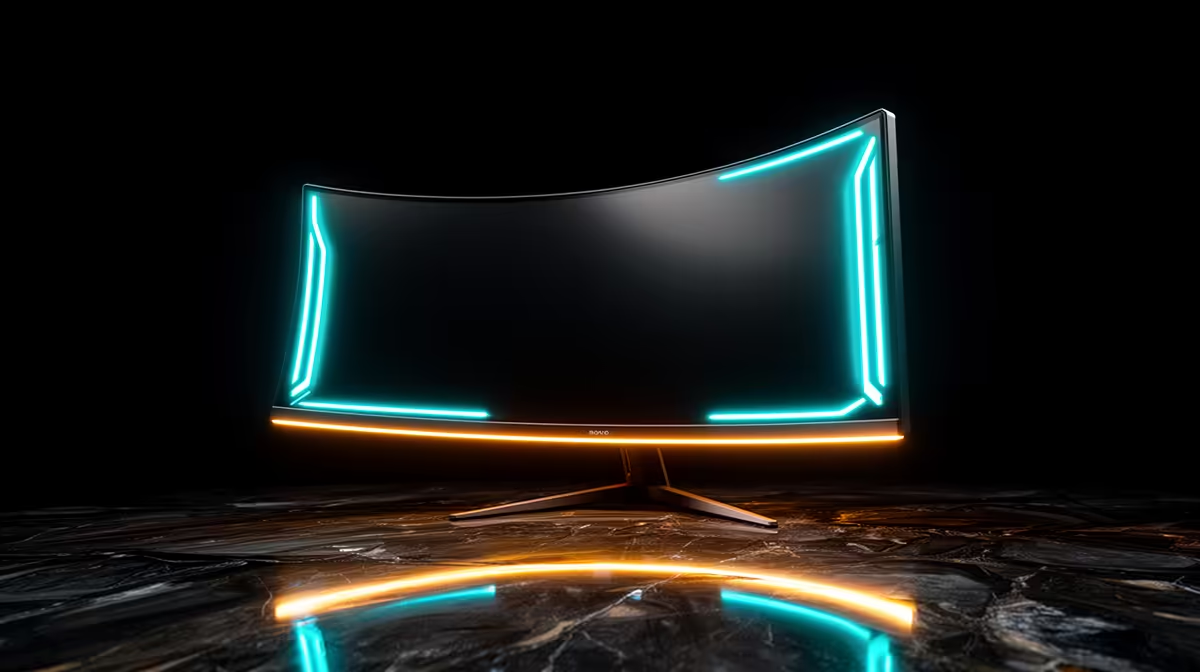
240Hz OLED panels still carry a premium in SA because OLED manufacturing is costly, supply is limited, and burn-in mitigation adds complexity — so a 240Hz OLED sits well above a 240Hz IPS of the same size. The OLED's true blacks and 0.03ms response are excellent, but a fast 240Hz IPS gives most of the competitive benefit for less.
Why OLED stays expensive
OLED uses self-lit pixels, which deliver perfect blacks and near-instant response but are expensive to manufacture at scale, especially at high refresh rates. Limited panel supply and the engineering to reduce burn-in keep prices high. In SA, import and exchange-rate factors add further to the cost. The result is that 240Hz OLED remains a premium tier rather than a mainstream default.
Is the premium worth it?
For pure esports, a 240Hz IPS panel already provides the fast refresh and low motion blur that competitive play needs, so the OLED premium buys image quality more than raw advantage. If you also play story-driven games and value deep contrast and vivid colour, an OLED's picture is a genuine step up that may justify the cost. Either way, make sure your GPU pushes 240+ fps first — feeding the panel matters more than the panel type.
FAQ
Why are 240Hz OLED panels still expensive in SA?
OLED manufacturing is costly, supply is limited, and burn-in mitigation adds complexity, with import factors on top. That keeps 240Hz OLED a premium tier.
Is a 240Hz OLED worth it over IPS?
For image quality, yes — true blacks and 0.03ms response. For pure esports, a cheaper 240Hz IPS delivers most of the competitive benefit.
What matters more than panel type?
Feeding the panel. Ensure your GPU pushes 240+ fps before spending on the panel, since that determines whether you see the refresh benefit.
Before you buy
For competitive value, a 240Hz IPS panel beats an OLED with a weaker GPU — reserve the OLED premium for mixed gaming where contrast matters.