

Staring at your PC, waiting for a game to load while Eskom plays its favourite guessing game? We've all been there. Upgrading your storage is one of the best bangs for your buck, but the big question always pops up: NVMe vs SATA? In South Africa, choosing the right SSD can feel like a mission. Don't stress. This guide will break down exactly what you need to know to make your rig fly. 🚀
SATA SSDs: The Reliable Workhorse
Think of a SATA SSD as the trusty Toyota Hilux of storage. It’s reliable, gets the job done, and represents a massive leap from an old-school mechanical hard drive (HDD).
SATA (Serial ATA) is an older connection standard that has served us well for years. These drives typically come in a 2.5-inch rectangular shape and connect to your motherboard via a SATA cable for data and another for power. Their speed maxes out at around 550MB/s.
While that might not sound as flashy as NVMe speeds, it's still incredibly fast for everyday use and gaming. For many South African gamers, a good SATA drive offers the perfect balance of price and performance, especially for storing a large Steam library. If you're upgrading an older PC or need a high-capacity drive without breaking the bank, exploring 2.5-inch SSDs is a fantastic starting point.
Who Should Buy a SATA SSD?
- Budget-conscious builders: Get SSD speeds at a more affordable price per gigabyte.
- Gamers needing bulk storage: Load your massive game library without selling a kidney.
- Owners of older PCs: Most older motherboards will have SATA ports, making it a guaranteed compatibility win.
NVMe SSDs: The Formula 1 Racer ⚡
If SATA is the reliable bakkie, then NVMe (Non-Volatile Memory Express) is a Formula 1 car. It’s built for one thing: pure, unadulterated speed.
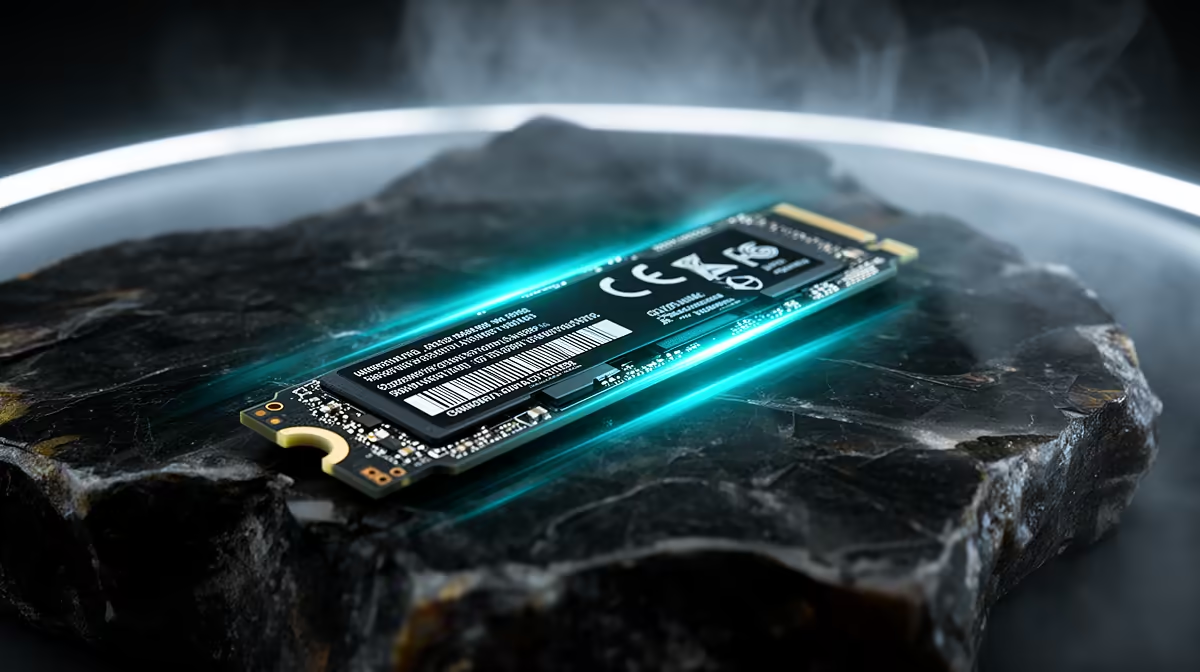
NVMe SSDs are a newer technology that uses the M.2 form factor—a small stick that plugs directly into your motherboard. This allows it to communicate via the super-fast PCIe bus, the same one your graphics card uses. The result? Mind-blowing speeds. A Gen4 NVMe drive can hit over 7,000MB/s, more than 12 times faster than a SATA SSD.
This speed is most noticeable when transferring massive files, booting up Windows, or working with high-resolution video. For gaming, the difference in load times between NVMe and SATA is often just a few seconds, but for performance enthusiasts who want the absolute best, those seconds count. If you're building a top-tier rig, a collection of blazing-fast NVMe SSDs is the only way to go.
Check Your Motherboard! 🔧
Before you buy an NVMe drive, check your motherboard's manual or product page. Make sure you have a free M.2 slot and confirm if it supports PCIe Gen3, Gen4, or the latest Gen5 speeds. Buying a Gen4 drive for a Gen3 slot will work, but it will run at the slower Gen3 speed.
NVMe vs SATA South Africa: The Real-World Verdict
So, which one is right for you? The NVMe vs SATA South Africa debate really comes down to your specific needs and budget.
For pure gaming, the jump from a hard drive to any SSD is the biggest performance boost you'll experience. The difference between a good SATA SSD and a high-end NVMe in game-loading screens is often smaller than you’d think.
However, if you're a content creator, a streamer, or someone who just hates waiting for anything, the raw speed of an NVMe is undeniable. Copying a 100GB game file can take minutes on SATA but mere seconds on a fast NVMe.
Ultimately, the best setup for many is a hybrid approach:
- A smaller, fast NVMe SSD for your operating system and favourite applications.
- A larger, more affordable SATA SSD for your game library and media files.
This strategy gives you snappy responsiveness for daily tasks and plenty of cost-effective space for everything else. Take a look at the full range of SSDs available in South Africa to compare prices and find the perfect fit for your build.
Ready to Upgrade Your Speed? Whether you choose the reliable power of SATA or the lightning speed of NVMe, the right drive is waiting for you. Check out the best SSD deals in South Africa for performance that leaves lag in the dust.











