

Building a new gaming rig in South Africa is an epic feeling. You've picked your parts, the excitement is building... but a nagging question pops up: is this setup truly future-proof? With all the buzz around the PCIe Gen 5 graphics card, it’s easy to wonder if you’re building on yesterday's tech. Let's cut through the noise and figure out what PCIe 5.0 means for your next powerhouse PC.
Understanding the PCIe 5.0 Leap
So, what exactly is PCIe, and why does the "Gen 5" part matter so much? Think of the PCIe slot on your motherboard as a high-speed highway connecting your graphics card to the rest of your PC. Each generation of PCIe effectively doubles the number of lanes on that highway.
A PCIe Gen 5 graphics card uses a connection that offers twice the bandwidth of the previous Gen 4 standard—a massive 128 GB/s. In theory, this means your GPU can communicate with your CPU and RAM faster than ever before, paving the way for incredible performance gains and eliminating potential bottlenecks. ⚡
Is a PCIe Gen 5 Graphics Card Worth It Right Now?
Here's the honest truth: for most gamers in 2024, the answer is... probably not yet. Even the most powerful GPUs available today, like the beastly RTX 4090, don't fully saturate a PCIe 4.0 slot in most gaming scenarios. The performance difference between running a top-tier card on a Gen 4 versus a Gen 5 slot is often negligible in real-world gameplay.
While the future is exciting, the present is packed with incredible value. The market is full of the latest graphics cards that deliver breathtaking performance on the well-established PCIe 4.0 platform. Think of it this way: you have a supercar, but the speed limit is still the same. You have the power, but the roads (games and software) haven't been built to demand it all just yet.
Check Your Motherboard First! 🔧
Before even thinking about a Gen 5 GPU, check your motherboard specifications. You need a motherboard with a physical PCIe 5.0 x16 slot to get the full benefit. Plugging a Gen 5 card into a Gen 4 slot will work, but it will run at the slower Gen 4 speeds, defeating the purpose of the upgrade.
The Real Advantage of a PCIe 5.0 Setup 🚀
So, if today's games don't need it, why bother? The argument for a PCIe Gen 5 graphics card setup is all about future-proofing. It's an investment in tomorrow's technology. As game developers start using technologies like Microsoft's DirectStorage more effectively, the ability to rapidly stream assets from ultra-fast NVMe SSDs directly to your GPU will become crucial. That's where PCIe 5.0's massive bandwidth will truly shine.
Both major players are gearing up for this shift. You can bet that future generations of powerful NVIDIA GeForce options will be designed to leverage this new standard. Likewise, the competing AMD Radeon lineup is also pushing the boundaries of what's possible. Leading manufacturers are already engineering cooling solutions and power delivery systems for these next-gen beasts, with some top-tier MSI models setting the standard for quality and innovation.
Planning Your Gen 5 Upgrade Path
Deciding on a PCIe Gen 5 graphics card isn't just about the GPU itself; it's about the entire platform. To build a true Gen 5 rig, you'll need:
- A PCIe 5.0 compatible motherboard.
- A modern CPU that supports the standard.
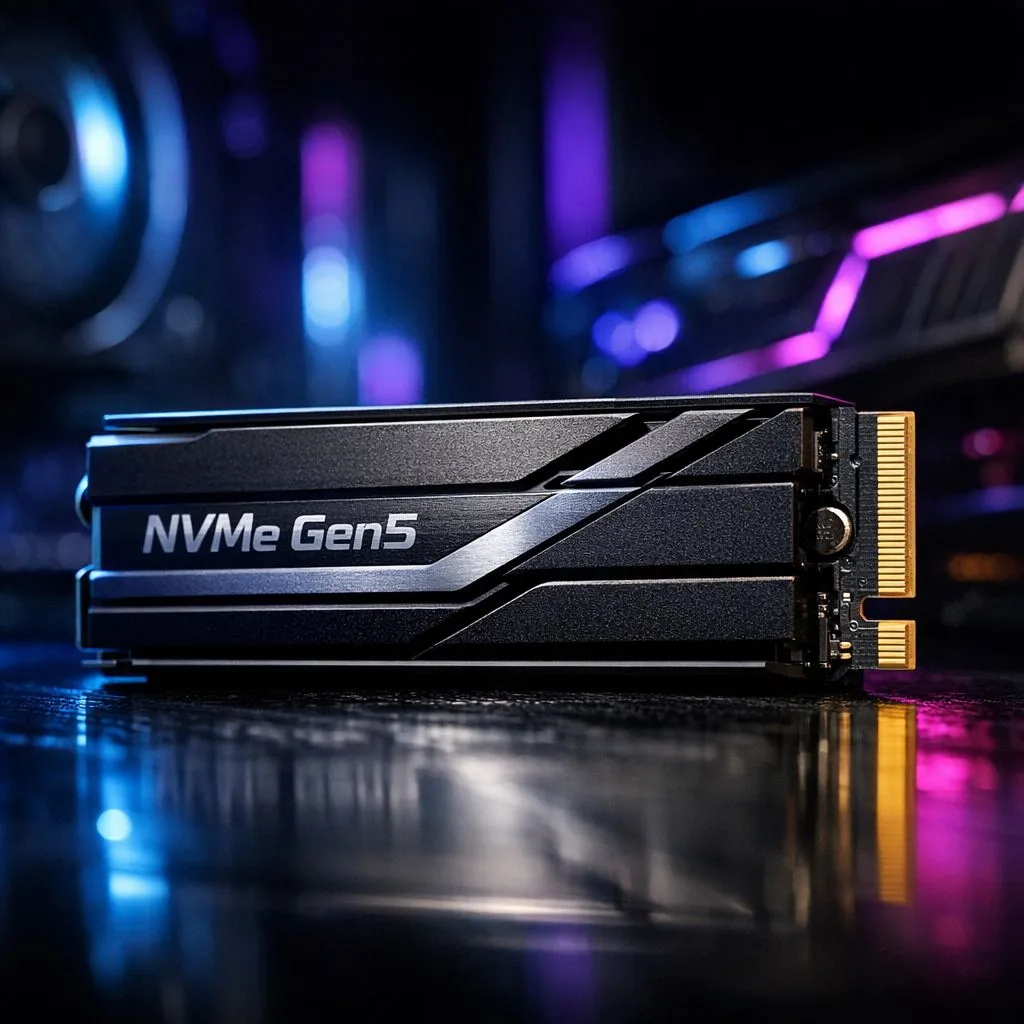
- Ideally, a PCIe 5.0 NVMe SSD to maximise data transfer speeds across the board.
If you're building a brand-new, no-compromise PC today that you want to last for years, investing in a Gen 5-ready motherboard is a smart move. It gives you a clear and simple upgrade path for when Gen 5 GPUs become the new standard. For everyone else, a solid PCIe 4.0 system still offers incredible performance and value for your hard-earned Rands. ✨
Ready to Unleash Next-Gen Power? Whether you're future-proofing with the latest tech or looking for the best bang-for-your-buck right now, the perfect GPU is waiting. A powerful PCIe Gen 5 graphics card is on the horizon, but today's champions are ready for battle. Explore our massive range of graphics cards and find the perfect heart for your gaming rig.











