We've all been there. Scrolling through Facebook Marketplace and seeing a "slightly used" RTX 3080 for a price that seems too good to be true. The temptation is real, especially with the high cost of new tech in South Africa. But is saving a few thousand Rand worth the risk? The debate over used vs new PC parts in South Africa is a big one. Let's break down when to grab a bargain and when to buy new.
The Allure of Used PC Parts: Big Savings, Bigger Risks
Let's be honest, the main reason anyone considers second-hand PC components is the price. You can potentially save thousands, stretching your budget to afford a higher-tier component than you could new. Finding a good deal feels like a massive win.
However, the risks are just as significant. You're often buying "voetstoots" (as is), with no warranty or returns. You don't know the component's history… was that GPU used for 24/7 crypto mining? Was that CPU aggressively overclocked? A cheap part that fails after a month is the most expensive purchase you can make.
The Case for New PC Components: Warranty & Peace of Mind
Buying new parts from a trusted retailer like Evetech completely flips the script. The biggest advantage? The manufacturer's warranty. If a component is faulty, you're covered. This peace of mind is priceless, especially when you're investing in the heart of your rig.
You also get guaranteed performance, the latest technology, and the satisfaction of unboxing a pristine piece of hardware. When considering whether to buy used or new PC components, the security and reliability of a new part often justify the extra cost.
A Part-by-Part Breakdown: What's Safe to Buy Used vs New?
The decision of buying used vs new PC parts isn't always black and white. It heavily depends on the specific component. Some parts are far safer to buy second-hand than others. Here’s our guide to navigating the market. 🔧
The "Almost Always Buy New" List ⚡
These are the components where the risk of failure is high and the consequences are severe. We strongly recommend buying these new.
- Power Supply Units (PSUs): A PSU is the heart of your PC, and a failing one can take every other component down with it. Internal capacitors degrade over time, reducing efficiency and stability. Don't risk your entire build; always invest in a reliable power supply with a solid warranty.
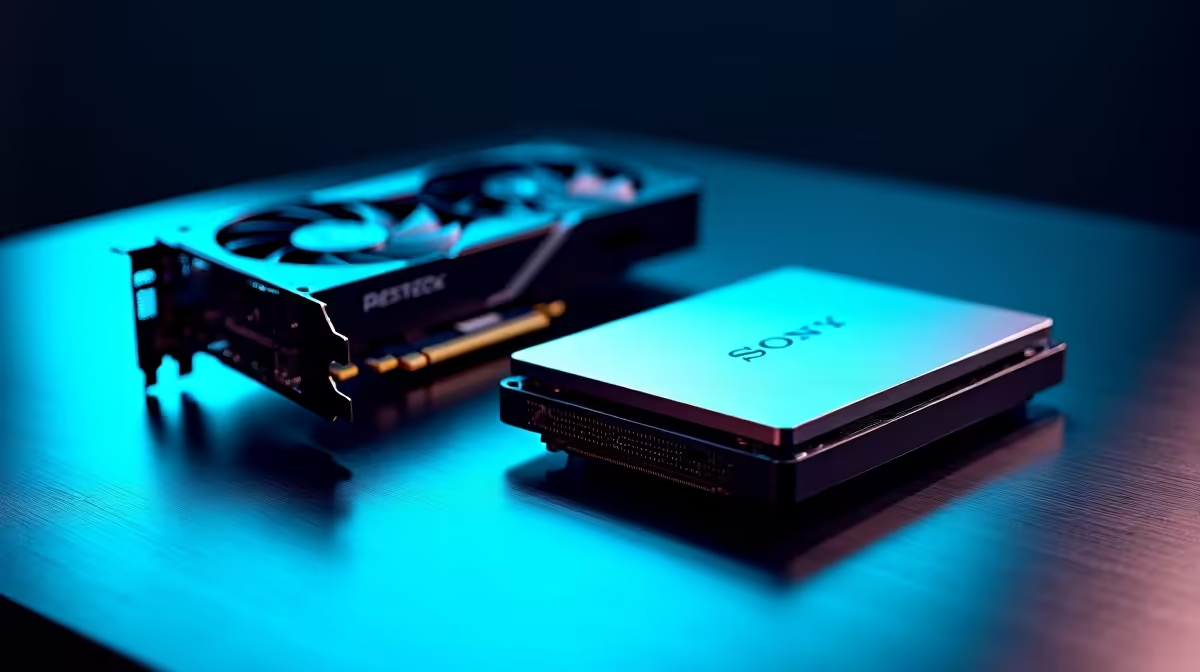
- Storage (SSDs & HDDs): Both SSDs and hard drives have a finite lifespan. SSDs have a limited number of read/write cycles, and you have no way of knowing how much life a used drive has left. For your OS and important files, the speed and reliability of new Solid State Drives is a non-negotiable.
- Motherboards: A used motherboard is a minefield of potential issues. Bent CPU pins, failing capacitors, or a corrupted BIOS can lead to endless troubleshooting. It's the complex central hub of your PC, and starting with one of the latest motherboards ensures compatibility and stability from day one.
The "It Depends" List 🤔
These components can be a calculated risk. If you can test them thoroughly and trust the seller, you might find a bargain.
- Graphics Cards (GPUs): This is the most tempting used part. A second-hand GPU can offer huge savings, but the risk of buying an abused ex-mining card is very real. These cards have often run at full tilt for years, significantly shortening their lifespan. Compare that risk to the guarantee you get with brand-new graphics cards.
- CPUs: Processors are incredibly durable as they have no moving parts. The main risk is physical damage during removal, like bent pins on an AMD chip. If it works, it will likely continue to work for years. Still, buying one of the modern CPU processors new eliminates any doubt.
- RAM: Like CPUs, RAM is quite resilient. The primary risk is incompatibility or hidden errors that only show up under specific loads. If you can get a good deal on a kit, it might be worth it, but new high-speed RAM kits are often affordable enough to justify buying new.
Used Part Inspection Tip 📝
If you're considering a used GPU, ask the seller to run a benchmark like FurMark or 3DMark Time Spy for 15-20 minutes while you're there. Watch for visual glitches (artefacts), overheating, or system crashes. This isn't a foolproof test, but it can help you spot a component that's on its last legs.
The "Usually Safe to Buy Used" List ✅
These parts are low-risk and great candidates for saving some cash on your build.
- PC Cases: A case is essentially a metal box. As long as it isn't badly dented and all the panels are there, you're good to go. A quick clean can make a used case look brand new. You can put the money you save towards a better component, and still end up with a sleek PC case.
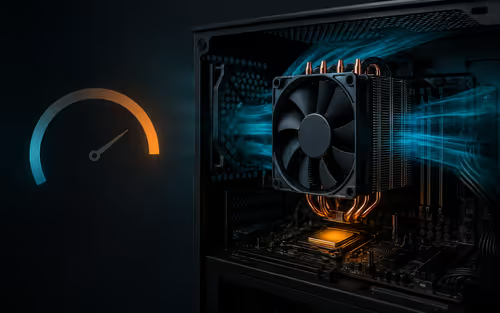
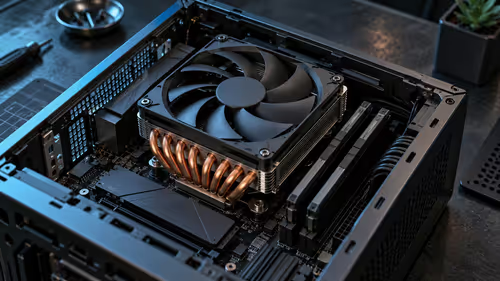
- CPU Coolers: Air coolers, in particular, are very simple. They're just a heatsink and a fan. As long as the fan spins and the mounting hardware is included, it's a safe bet. Just be sure to clean off the old thermal gunk and apply some fresh thermal paste. An efficient CPU cooler is crucial, and a used high-end model can be a steal.
The Smart Middle-Ground: Upgrade Bundles 🚀
Feeling overwhelmed by the choices? There's a brilliant middle path. An upgrade bundle combines a new motherboard, CPU, and RAM, all pre-tested for compatibility. This approach eliminates the biggest risks of a DIY build while still offering great value. It’s the perfect solution if you want to make a significant performance jump without the headache, taking the guesswork out of choosing core components. For many South African builders, these Intel and AMD-based bundle packs are the smartest way to upgrade.
Ultimately, the choice between used and new PC parts in South Africa comes down to your budget and risk tolerance. While a used case or cooler can be a savvy way to save money, the core of your system—the PSU, motherboard, and storage—is best bought new for the warranty and peace of mind.
Ready to Build with Confidence? The used vs new PC parts debate is complex, but for guaranteed performance, a full warranty, and zero headaches, nothing beats brand-new components. Explore our massive range of PC components and build the rig of your dreams the smart way.