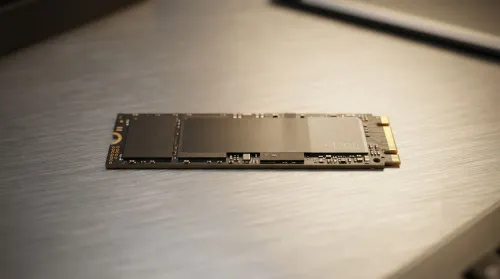
Artificial intelligence isn't just for mega-corporations anymore. Here in South Africa, techies and gamers are diving headfirst into AI, using their powerful rigs to generate art, run local language models, and experiment with code. But as you start downloading bigger datasets and saving complex models, you hit a wall... a storage wall. Suddenly, your trusty old drive isn't just slow; it's a bottleneck holding your creativity back. So, what are the best AI data storage solutions available locally?
Why Your Storage Is Crucial for AI Performance
When you're working with AI, your computer is constantly reading and writing massive amounts of data. Training a model involves feeding it gigabytes (or even terabytes) of information, while running inference means loading multi-gigabyte models into memory. This isn't like loading a game once; it's a relentless, high-demand workload.
Your storage speed directly impacts how quickly these tasks happen. A slow drive means your powerful GPU is sitting idle, waiting for data to process. This is why understanding the different tiers of AI data storage solutions is essential for anyone serious about AI projects. It's not just about capacity; it's about speed, endurance, and having the right drive for the right job. 🚀
Finding the Right AI Data Storage Mix
There’s no single "best" drive for AI. The optimal setup is a tiered strategy that balances speed and cost. Think of it as a workflow: from ultra-fast active project storage to massive, affordable long-term archives.
Tier 1: NVMe SSDs for Active Work
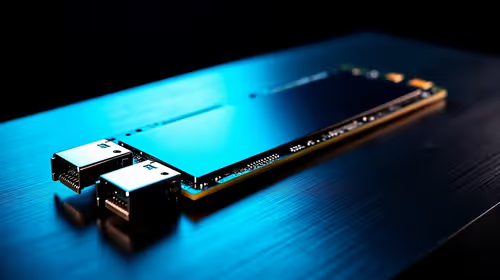
For your operating system, AI software, and the dataset you're currently training, nothing beats the raw speed of a Gen4 or Gen5 NVMe SSD. These drives offer phenomenal read/write speeds, ensuring your processor and GPU are fed data as fast as they can handle it. When every second counts, an NVMe is non-negotiable. Most modern high-performance NVIDIA gaming PCs come equipped with these as standard, making them a great starting point for AI exploration.
Tier 2: SATA SSDs for Warm Storage
What about datasets you use often but aren't actively training right now? A larger, more affordable SATA SSD is perfect. It provides a significant speed boost over a mechanical hard drive without the premium price of a top-tier NVMe. This is the ideal place to keep your library of models and cleaned datasets ready to go. Many customisable AMD gaming rigs offer flexible storage configurations, allowing you to easily add a large SATA SSD alongside a primary NVMe.
Tiered Storage Pro Tip ⚡
an efficient AI workflow, partition your storage logically. Use a fast NVMe SSD (C:) for your OS and software. Use a second NVMe or large SATA SSD (D:) for active projects and datasets. Finally, use a large capacity Hard Disk Drive (E:) for archiving raw data, old projects, and model checkpoints. This keeps things organised and ensures your fastest storage is always available for the most demanding tasks.
Tier 3: HDDs for Cold Archiving
AI generates a colossal amount of data. From raw, unprocessed datasets to multiple versions of trained models, you need a place to store it all without breaking the bank. This is where traditional Hard Disk Drives (HDDs) still shine. ✨ They offer the lowest cost per terabyte, making them the perfect solution for long-term archival. For professional data scientists or those running complex simulations, investing in purpose-built workstation PCs with massive HDD arrays is often the most practical approach to managing data archives.
Ultimately, the best storage for your AI projects depends on a smart combination of these technologies, creating a system that’s both incredibly fast and cost-effective.
Ready to Build Your AI Powerhouse? A powerful GPU is only half the story. The right storage strategy is what unlocks true AI performance. Whether you're upgrading your current rig or building a new one from scratch, we've got the hardware you need. Explore our huge range of PC components and build a machine ready for the future of AI.