So, you've jumped into the incredible world of AI-powered creativity. You're using Photoshop's Generative Fill, upscaling videos with Topaz, or letting DaVinci Resolve's AI tools handle the tedious bits. But there's a problem... it's slow. Painfully slow. If you're tired of staring at progress bars, your machine is likely the bottleneck. Understanding the specific AI editing hardware requirements is the first step to reclaiming your time and unlocking your creative flow. Let's dive in.
Key Hardware for AI Editing Performance
When you're building or upgrading a PC for AI-driven creative work, not all components are created equal. While a balanced system is always best, certain parts do much more of the heavy lifting. The right AI editing hardware requirements focus heavily on the graphics card, but the CPU and RAM play crucial supporting roles.
The GPU: Your AI Powerhouse 🚀
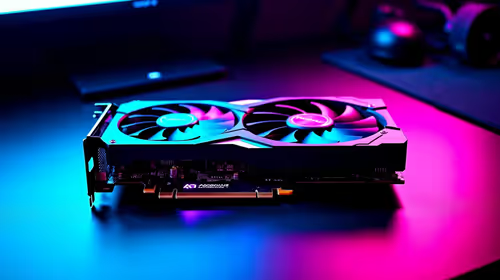
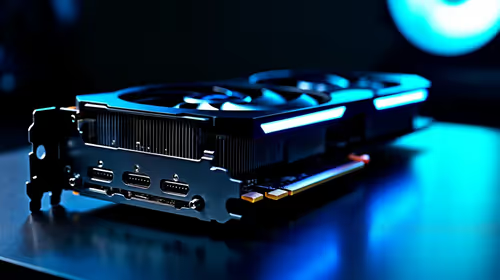
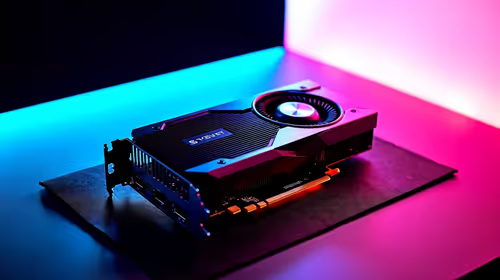
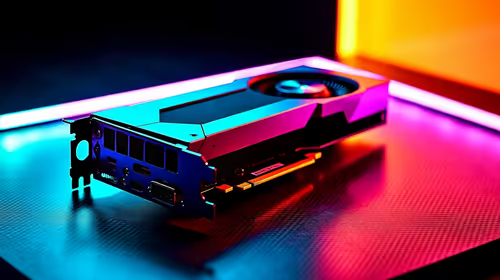
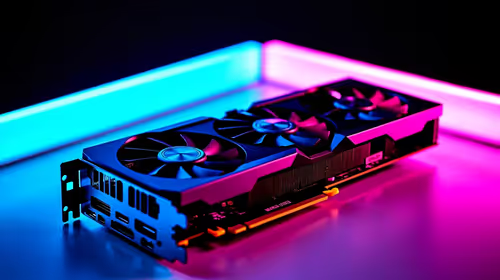
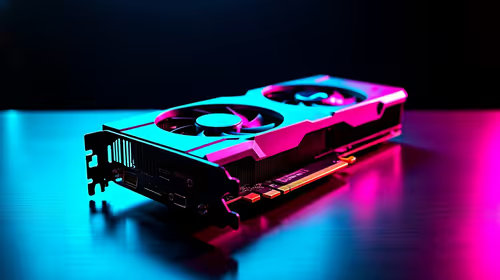
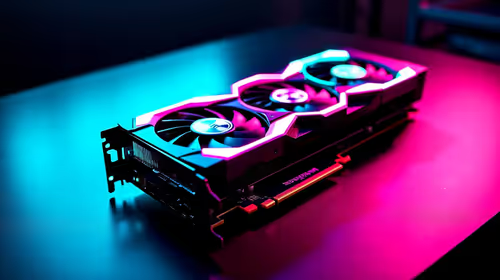
For the vast majority of consumer AI applications, the Graphics Processing Unit (GPU) is the single most important component. These tasks are built to run on the thousands of small cores inside a GPU, making them significantly faster than on a CPU alone.
- VRAM is King: Video RAM is the most critical factor. AI models are loaded directly into your GPU's VRAM. If you don't have enough, your system will be forced to use slower system RAM, causing performance to plummet. Aim for a minimum of 8GB of VRAM, with 12GB or more being strongly recommended for serious work.
- NVIDIA's Edge: While both brands are capable, NVIDIA's CUDA cores and dedicated Tensor Cores give them a significant advantage in many AI applications, which are often optimised for their architecture first.
If you're looking for a solid foundation, exploring the latest options in our AMD Ryzen PC deals can provide excellent multi-core performance to support a powerful GPU.
Check Your Software's Needs 🔧
Before you buy, check the recommended specs for the exact AI software you use most. Some tools, like Topaz Video AI, publish detailed benchmarks showing how different GPUs perform. This ensures you invest your money where it will have the biggest impact on your specific workflow.
The CPU: The Smart Director 🧠
While the GPU handles the raw parallel processing, the Central Processing Unit (CPU) manages the entire workflow. It preps data, sends instructions to the GPU, and handles all the other tasks your PC is running. A weak CPU will bottleneck even the most powerful GPU.
- Core Count & Clock Speed: A good balance is key. High clock speeds help with general responsiveness, while a higher core count (8 cores or more) is excellent for multitasking and feeding the GPU the data it needs. The latest processors are designed to handle these complex workloads efficiently.
A modern processor is a non-negotiable part of your PC needs for AI editing. You can find excellent options across our range of Intel PC deals, which offer a strong mix of single-threaded and multi-threaded performance.
RAM and Storage: The Essential Support Crew
Don't let your primary components be held back by slow memory or storage.
- System RAM: 16GB is the absolute minimum, but 32GB is the new sweet spot for creative professionals. This gives your operating system and AI applications enough breathing room to operate without constantly swapping data to your drive.
- Storage: A fast NVMe SSD is essential. It dramatically reduces loading times for your OS, applications, and the large project files you'll be working with.
Getting started doesn't have to break the bank. Many of our custom-built PCs under R20,000 offer a fantastic upgrade path, allowing you to start with a solid foundation and add more powerful components later.
Building Your Ideal AI Editing PC ✨
Fulfilling your AI editing hardware requirements is about creating a balanced and powerful system. Prioritise getting the best GPU with the most VRAM you can afford, support it with a modern CPU with at least 8 cores, and ensure you have a minimum of 16GB of RAM (preferably 32GB) and a fast NVMe SSD. This combination will transform your creative process from a frustrating wait into a seamless, inspiring experience.
Ready to Unleash Your AI Creativity? Understanding AI hardware is the first step. The next is getting a machine that crushes render times and lets your ideas flow. Explore our massive range of Gaming PCs and find the perfect, customisable rig for your AI-powered workflow today!