So, you’ve built a monster AI rig. It chews through datasets and renders complex models in minutes. Amazing, right? If a UPS is required, size it for a controlled shutdown against the measured load of the complete setup. High-performance computing can be power-hungry, but understanding and managing your AI workstation power consumption is crucial in South Africa. Let’s look at how you can tame that beast and keep your Eskom bill from spiralling out of control. 🔌
What Drives AI Workstation Power Consumption?
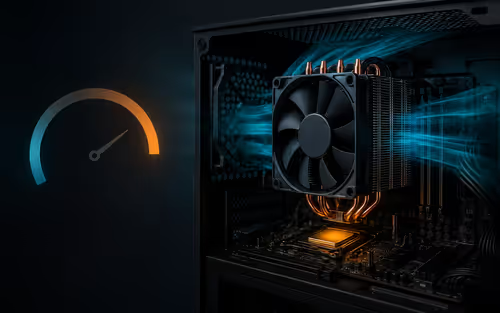
Before we can optimise, we need to know where the watts are going. The power draw of an AI PC isn't constant; it spikes dramatically under load. The two biggest culprits are, without a doubt, your graphics card (GPU) and your central processing unit (CPU).
- The GPU: This is the heart of any AI or machine learning workstation. A top-tier card like an NVIDIA RTX 4090 can pull over 450W on its own when training a model.
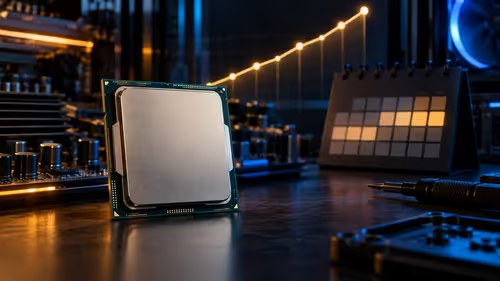
- The CPU: While less demanding than the GPU during AI-specific tasks, a high-core-count processor can still draw a significant amount of power, often exceeding 200W under full load.
- Other Components: RAM, storage, and cooling systems all add to the total. While individually small, they contribute to the overall AI workstation power consumption.
Choosing Hardware for Power Efficiency
Building a powerful yet efficient rig starts with smart component choices. You don't always have to sacrifice performance for a lower electricity bill. It's about finding the right balance.
The GPU and CPU Battle
Modern GPUs are engineering marvels, designed to deliver incredible performance per watt. NVIDIA's latest architecture, found in their powerful yet efficient GeForce gaming PCs, offers excellent efficiency thanks to features like Tensor Cores that are optimised for AI workloads.
Similarly, AMD has made huge strides. The RDNA architecture in their latest cards delivers a competitive punch without needing a miniature power station to run. Many of our custom-built AMD Radeon gaming PCs are configured to offer a fantastic blend of raw power and sensible energy use.
PSU Pro Tip ⚡
Don't cheap out on your Power Supply Unit (PSU)! An 80 Plus Gold or Platinum-rated PSU is more efficient, meaning less electricity is wasted as heat. It might cost a few hundred ZAR more upfront, but it pays for itself over time by reducing your total system power draw from the wall.
Practical Tips to Lower Your PC's Power Draw
Hardware is only half the story. How you use your machine day-to-day can have a massive impact on its electricity usage. Here are a few simple tweaks to manage your AI workstation power consumption.
1. Optimise Your Windows Power Plan
Windows gives you direct control over your PC's power profile.
- Go to Settings > System > Power & battery.
- Switch the Power mode to "Balanced" or "Best power efficiency" when you're not running intensive tasks like training a model or rendering. The "Best performance" mode keeps your hardware running at higher clocks, consuming more power even when idle.
2. Undervolting (For the Brave) 🔧
For advanced users, undervolting your CPU or GPU can significantly reduce power consumption and heat with a minimal, sometimes non-existent, performance loss. It involves using software like MSI Afterburner to supply the component with slightly less voltage than its factory setting. It requires careful testing but can be incredibly effective.
3. Software and System Hygiene
A clean system is an efficient system. Unnecessary background processes and startup applications can keep your CPU ticking over, consuming watts for no reason. Regularly review what's running and disable anything you don't need. This small step helps lower the baseline power draw of your AI workstation.
Ultimately, the best way to ensure an optimised balance between performance and power draw is to start with a well-configured system. An expertly built machine considers how each component works together, ensuring the PSU is perfectly matched and the cooling is adequate for the job. This holistic approach is key to building a rig that excels at AI tasks without becoming an energy liability. For a solid foundation, check out our specialised custom-built workstation PCs. ✨
Ready to Build an Efficient AI Powerhouse? Taming your electric bill doesn't mean sacrificing performance. It's about making smart choices from the start. Browse our massive range of PC components and build a machine that balances raw power with efficiency.