So, you've heard the buzz about DeepSeek, the AI that’s writing code faster than a Jozi taxi in the fast lane. It's powerful, it's smart, and it promises to revolutionise how we work. But here’s the real question for us in South Africa: can your current PC even handle it? 🤖 Before you dive in, understanding the DeepSeek hardware requirements is crucial. Let's break down what you actually need to run this AI magic locally.
Understanding the Core Hardware Requirements for DeepSeek
At its heart, DeepSeek is a large language model (LLM), similar to the tech behind ChatGPT. When you run it on your own machine, your PC's components are doing the intense calculations. The performance you get isn't about your internet speed... it's about raw local processing power.
The most important thing to realise is that not all AI tasks are equal. Experimenting with a small, pre-trained model has very different system requirements than fine-tuning a larger, more complex one. For South African developers, creators, and enthusiasts, getting the hardware balance right from the start saves a lot of frustration (and money). The GPU, without a doubt, is where you should focus most of your attention and budget.
The GPU: Your AI Powerhouse 🚀
When it comes to AI, the Graphics Processing Unit (GPU) is the undisputed champion. It’s designed for parallel processing, which is exactly what machine learning models thrive on. The single most critical specification? VRAM (Video RAM). Think of VRAM as the GPU's personal workspace. The bigger the model you want to run, the more VRAM you need to load it.
VRAM is King
- 8GB VRAM: A decent starting point for experimenting with smaller models. You can run them, but you might face limitations.
- 12GB-16GB VRAM: This is the sweet spot for many users. It provides enough memory to handle more capable models without breaking the bank.
- 24GB+ VRAM: If you're serious about AI development or want to run the biggest, most powerful models, this is the territory you need to be in.
NVIDIA's CUDA technology has a massive head start in the AI world, making their cards the go-to choice for compatibility and performance. Because of this, powerful NVIDIA GeForce gaming PCs are often the top choice for running local AI. While AMD is making strides, you'll generally find a smoother experience in the NVIDIA ecosystem for now.
CPU, RAM, and Storage: The Supporting Cast
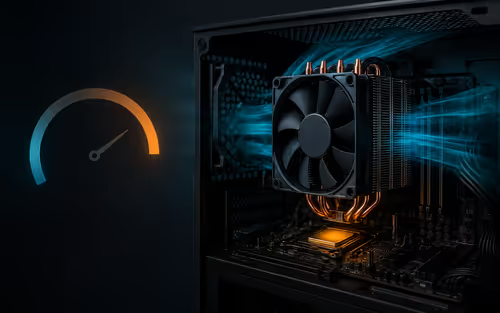
While the GPU steals the spotlight, the rest of your system components play vital supporting roles. Neglecting them can create bottlenecks that cripple your AI performance, even with a top-tier graphics card. A well-balanced system is key to meeting the full DeepSeek hardware requirements.
Key Components to Consider
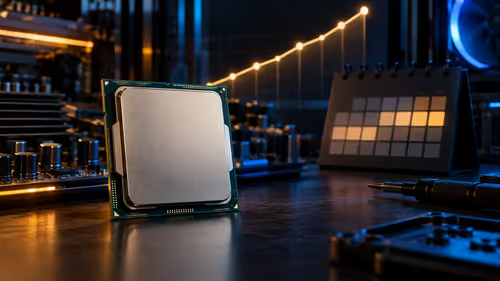
- CPU (Processor): You don't need the absolute best, but a modern processor with multiple cores (like an Intel Core i5/i7 or AMD Ryzen 5/7) is important for managing data and keeping the whole system responsive while the GPU is under load.
- System RAM: This is different from your GPU's VRAM. For AI work, 32GB of fast DDR4 or DDR5 RAM is a solid baseline. If you're handling large datasets, upgrading to 64GB is a smart move.
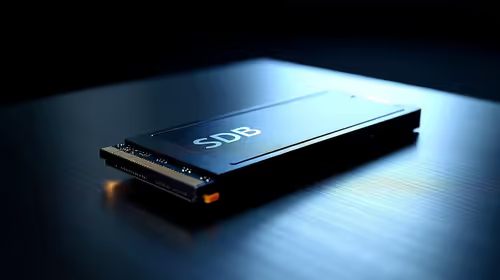
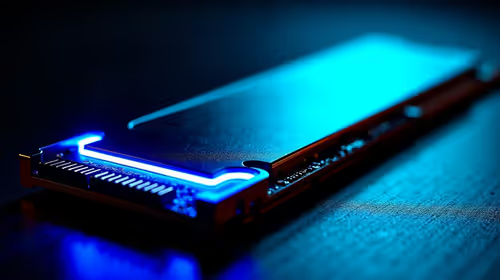
- Storage: AI models are massive files. A fast NVMe SSD is non-negotiable. It drastically reduces loading times for models and datasets, getting you to work faster. A 1TB NVMe drive is a good starting point.
Check Your VRAM Usage 🔧
When running an AI model, use a tool like GPU-Z or the NVIDIA SMI command-line interface (nvidia-smi) in your terminal. This allows you to see exactly how much VRAM the model is consuming in real-time. If you're constantly hitting your VRAM limit, it's a clear sign you need a GPU with more memory for the tasks you're running.
While a high-end gaming PC can be a fantastic AI machine, don't count out a powerful AMD Radeon gaming PC, especially for those who balance productivity with high-fidelity gaming.
Recommended PC Tiers for DeepSeek in South Africa
So, what does a good PC for DeepSeek look like? For truly demanding, professional AI workloads where you're training models or running them for hours on end, you're entering the realm of dedicated workstation PCs. These machines are built with components designed for sustained, heavy-duty computation and reliability.
For most users, however, a well-specced gaming or creator PC will do the job beautifully. Here’s a quick breakdown:
- Entry-Level AI PC: An NVIDIA GeForce RTX 4060 (8GB), a modern 6-core CPU, 32GB of DDR4/DDR5 RAM, and a 1TB NVMe SSD. Perfect for learning and experimenting.
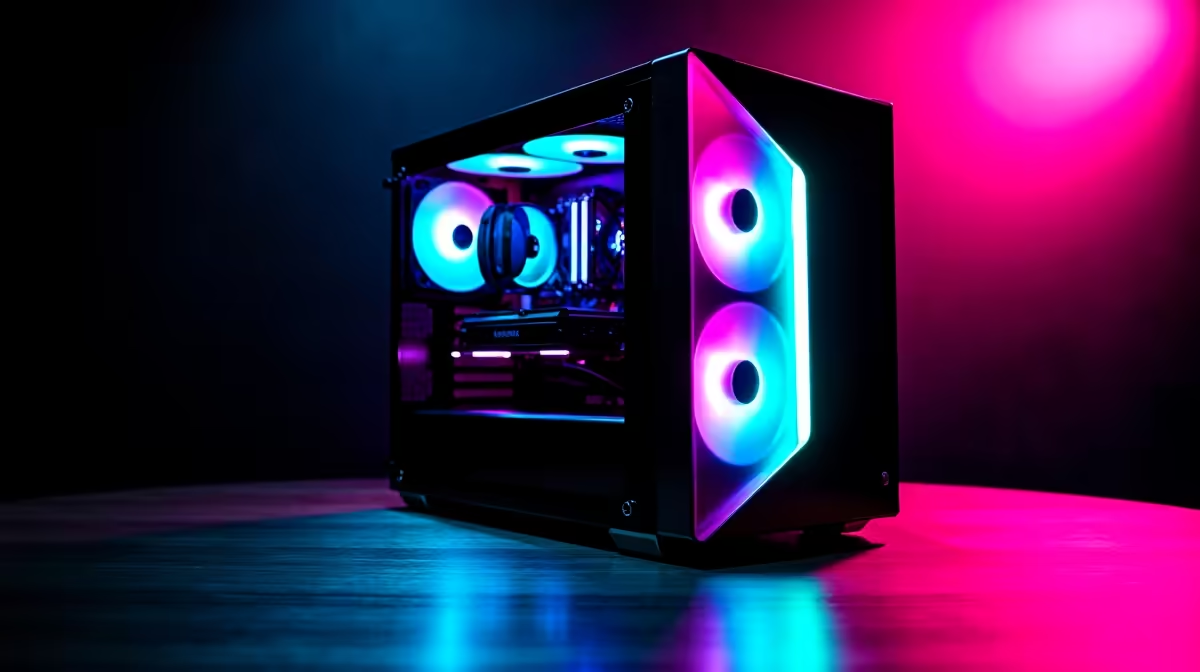
- The Sweet Spot: An NVIDIA GeForce RTX 4070 SUPER (12GB), an 8-core CPU, 32GB of fast DDR5 RAM, and a 2TB NVMe SSD. This build offers an excellent price-to-performance ratio for serious hobbyists and professionals.
- The Power User Rig: An NVIDIA GeForce RTX 4090 (24GB), a high-end Core i9 or Ryzen 9 CPU, 64GB+ of DDR5 RAM, and multiple terabytes of NVMe storage. This setup will handle almost any publicly available model you can throw at it.
Ready to Build Your AI Machine? Getting the right DeepSeek hardware requirements can feel complex, but the power to run cutting-edge AI locally is within reach. For maximum performance, choice, and value in South Africa, a purpose-built PC is the clear winner. Explore our massive range of customisable PCs and build the perfect machine to code, create, and conquer.