So, you’ve dived into the world of DeepSeek, ready to revolutionise your coding or creative workflow. The power is incredible… when it works. But what happens when you’re hit with random crashes, cryptic error messages, or a system slowdown that makes your PC feel like it’s wading through treacle? You’ve likely stumbled into the frustrating world of DeepSeek software conflicts. Don’t stress, we’re here to help you troubleshoot the problem, boet. 🔧
Understanding Common DeepSeek Software Conflicts
Before you can fix the issue, you need to know what you’re looking for. A "software conflict" happens when two or more programs on your PC try to use the same system resources in an incompatible way. For a powerful tool like DeepSeek, which leans heavily on your GPU and system memory, this can happen easily.
Common culprits behind issues with DeepSeek often include:
- Outdated Graphics Drivers: The number one cause. AI models need the latest driver optimisations to run correctly.
- Overzealous Antivirus: Security software can sometimes mistake DeepSeek's processes for something malicious.
- Competing Software: Running other resource-heavy applications or even other AI tools simultaneously can cause chaos.
- System Resource Bottlenecks: Not enough RAM or, more importantly, VRAM (your GPU’s dedicated memory).
Your Step-by-Step Troubleshooting Guide
Let’s work through the most common fixes, from simplest to most involved. Start at the top and see if it resolves your specific DeepSeek software conflict.
Step 1: Update Your Graphics Drivers
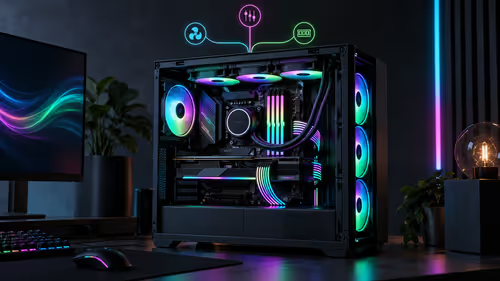
This is the golden rule of PC gaming and AI work. Both NVIDIA and AMD regularly release driver updates that include crucial performance improvements and bug fixes for new applications. Running an old driver is the fastest way to encounter problems. Whether you’re running a cutting-edge NVIDIA GeForce gaming PC or another powerful rig, make sure you’re on the latest version.
- For NVIDIA: Use the GeForce Experience app or download directly from their website.
- For AMD: Use the Adrenalin Software suite.
Always perform a "Clean Installation" if the option is available. This removes old driver files that could cause lingering issues.
Step 2: Check Your Antivirus and Firewall
Is your antivirus putting DeepSeek in jail? It's possible. Because AI tools can perform complex operations, some security programs get suspicious and block them.
Temporarily disable your antivirus and firewall and try running DeepSeek again. If it works, you’ve found the problem! Don’t leave your security disabled, though. Instead, go into your antivirus settings and add DeepSeek's installation folder to the "exceptions" or "allow list." This tells your security software to trust it.
Check Your VRAM Usage 💡
On Windows, open Task Manager (Ctrl+Shift+Esc), go to the 'Performance' tab, and click on your GPU. You can see your 'Dedicated GPU Memory Usage' here. If it's maxed out while running DeepSeek, that's a major sign your hardware is the bottleneck, often leading to crashes that look like software conflicts.
Step 3: Isolate the Environment
If you're using DeepSeek for coding, package conflicts are a massive headache. You might have one version of a library that DeepSeek needs and another version that a different project requires. The solution is to use virtual environments. Tools like Python's venv or Conda create isolated spaces for each project, ensuring their dependencies don’t clash. It's a best practice that can save you hours of troubleshooting. Managing these resources is critical, especially on high-end AMD Radeon gaming PCs where you're trying to maximise performance.
When It’s Not a Conflict… It’s a Bottleneck 🚀
Sometimes, what appears to be a DeepSeek software conflict is actually your hardware struggling to keep up. Local AI models are incredibly demanding. If your CPU is old, you have limited RAM, or your graphics card has minimal VRAM, your system will buckle under the pressure, resulting in crashes and errors.
If you’ve tried all the software fixes and DeepSeek is still unstable, it might be time to consider if your machine is truly up to the task. For serious, professional-grade AI development, coding, and content creation, purpose-built workstation PCs are specifically designed with the powerful processors, massive RAM capacities, and high-VRAM GPUs needed to handle these demanding workloads without breaking a sweat.
Ready to Eliminate AI Bottlenecks? Troubleshooting software is one thing, but sometimes your hardware just isn't up to the task. For seamless AI performance, a powerful, purpose-built machine is key. Explore our range of high-performance Workstation PCs and find the perfect rig to power your ambitions.