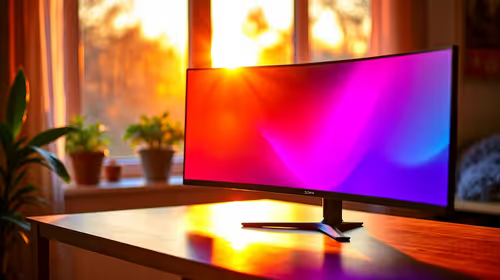
Ever been in a frantic firefight in Warzone, only for the screen to turn into a blurry mess? You’re not alone. High refresh rates help, but what if your monitor could... invent new frames to smooth things out? That’s the wild promise of motion interpolation gaming monitors. But is this cutting-edge tech the future of fluid gameplay for South African gamers, or just a fancy feature with a fatal flaw? Let's dive in. 🚀
What Exactly is Motion Interpolation?
You might already know motion interpolation from your TV, where it's often called the "soap opera effect." It's the feature that makes movies look unnaturally smooth. In a gaming monitor, the concept is similar: the display's internal processor analyses two sequential frames from your graphics card and intelligently generates a new "in-between" frame.
The goal is to double the perceived frame rate. For example, it can take a 60 FPS signal and display it at 120 FPS, creating the illusion of smoother motion. This process, also known as Motion Estimation, Motion Compensation (MEMC), happens right inside the monitor, independent of your PC's GPU. It's a clever piece of engineering found across a growing variety of PC monitors today.
The Promise: Why Gamers Might Want It
The main appeal of a motion interpolation gaming monitor is visual fluidity. For cinematic, single-player adventures like Baldur's Gate 3 or Starfield, the effect can be stunning. It reduces the judder and blur that can occur when panning the camera, making the game world feel more solid and immersive. If your PC struggles to consistently hit a high frame rate, motion interpolation can artificially smooth over the performance dips, providing a more consistent visual experience.
This technology is becoming another feature to consider when browsing the landscape of all gaming monitors, promising liquid-smooth visuals even when your hardware isn't quite top-tier.
The Catch: Why Pro Gamers are Skeptical 🤔
Here's the trade-off, and it's a big one: input lag. Creating those extra frames takes processing time. This adds a small but noticeable delay between when you move your mouse or press a key and when you see the result on screen. In a casual RPG, a few extra milliseconds might go unnoticed. But in a competitive shooter like Valorant or CS2, that delay can be the difference between landing a headshot and staring at a respawn screen.
Furthermore, the technology isn't perfect. Fast-moving objects can sometimes exhibit visual "artefacts" or a ghostly halo as the processor struggles to generate a perfect intermediate frame. This is why many high-end 5K and 4K monitors designed for creative work and gaming often prioritise colour accuracy and response time over interpolation features.
Check for Game Mode ⚡
monitors with motion interpolation include a 'Game Mode' or low-latency setting. This typically disables heavy image processing, including interpolation, to minimise input lag. Always enable this mode for competitive gaming. It gives you the best of both worlds: smooth visuals for movies and raw speed for gaming.
So, Is a Motion Interpolation Gaming Monitor for You?
The decision really comes down to what you play and what you value most.
You might love it if...
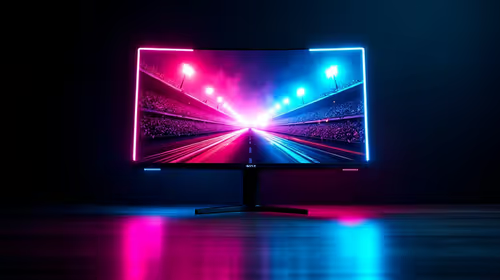
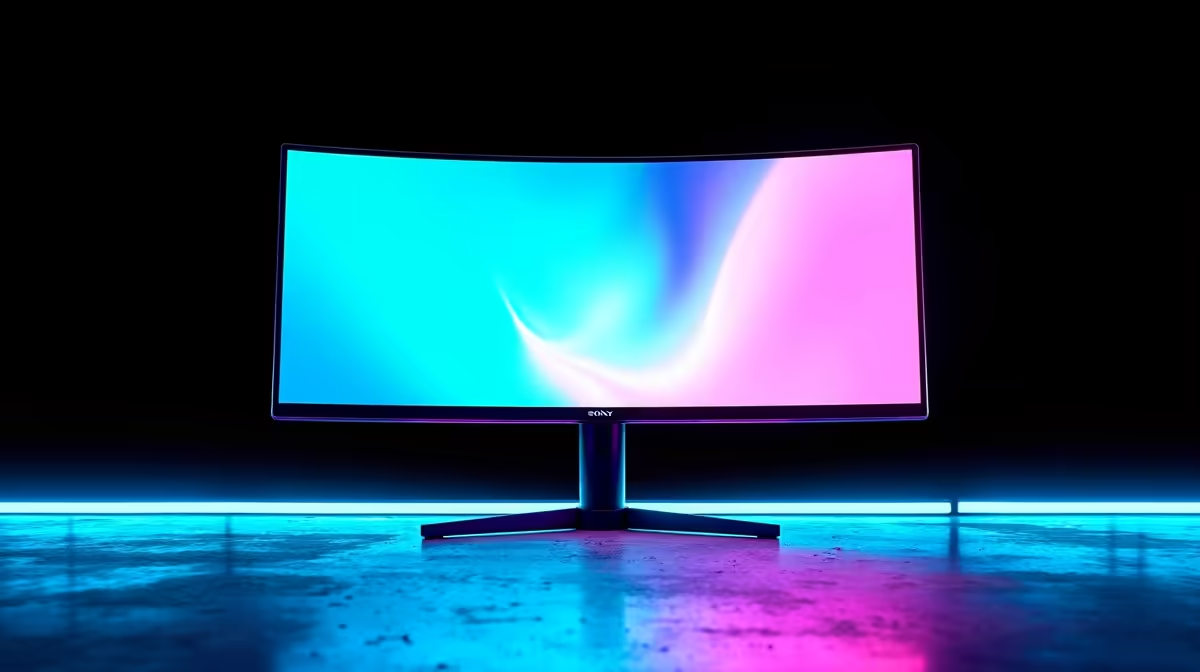
You're a single-player enthusiast who craves the smoothest possible visuals. The added immersion, especially on immersive curved monitors, can be a fantastic experience for story-driven games. It's a feature that showcases innovation in the display space, much like the rise of unique form factors such as portable monitors.
You should probably avoid it if...
You're a competitive gamer. For esports, nothing beats a high native refresh rate (144Hz and above) and the fastest possible pixel response time. The input lag from interpolation is simply a non-starter. Instead of relying on software tricks, your money is better spent on a monitor built for pure speed, paired with the right monitor accessories for a pro-level setup. If you're looking for the best performance for your budget, it's always wise to check out the best PC monitor deals available.
The Verdict on the Future of Smooth Gameplay
While the technology behind motion interpolation gaming monitors is fascinating, it's not the undisputed future... at least not yet. For the majority of South African gamers, especially those in the competitive scene, technologies like NVIDIA G-Sync and AMD FreeSync paired with a high-refresh-rate panel remain the gold standard for achieving smooth, tear-free, and responsive gameplay.
Motion interpolation is a niche feature with a specific audience. As the processing gets faster and input lag decreases, it may become more widespread. For now, view it as an interesting bonus for cinematic gaming, not an essential feature for victory.
Ready to Find Your Perfect Match? The world of gaming monitors is packed with tech, but for pure, responsive performance, a high-refresh-rate screen is tough to beat. Explore our massive range of PC monitor deals and find the perfect display to conquer your game.