You’ve seen the AI explosion. From creating wild images with Midjourney to getting help from ChatGPT, artificial intelligence is everywhere. But did you know the powerful graphics card in your gaming rig is the key to unlocking this world for yourself? Getting started with a GPU for AI in South Africa is easier than you think. This guide will break down what you need to know, helping you choose the right hardware without the technical jargon. 🚀
Why Your Gaming GPU is a Great Starting Point for AI
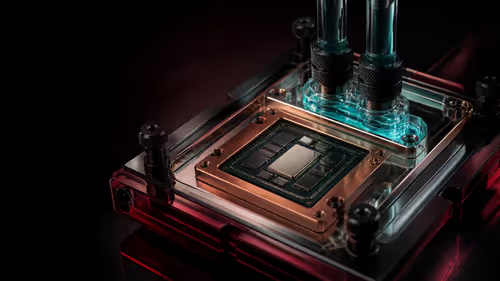
At their core, both gaming and AI rely on the same thing: massively parallel processing. A Graphics Processing Unit (GPU) is designed to handle thousands of simple tasks simultaneously, whether that’s rendering pixels in Helldivers 2 or crunching numbers for a machine learning model. This makes your gaming card a surprisingly capable tool for AI.
For years, NVIDIA has been the top choice for AI enthusiasts, thanks to its CUDA platform and dedicated Tensor Cores found in RTX cards. These features give them a serious edge in performance and software compatibility. If you're looking to dive deep into AI development, an NVIDIA GeForce-powered gaming PC offers a fantastic balance of price and AI-ready power right out of the box.
Key Specs for an AI GPU in South Africa
When you're browsing for a new graphics card or PC, a few specs matter more than others for AI tasks. Forget about clock speeds for a moment; let's focus on what really moves the needle.
VRAM: The More, The Better
Video Memory (VRAM) is arguably the single most important factor for AI. It determines the size and complexity of the AI models you can run and train. Running a large language model or generating high-resolution images requires a lot of VRAM.
- 8GB VRAM: A decent entry point for experimenting and learning.
- 12GB-16GB VRAM: The sweet spot for most hobbyists, allowing you to run popular models like Stable Diffusion comfortably.
- 24GB+ VRAM: Essential for serious training or working with cutting-edge, complex models.
CUDA Cores vs. Stream Processors
These are the workhorses of the GPU. NVIDIA calls them CUDA Cores, while AMD calls them Stream Processors. More cores generally mean faster processing. While NVIDIA's CUDA has wider support in the AI software world, AMD is making huge strides. For those on Team Red, a high-end AMD Radeon gaming PC can still be a powerful and cost-effective option, especially for tasks that aren't locked into the CUDA ecosystem.
Check Your VRAM Usage 🔧
Curious how much VRAM your current AI tools are using? On Windows, open Task Manager (Ctrl+Shift+Esc), go to the Performance tab, and select your GPU. You can monitor the "Dedicated GPU memory" usage in real-time. This is a great way to see if you're hitting your hardware's limits and need an upgrade!
Gaming PC or a Full-Blown Workstation?
So, is your gaming PC enough? For learning, tinkering, and running pre-trained models, absolutely! It's the perfect platform to start your AI journey. You get to explore the field without a massive initial investment. ✨
However, if your projects become more serious—like training custom models for hours or days on end, handling massive datasets, or commercial development—you might hit a ceiling. That’s where workstations come in. A dedicated workstation PC is built for stability, reliability, and sustained peak performance, often featuring professional-grade GPUs with even more VRAM and optimised drivers.
Choosing the right GPU for AI in South Africa comes down to your goals. Start with a capable gaming rig, see how far it takes you, and upgrade when your ambitions demand more power.
Ready to Power Your AI Ambitions? Whether you're starting your AI journey or scaling up a project, the right hardware makes all the difference. From powerful gaming rigs to dedicated workstations, we've got the perfect PC for your needs. Explore our range of custom-built PCs today and start creating.