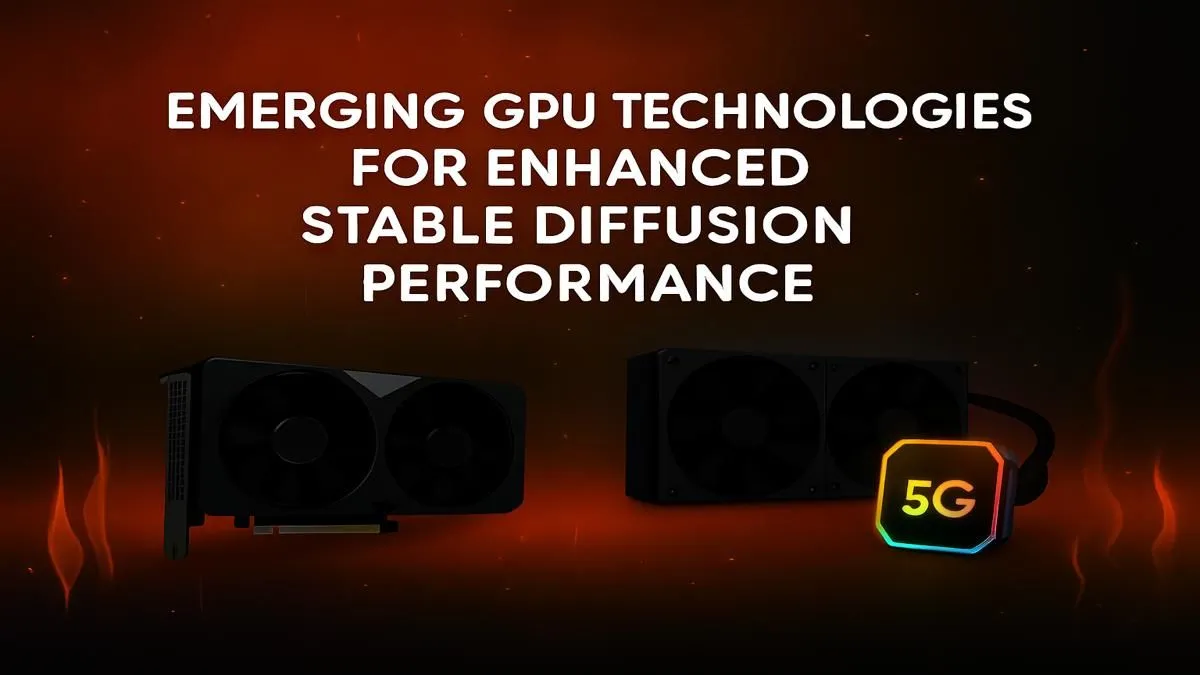
Ever typed a wild prompt into Stable Diffusion, dreaming of a photorealistic cyber-blesbok, only to wait... and wait... for your PC to catch up? You're not alone. In the incredible world of AI image generation, your graphics card is the engine. Choosing the right GPU for Stable Diffusion isn't just about faster renders; it's about unlocking your creative potential without the frustrating lag. Let's dive into what makes a GPU tick for AI art.
Why Your GPU is the Star Player for AI
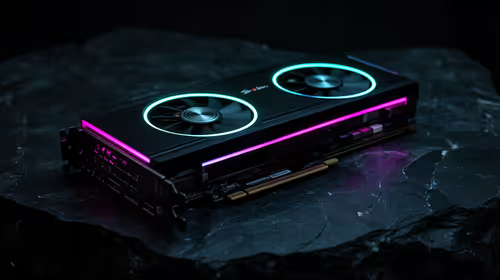
When you generate an image with Stable Diffusion, your computer performs millions of complex calculations. A CPU (Central Processing Unit) handles tasks one by one, like a focused cashier. A GPU (Graphics Processing Unit), however, works like an army of cashiers working in parallel. This parallel processing power is exactly what AI models need to work their magic quickly.
This is why upgrading to the right GPU for Stable Diffusion provides such a massive performance leap compared to any other component. Simply put, the more powerful the GPU, the faster you can turn your text prompts into stunning visuals. 🖼️
Key Specs for Peak Stable Diffusion GPU Performance
Navigating the world of graphics cards can feel overwhelming with all the jargon. For AI, you can cut through the noise by focusing on two critical factors: VRAM and processing architecture.
VRAM: Your Creative Canvas Size
Video Random Access Memory (VRAM) is the single most important spec for Stable Diffusion. It's the dedicated memory on your graphics card where the AI model, your image, and all the calculations are temporarily stored.
- 8GB VRAM: The absolute minimum. You can generate standard 512x512 images, but you might struggle with larger resolutions, complex models, or multitasking.
- 12GB VRAM: The sweet spot for most enthusiasts in South Africa. This gives you enough headroom for higher-resolution images (1024x1024), training custom models (LoRAs), and using more advanced features without constant errors.
- 16GB+ VRAM: The pro-tier. If you're serious about AI art and want to experiment with the largest models and fastest workflows, more VRAM is always better.
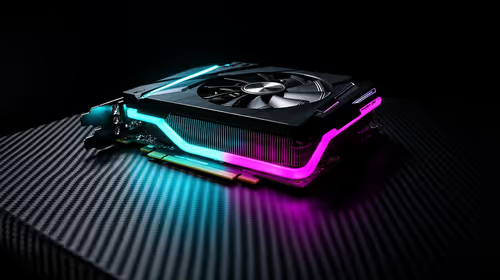
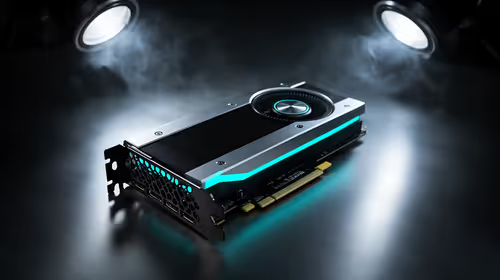
A huge variety of modern graphics cards have enough VRAM to get you started on your AI journey.
The NVIDIA CUDA Advantage ⚡
Currently, the vast majority of AI software, including Stable Diffusion and its popular interfaces, is built using NVIDIA's CUDA platform. This deep integration makes the current lineup of NVIDIA GeForce graphics cards the default "it just works" choice for most users, offering maximum compatibility and performance out of the box.
Optimise Your Settings 🔧
If you're running low on VRAM, don't despair! In the popular AUTOMATIC1111 web UI, you can add command-line arguments like --medvram or --lowvram to your startup file. This trades a bit of speed for lower memory usage, letting you create images that might otherwise crash. It's a great way to push your hardware further.
What About Team Red?
So, is an AMD card a viable GPU for Stable Diffusion? The answer is a promising "yes, but..." AMD has its own software platform (ROCm) and performance is improving rapidly. However, the setup process can be more complex, often requiring Linux or specific software versions. While the community is making huge strides, getting started with AMD Radeon graphics cards can involve more tinkering than their NVIDIA counterparts.
Finding the Right Card for Your Budget
The best GPU for Stable Diffusion is the one that fits your needs and your wallet.
- The Entry Point: An NVIDIA GeForce RTX 3060 with 12GB of VRAM is widely seen as the best-value starting point. It has enough VRAM for serious work without breaking the bank.
- The Enthusiast's Choice: Cards like the RTX 4070, 4070 Ti, or 4080 offer a significant jump in speed and more VRAM, cutting down your wait times dramatically.
- The Professional Powerhouse: For commercial use, massive datasets, or when every second counts, the RTX 4090 is the undisputed champion. For even more specialised workloads, dedicated workstation graphics cards with enormous VRAM pools become a serious consideration.
Ultimately, your journey into AI art is powered by your hardware. Investing in a capable GPU is the first and most important step to bringing your wildest ideas to life, one prompt at a time. 🚀
Ready to Unleash Your AI Creativity?
Choosing the right GPU is the single biggest step to faster, higher-quality AI art. Whether you're just starting out or building a professional rig, we've got the hardware to bring your imagination to life. Explore our complete range of graphics cards and find the perfect engine for your creative journey.