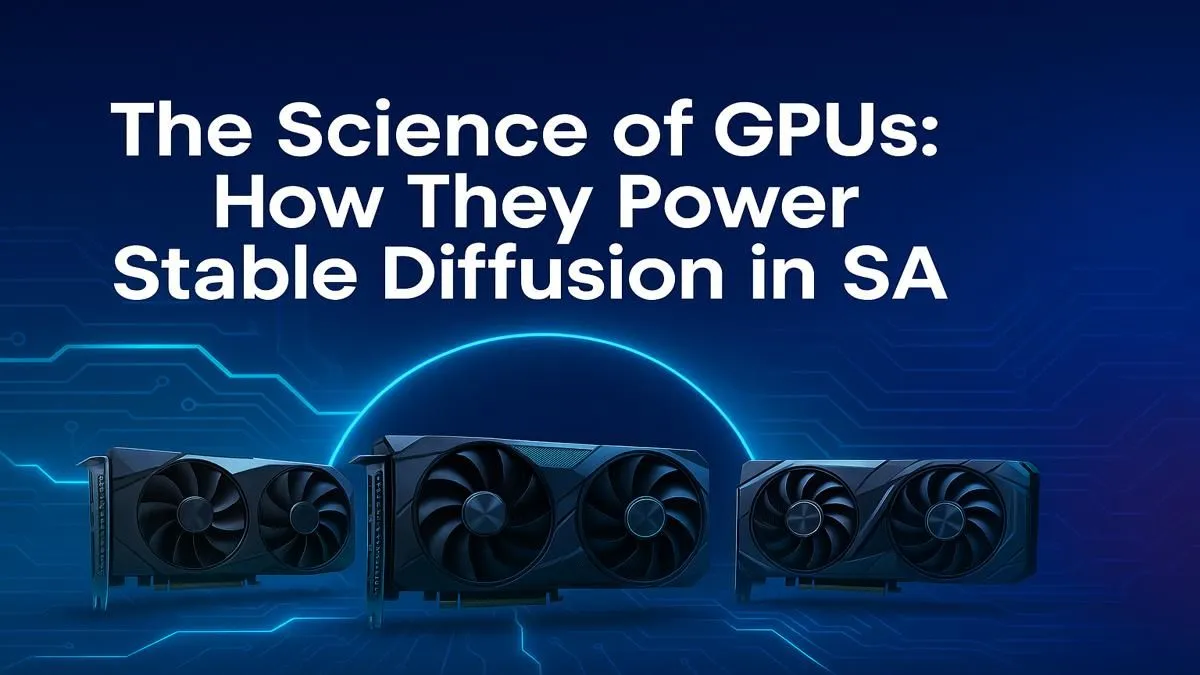
Ever typed a wild phrase like "a cyber-lion roaring on Table Mountain" and watched an AI generate a stunning image in seconds? That magic isn't happening in some distant cloud... it's powered by the beast in your PC: the graphics card. For South African creatives and gamers diving into AI, choosing the right GPU for Stable Diffusion is the key to unlocking this incredible new world. It’s not just about gaming anymore; your hardware is now your paintbrush. 🎨
Why Your GPU is the Engine for AI Art
At its core, AI image generation with models like Stable Diffusion involves billions of tiny calculations. It's a massively parallel task, meaning it needs to do thousands of things at once. Sound familiar? That's exactly what a graphics card is designed for. While your CPU handles tasks one by one, a powerful GPU for Stable Diffusion uses its thousands of cores to crunch the numbers simultaneously, turning your text prompt into a visual masterpiece in minutes, not hours.
The Key Specs for Your Stable Diffusion GPU
When you're hunting for the best hardware for AI, the usual gaming benchmarks don't tell the whole story. A few key specifications matter more than anything else.
VRAM: Your AI Canvas Size
Forget clock speeds for a moment. When it comes to AI, Video RAM (VRAM) is the single most important specification. Think of it as your digital canvas. More VRAM allows you to generate images at higher resolutions, create more images at once (batch size), and use more complex AI models without crashing. An 8GB card is a decent starting point, but 12GB or more is the sweet spot for serious creative freedom.
NVIDIA's CUDA & Tensor Cores: The Unfair Advantage?
Right now, NVIDIA holds a major advantage in the AI space thanks to its CUDA platform. Most AI tools, including Stable Diffusion, are heavily optimised for it. The Tensor Cores found in modern NVIDIA GeForce RTX graphics cards are specifically designed to accelerate AI calculations, giving you a significant speed boost. This makes an NVIDIA GPU a very reliable choice for AI image generation.
What About AMD? The Feisty Underdog
Don't count AMD out! Team Red has made huge strides. While setup can sometimes require a few more technical steps, many modern AMD Radeon graphics cards with their ample VRAM can be absolute powerhouses for AI. The community support is growing daily, making them a viable and often value-packed alternative for those willing to do a little tinkering. 🔧
Prompt Crafting 101 ✨
prompt is everything! Instead of just "a dog", try being more descriptive: "A photorealistic portrait of a happy golden retriever, wearing a tiny red bandana, sitting in a field of sunflowers, cinematic lighting, ultra-detailed". The more detail you give the AI, the more stunning your results will be. Experiment and have fun with it!
Choosing the Right GPU for Your AI Ambitions
Finding the perfect graphics card depends on your budget and goals. For many South African gamers, the good news is that your existing gaming GPU is likely a great starting point.
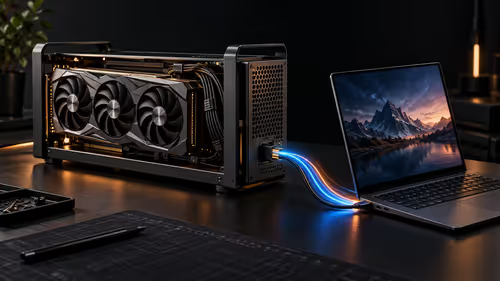
The NVIDIA RTX 3060 12GB remains a legendary value pick due to its generous VRAM. If you're looking for more power for both high-refresh-rate gaming and faster AI generation, the RTX 40-series offers incredible performance. For professional artists or data scientists running massive models, dedicated workstation graphics cards offer certified drivers and even more VRAM, but they come at a premium price.
Ultimately, the best choice is one that fits your needs and budget. The technology is moving fast, and there has never been a better time to explore the amazing options available. Diving into the full range of NVIDIA and AMD graphics cards is the best way to compare specs and find your perfect match.
The Final Word: Powering Your Creativity
Getting started with AI image generation is an exciting journey. It transforms your gaming PC into a limitless art studio. Remember the key takeaway: prioritise VRAM above all else. A card with 12GB or more will serve you far better than a slightly faster card with only 8GB. Your choice of a graphics card for Stable Diffusion is an investment in your own creativity. 🚀
Ready to Build Your AI Art Machine? Choosing the right GPU for Stable Diffusion is the first step towards creating incredible AI art. Whether you're upgrading your gaming rig or building a dedicated creative workstation, the perfect component is waiting. Explore our massive range of PC components and find the engine for your imagination today.