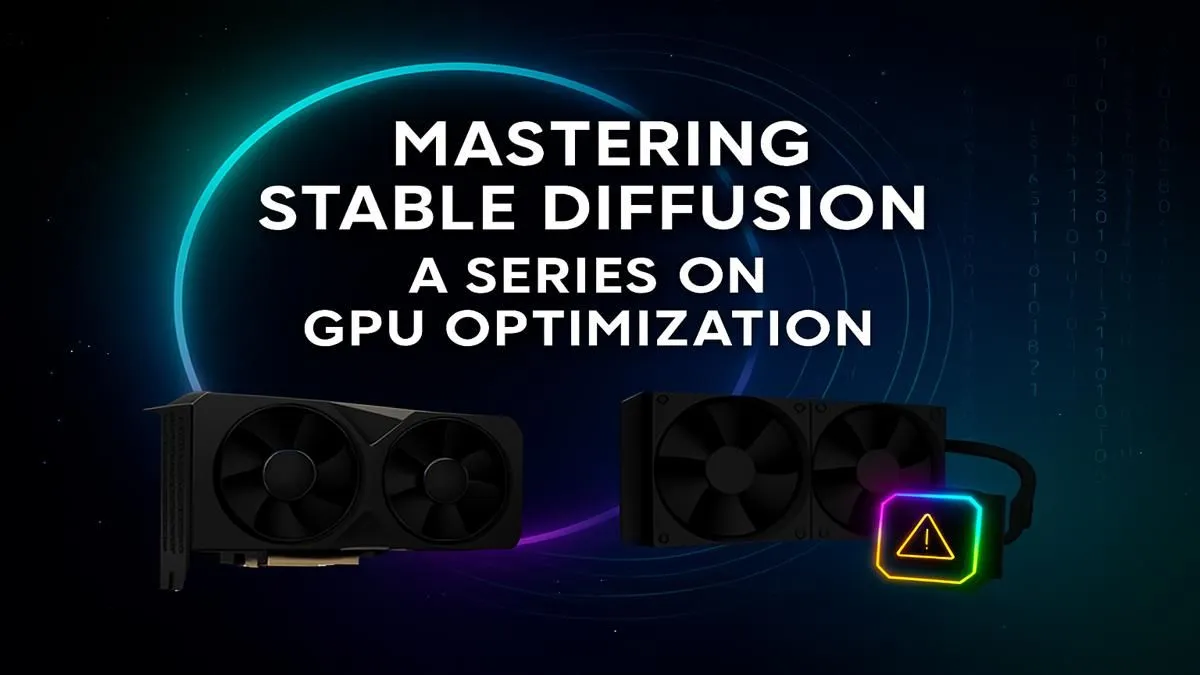
So, you've dived headfirst into the incredible world of AI art, but your PC sounds like it's about to take off... and you're still waiting for that first image. We get it. The key to going from frustratingly slow renders to generating masterpieces in seconds isn't just raw power; it's about smart Stable Diffusion GPU optimization. Let's fine-tune your setup and unlock the creative speed you've been dreaming of, right here in Mzansi. 🚀
Why Your GPU is the Heart of AI Art
Before we tweak any settings, let's understand why your GPU is so critical. Stable Diffusion is a massively parallel task. It performs millions of calculations simultaneously to turn text prompts into visual art. This is exactly what GPUs were built for.
The most important factor is VRAM (Video RAM). Think of it as your GPU's dedicated workspace. The more VRAM you have, the larger the images and the bigger the batches you can generate without your system grinding to a halt. For a smooth experience, 8GB of VRAM is a decent starting point, but 12GB or more is where the magic really happens. This is why having a powerful graphics card is non-negotiable for serious AI artists.
Essential Stable Diffusion GPU Optimization Techniques
Getting maximum performance from your hardware involves more than just plugging it in. These software-side tweaks can dramatically boost your image generation speed.
### Start with the Right Drivers
This might seem obvious, but it’s the foundation of good performance.
- For NVIDIA users: Always opt for the "Studio Driver" over the "Game Ready Driver". Studio Drivers are optimised for creative applications like Stable Diffusion, offering better stability and performance for these workloads.
- For AMD users: Ensure you're running the latest Adrenalin Edition drivers to get the best support for ROCm (AMD's answer to CUDA).
### Master the Command-line Arguments
This is where you'll see the biggest speed improvements. When you launch your Stable Diffusion interface (like AUTOMATIC1111), you can add flags to the startup script.
--xformers: This is the big one for NVIDIA users. It enables a memory-efficient attention implementation from the xFormers library, which can boost generation speed by up to 2x with minimal to no quality loss. It's a must-use for any serious Stable Diffusion GPU optimization.--medvramor--lowvram: If you're constantly running out of memory and getting "Out of memory" errors, these arguments can help. They trade a bit of speed for lower VRAM usage, allowing you to generate images that would otherwise fail. Start with--medvramfirst.
Check Your VRAM Usage 🔧
Not sure if you're hitting your VRAM limit? Keep an eye on your GPU's VRAM usage with a tool like Task Manager (on the Performance tab) or GPU-Z. If it’s constantly maxed out at 99-100% during generation, it's a clear sign you need to either lower your settings or consider a hardware upgrade.
### Choose Your Sampler and Steps Wisely
Not all samplers are created equal. Some produce great results quickly, while others need more steps to converge on a quality image.
- Speed: Samplers like
Euler aandDPM++ 2M Karrasare incredibly fast and can produce excellent images in just 20-25 steps. - Quality vs. Time: A sampler like
DDIMmight require 50+ steps for a similar quality level, taking twice as long. Experiment to find the sweet spot for your workflow. Reducing steps is a direct way to improve your Stable Diffusion performance.
The Right Hardware for the Job
While software tweaks are crucial, your hardware sets the ultimate performance ceiling. If you're serious about AI art, choosing the right GPU is the most important decision you'll make.
NVIDIA has historically dominated the AI space thanks to its mature CUDA ecosystem, which most Stable Diffusion tools are built on. For this reason, NVIDIA's GeForce RTX lineup, especially the 30-series and 40-series cards with their ample VRAM, are often the top recommendation.
However, the landscape is changing. Recent developments have significantly improved performance on AMD's Radeon cards, making them a viable and often value-packed alternative, especially if you're also a gamer. For those working on massive models or commercial projects, investing in professional workstation GPUs with 24GB or even 48GB of VRAM can unlock a whole new level of creative freedom. ✨
Ultimately, the best GPU is the one that fits your budget and creative ambitions. By combining a capable card with the optimization techniques we've covered, you'll be creating stunning AI art faster than ever.
Ready to Unleash Your AI Potential? Smart optimization can take you far, but the right hardware provides the ultimate foundation. From entry-level powerhouses to VRAM titans, we've got the perfect GPU for your AI journey. Explore our massive range of graphics cards and find the perfect engine for your creativity.