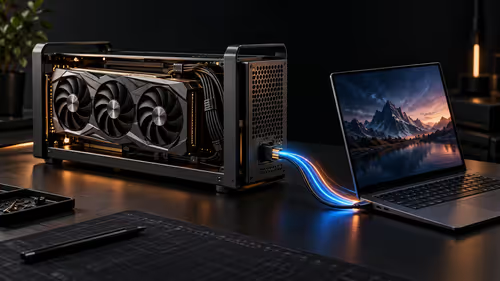
Diving into the world of AI art with Stable Diffusion is thrilling... until you see your electricity bill. That powerful GPU humming away is a beast, and its power consumption can be a real shock, especially with outage schedules to worry about. But what if you could create stunning images without draining your wallet or your inverter's battery? Understanding your Stable Diffusion GPU power consumption is the first step to becoming a more efficient AI artist. Let’s get you optimised. ⚡
Understanding GPU Power Draw for AI
When you're generating images, your Graphics Processing Unit (GPU) isn't just idling. It's performing millions of complex calculations per second. This intense workload causes two things: a spike in core clock speeds and heavy use of its VRAM (Video Memory). Both demand significant electricity.
Unlike gaming, where power usage might fluctuate wildly, AI image generation often creates a high, sustained load on your card. This consistent draw is what really impacts your monthly bill. Monitoring the Stable Diffusion GPU power consumption reveals that even a few hours of generating art can use as much power as a full day of typical desktop work.
Why Your GPU Choice Matters for AI Efficiency
Not all GPUs are created equal when it comes to AI. The architecture, memory bandwidth, and driver support all play a huge role in performance and power efficiency.
NVIDIA's CUDA Advantage
For a long time, NVIDIA has been the top choice for AI enthusiasts, thanks to its CUDA cores, which are highly optimised for machine learning tasks. Newer cards in the RTX 40-series, for example, have made massive leaps in efficiency. This means they can generate images faster while consuming less power per image than older models. Exploring the latest NVIDIA GeForce graphics cards is a great starting point for any serious AI artist.
AMD's Rising Potential
Team Red isn't sitting on the sidelines. While NVIDIA has historically had the software edge, modern AMD Radeon graphics cards offer incredible raw performance for their price. With advancements in drivers and open-source projects, AMD is becoming a more viable and often more budget-friendly option for running Stable Diffusion, especially if you're willing to do a little tweaking.
The Professional Angle 🎨
For those running AI models for commercial use or intensive research, the conversation shifts. Cards designed for these scenarios, like NVIDIA's RTX Ada Generation or AMD's Radeon Pro series, offer certified drivers, massive VRAM pools, and are built for 24/7 reliability. While they come at a premium, these workstation graphics cards can be the most efficient choice for heavy, professional workloads.
Practical Tips to Reduce Your GPU's Power Draw 🔧
Okay, so you have your GPU. How can you lower its power usage right now? You don't always have to run it at 100% capacity to get great results.
A few smart software tweaks can significantly reduce your Stable Diffusion GPU power consumption without a noticeable drop in quality or speed.
Pro Tip: Undervolt for Efficiency ⚡
A simple undervolt using a tool like MSI Afterburner can dramatically lower power consumption and heat. By slightly reducing the voltage your GPU receives at a specific clock speed, you can often maintain 95-100% of the performance while cutting power usage by 10-20%. It's one of the best free performance-per-watt upgrades you can make!
Here are a few more things to try:
- Lower the Batch Size: Generating eight images at once is faster, but it pushes your GPU to its absolute limit. Try generating images in batches of one or two. It might take a bit longer overall, but the sustained power draw will be much lower.
- Optimise Your Sampler: Experiment with different samplers and step counts. Sometimes, you can get a near-identical image with 20 steps instead of 50, saving a significant amount of processing time and energy.
- Power Limit Your Card: In your GPU's control panel (NVIDIA Control Panel or AMD Software), you can often set a manual power limit. Capping your card at 80% or 90% of its maximum power can lead to a huge efficiency gain with only a minor performance hit.
Finding the Sweet Spot: Speed vs. Power
Ultimately, managing your GPU's power draw for AI is a balancing act. Do you need images generated in 5 seconds, or are you happy to wait 10 seconds and save on your electricity bill? For most South African creators, a little extra patience can lead to real savings.
By choosing the right hardware and implementing a few simple software tweaks, you can master your Stable Diffusion GPU power consumption. You'll create amazing art, keep your PC running cool, and give your wallet a much-needed break. 🚀
Ready to Optimise Your AI Workflow? Whether you're upgrading for better efficiency or building your first AI rig, the right GPU makes all the difference. Explore our massive range of graphics cards and find the perfect engine to power your creativity.