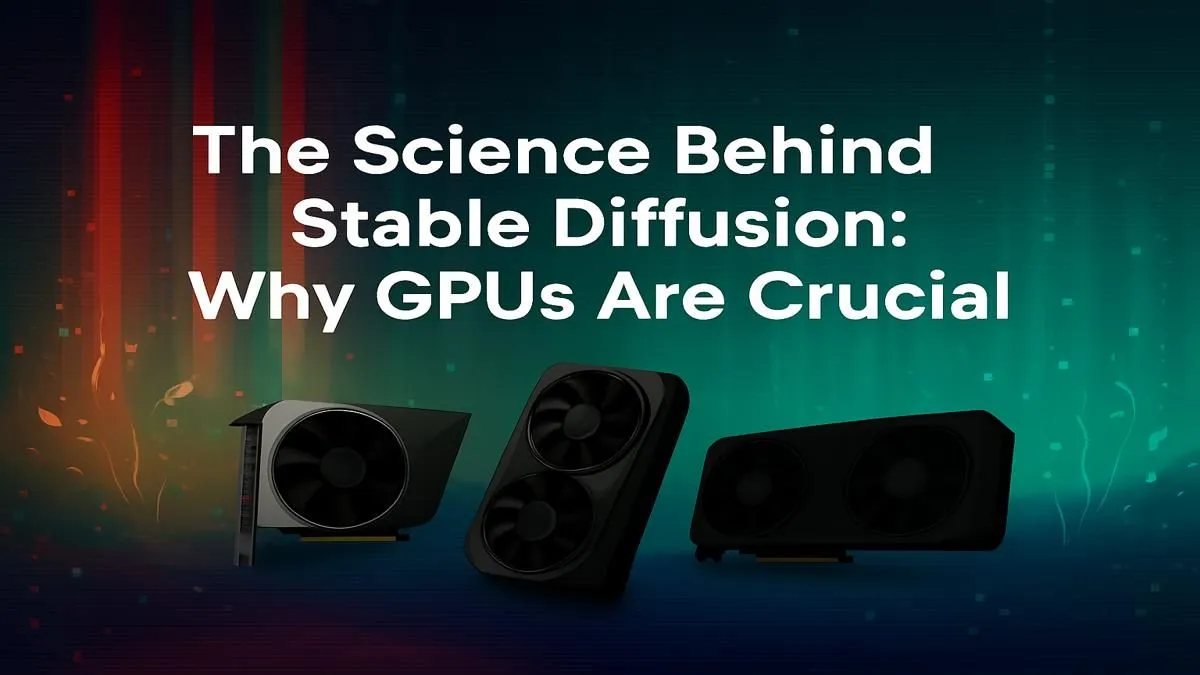
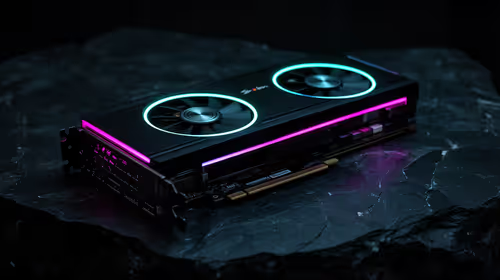
You've seen the incredible AI-generated art flooding your feeds. From hyper-realistic portraits to mind-bending fantasy landscapes, Stable Diffusion is putting the power of a digital artist into everyone's hands. But before you can start crafting your own masterpieces, there's a critical question to answer: does your PC have the muscle for it? The magic isn't just software... it's powered by your graphics card. Let's break down the real Stable Diffusion GPU requirements.
Understanding the Core GPU Requirements for Stable Diffusion
Running an AI model like Stable Diffusion locally is a bit different from running the latest AAA game. While gaming performance is a good indicator, the most important factors are more specific. Think of it less like a sprint and more like complex mathematics performed at lightning speed. 🧠
The performance of your GPU for Stable Diffusion boils down to three key things:
- VRAM (Video RAM): This is the single most important factor. It's the dedicated memory on your graphics card, and it determines the size and complexity of the AI models and images you can work with.
- GPU Architecture: This refers to the underlying technology of the GPU. NVIDIA's CUDA platform is the industry standard for AI, offering the best compatibility and performance out of the box.
- Processing Cores (CUDA/Tensor Cores): These are the tiny engines inside the GPU that do the heavy lifting. More cores generally mean faster image generation.
VRAM: Why It's the Most Critical Factor
Imagine VRAM as your artist's workbench. A small desk (low VRAM) means you can only work on small sketches, one at a time. A massive workshop (high VRAM) lets you tackle huge, complex paintings with multiple layers and tools laid out. This is why understanding the GPU requirements for Stable Diffusion starts with VRAM.
The Minimum Entry Point: 4GB - 6GB VRAM
You can get started with a card that has 4GB to 6GB of VRAM, but you'll face limitations. Expect slower generation times, and you'll be restricted to smaller image resolutions (like 512x512). It's a decent way to learn the ropes, and many older cards, like some in the NVIDIA GeForce GTX family, can handle these basic tasks.
The Sweet Spot: 8GB - 12GB VRAM
This is where the magic really happens for most enthusiasts. With an 8GB, 10GB, or 12GB card, you can comfortably generate high-resolution images, use more advanced models, and enjoy significantly faster speeds. An RTX 3060 12GB, for example, is often hailed as the price-to-performance champion for AI art. This range offers the best balance for anyone serious about AI creativity without breaking the bank, covering a huge portion of modern NVIDIA and AMD graphics cards.
Optimise Your Workflow 🔧
If you're running low on VRAM, use arguments like --medvram or --lowvram when launching Stable Diffusion's web UI. This tells the software to be more conservative with memory usage, which can prevent errors and allow you to generate images on less powerful hardware, albeit at a slower pace.
Pro-Level Power: 16GB+ VRAM
If you plan on training your own AI models, working with 4K+ resolutions, or generating images at maximum speed, you'll want 16GB of VRAM or more. This tier is for the serious creator or professional who can't afford to wait. Cards in this bracket, including high-end GeForce models and dedicated workstation graphics cards, provide the headroom needed for the most demanding AI tasks. ✨
NVIDIA vs. AMD: The AI Showdown
When it comes to AI and machine learning, there's a clear frontrunner. NVIDIA's CUDA technology has been the gold standard for years, meaning almost all AI tools, including Stable Diffusion, are built and optimised for it first. This translates to a plug-and-play experience with maximum performance.
That's not to say AMD is out of the race. Team Red has made huge strides, and it's absolutely possible to run Stable Diffusion on modern AMD Radeon graphics cards using platforms like ROCm. However, it often requires more technical know-how, and you might have to do some extra configuration to get things running smoothly. For a beginner, NVIDIA is the simpler path.
Ultimately, the best graphics card for your AI journey depends on your budget and ambition. From dipping your toes in the water to training custom models, having the right hardware is the key to unlocking your creative potential. 🚀
Ready to Unleash Your AI Creativity?
Choosing the right hardware is the first step to creating stunning AI art. The perfect GPU balances VRAM, processing power, and your budget. Explore our massive range of graphics cards and find the perfect engine for your digital canvas.