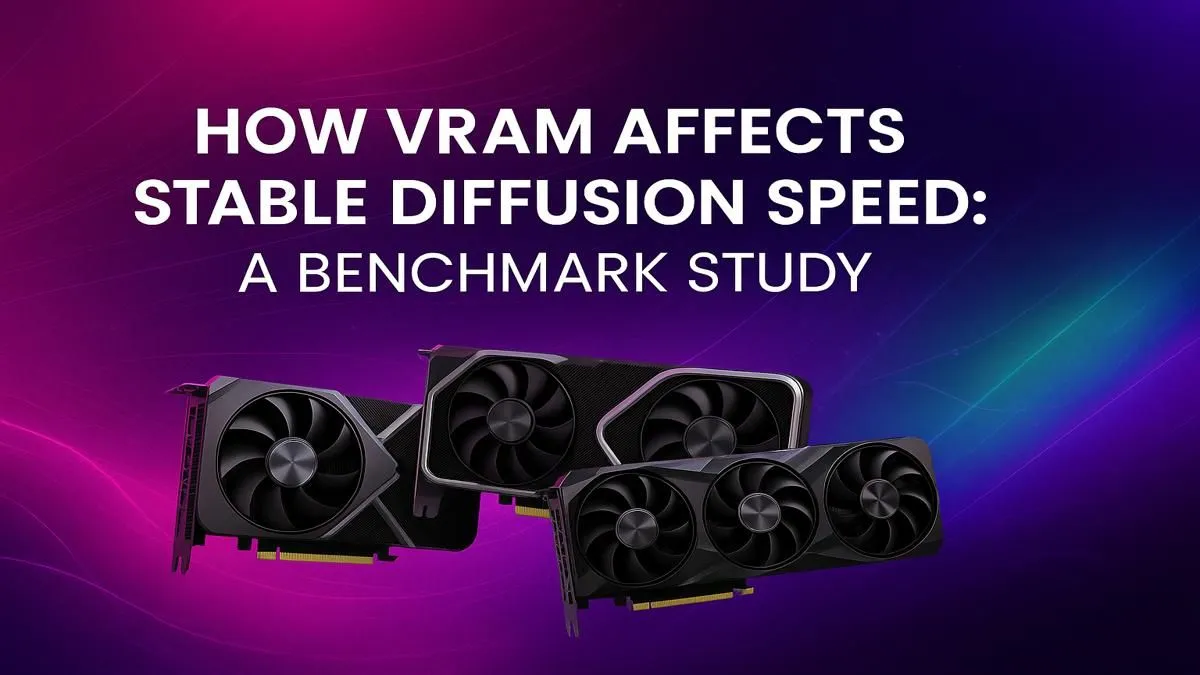
So, you’re diving into the incredible world of AI art with Stable Diffusion. You’ve seen the stunning images online—from hyper-realistic portraits to cyberpunk cityscapes over Table Mountain. But just as you’re ready to create your own masterpiece, you hit a wall... a VRAM wall. How much do you actually need? Let's cut through the noise and figure out the real Stable Diffusion VRAM requirements for creators in South Africa.
Why VRAM is the Fuel for Your AI Art Engine
Before we get into the numbers, let's quickly cover why VRAM (Video Random Access Memory) is so critical. Think of it as your graphics card's dedicated workspace. When you run Stable Diffusion, your GPU needs to load the complex AI model, the image you're generating, and all the intermediate calculations into this space.
If you don't have enough VRAM, you'll either get the dreaded "CUDA out of memory" error, or the process will be painfully slow as it shuffles data around. More VRAM means you can work with larger images, generate them faster, and experiment with more complex models without your PC grinding to a halt.
Decoding Stable Diffusion VRAM Requirements ⚙️
Your ideal VRAM amount depends entirely on your goals. Are you just having a jol, or are you training a custom model for your design business? Let's break it down.
The Starting Line: 6GB to 8GB VRAM
This is the entry-point for Stable Diffusion. With an 8GB card, you can comfortably generate standard 512x512 pixel images. You'll likely need to use optimisations (like command-line arguments) to prevent errors, and generating larger images will be slow. But it's absolutely possible to get started and learn the ropes here. Many of the most popular NVIDIA GeForce cards fall into this bracket, offering a great starting point for aspiring AI artists.
The Enthusiast's Sweet Spot: 12GB to 16GB VRAM
This is where the magic really happens for most users. With 12GB or more, you can:
- Generate higher-resolution images (1024x1024) with ease.
- Run multiple tools and extensions simultaneously.
- Experiment with light model training (like LoRAs).
- Enjoy significantly faster generation times.
A 12GB card provides the best balance of price and performance, letting you create high-quality art without constant workarounds. While NVIDIA has historically led in AI, modern AMD Radeon graphics cards are becoming increasingly viable alternatives for users comfortable with different software environments.
Optimisation Pro Tip ⚡
If you're running into VRAM limits, try enabling xFormers in your AUTOMATIC1111 web UI. Go to Settings > User Interface and add --xformers to your Commandline arguments. This can significantly reduce VRAM usage and speed up image generation, especially on NVIDIA cards, without sacrificing quality. It's a must-have tweak!
The Power User's Playground: 24GB+ VRAM
If you're serious about AI art, especially training your own models (like Dreambooth) or working at a professional level, 24GB of VRAM is the goal. This tier, often populated by cards like the RTX 4090 or professional workstation GPUs, removes virtually all VRAM bottlenecks. It allows for complex training, ultra-high-resolution workflows, and running the largest, most demanding AI models available today. 🚀
Beyond VRAM: Other Parts of the AI Puzzle ✨
While VRAM is the most important factor, don't forget the rest of your system. A fast NVMe SSD will load models quickly, and having at least 16GB of system RAM (32GB is better) ensures your PC runs smoothly while the GPU does the heavy lifting. Ultimately, finding the right graphics card is about matching your creative ambitions with the right hardware.
Ready to Build Your AI Powerhouse? Understanding Stable Diffusion's VRAM requirements is the first step. The next is finding the hardware to bring your vision to life. Explore our massive range of graphics cards and build the perfect rig to conquer the world of AI art.