So, you’ve dived into the incredible world of AI. You’re ready to generate mind-blowing art with Stable Diffusion or train a local model, you hit ‘Go’… and boom. A blue screen, a sudden reboot, or a complete system freeze. If you’re staring at your rig wondering why your computer crashes running AI, you’re not alone. This isn't like gaming; it's a different kind of beast that pushes your PC to its absolute limits.
Why AI Pushes Your PC to Its Limit
Unlike a game that has peaks and troughs of intensity, AI workloads are more like a marathon at full sprint. Tasks like training a model or generating high-resolution images place a massive, sustained load on specific components for minutes or even hours. This constant, heavy demand exposes weaknesses in your system that normal use or even intense gaming might never reveal. If your PC keeps crashing with AI, one of these culprits is likely to blame.
The Main Culprits Behind AI-Related Computer Crashes
Let's break down the most common reasons for instability and how to diagnose them.
1. VRAM Starvation: The Silent Killer 🎨
Video RAM (VRAM) is the ultra-fast memory on your graphics card (GPU). AI models, especially for image generation, are enormous and need to be loaded directly into VRAM to run efficiently. When you run out of VRAM, your system tries to use your slower system RAM, causing a massive performance bottleneck that often leads to a crash.
For AI, VRAM is king. An 8GB card might struggle, while 12GB or 16GB is a much safer bet. Modern NVIDIA GeForce gaming PCs are often equipped with generous VRAM, making them a strong starting point for enthusiasts.
2. Insufficient System RAM
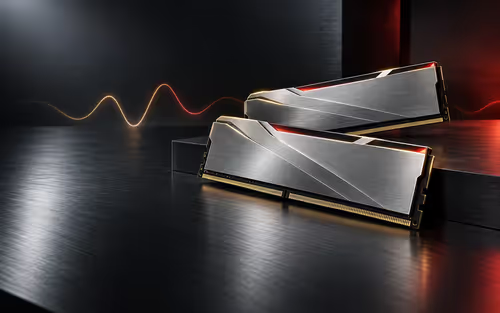
While VRAM is for the GPU, your regular system RAM is crucial for holding the AI application itself, your operating system, and all the data being processed. If the AI model and its data set exceed your available RAM, your system will grind to a halt or crash. For anyone serious about running local AI models, 16GB is the bare minimum, with 32GB being the recommended sweet spot for a smooth experience. This is a key consideration whether you're looking at cutting-edge AMD Radeon gaming PCs or planning a custom build.
3. Power Supply (PSU) Can't Keep Up ⚡
This is a sneaky one. Your GPU and CPU draw huge amounts of power under a sustained AI load. An older or budget-tier Power Supply Unit might not be able to provide consistent, stable voltage under that pressure. This electrical instability can cause random shutdowns that look like software crashes but are actually your PSU protecting itself (and your components) by cutting the power.
Power Pro Tip ⚡
Your PC's total wattage might look fine on paper, but AI workloads create massive, sustained power spikes for your GPU. A cheap or old Power Supply Unit (PSU) can fail to deliver stable voltage under this pressure, causing crashes. Always invest in a reputable brand with an 80+ Gold rating or higher for rock-solid stability.
4. Overheating: Your PC is Running a Fever
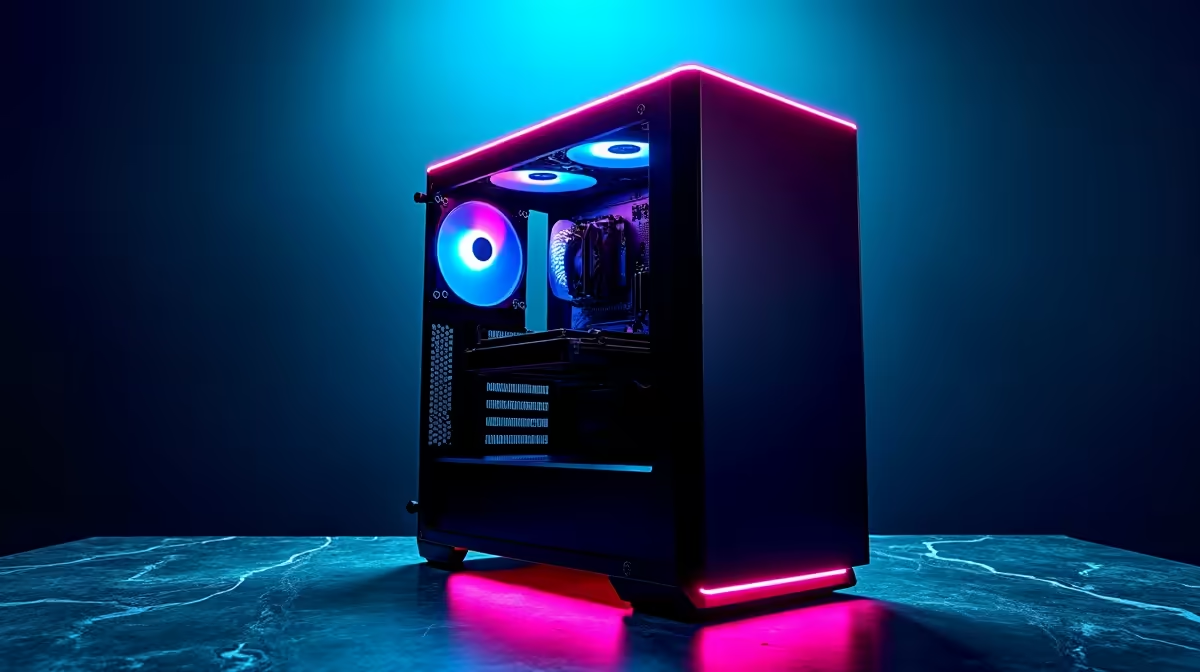
Running an AI model can max out your GPU and CPU for extended periods, generating an immense amount of heat. If your PC's cooling solution—fans, heatsinks, and airflow—isn't up to the task, your components will "throttle" (slow down to cool off) or trigger a thermal shutdown to prevent damage. This is a common reason why a computer crashes running AI after a few minutes of work. It’s why purpose-built workstation PCs are designed with superior cooling solutions to handle these marathon tasks without breaking a sweat.
Quick Fixes to Stop Your Computer Crashing with AI
Before you consider a major upgrade, try these simple steps:
- Reduce the Load: In your AI software, lower the image resolution or batch size. This uses less VRAM and processing power.
- Update Your Drivers: Ensure you have the latest graphics drivers. For NVIDIA cards, the "Studio Driver" is often more stable for creative workloads than the "Game Ready Driver".
- Monitor Your System: Use free tools like HWMonitor or GPU-Z to watch your component temperatures and VRAM usage in real-time. If temps are hitting 90°C or higher, you've found your problem.
- Improve Airflow: Make sure your PC case has clear airflow. Clean out any dust filters and ensure fans aren't obstructed. It's a simple fix that can make a huge difference.
If these tweaks don't solve the problem, it might be a sign that your hardware has met its match.
Ready to Build an AI Powerhouse? Tinkering can get you so far, but when your computer crashes running AI, it's often a sign that your hardware has hit its limit. Stop fighting instability and start creating. Use our Custom PC Builder to design a machine with the VRAM, RAM, and power needed to conquer any AI task.