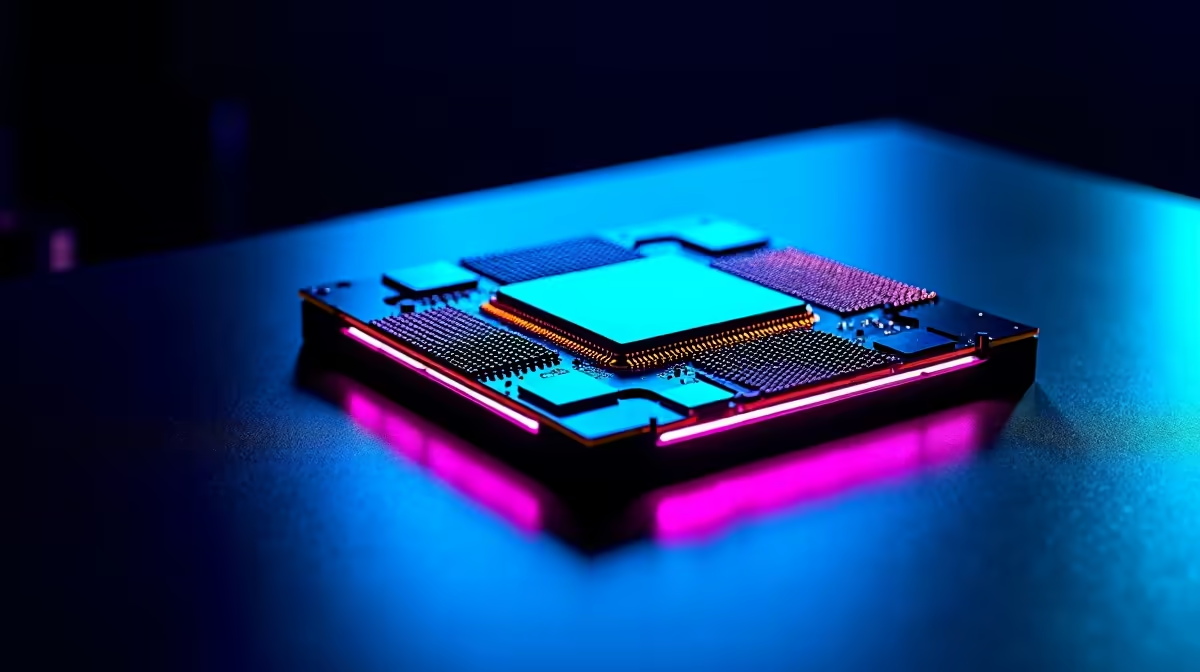
The world of AI is exploding, and right here in South Africa, the hardware powering it is a hot topic. You're ready to dive in, but a huge question looms: x86 vs ARM for AI? Choosing the right CPU architecture isn't just a tech debate... it's the foundation of your next creative project or gaming rig. Getting it wrong can mean slow renders and compatibility headaches. Let's break down which CPU is best for your AI ambitions. ���🇦
What's the Difference? A Quick Look at x86 and ARM
Before we talk AI, let's get the basics straight. Think of x86 and ARM as two different languages for processors.
x86 is the veteran powerhouse. It's the architecture behind Intel and AMD chips that have dominated desktops and servers for decades. Its design philosophy is all about maximum performance and handling complex instructions, making it the go-to for demanding tasks like high-end gaming and video editing.
ARM, on the other hand, started by mastering efficiency. It's the brain inside your smartphone and tablet, designed to sip power while delivering a snappy experience. Recently, with chips like Apple's M-series, ARM has proven it can compete on performance too, shaking up the entire industry.
The x86 vs ARM Battle for AI Supremacy
When it comes to artificial intelligence, the choice between x86 and ARM depends heavily on what you're actually doing. Are you building and training a massive new model, or are you just using AI-powered features in your favourite apps?
x86: The King of Raw Power and Development
For serious AI development and training, x86 is still the undisputed champ in South Africa. Here’s why:
- Unmatched Performance: Training AI models requires immense computational power. An Intel Core i9 or AMD Ryzen 9 processor can chew through data like nothing else. When you pair that CPU with a top-tier graphics card from our range of NVIDIA GeForce gaming PCs, you have a formidable AI training machine. 🚀
- Mature Software Ecosystem: The most popular AI frameworks—like TensorFlow, PyTorch, and CUDA—were built and optimised for x86 systems. This means better stability, wider community support, and fewer compatibility issues when you're deep in a project.
- Modularity and Upgrades: The x86 platform allows you to build and upgrade your rig piece by piece. Need more RAM or a better GPU down the line? No problem. This flexibility is crucial as AI demands continue to grow. The synergy within AMD's own ecosystem, found in our powerful AMD Radeon gaming PCs, is another prime example of this powerful, customisable approach.
Check Your Software First! 🧠
Before investing in any hardware for AI, always check the system requirements for the specific software and libraries you plan to use. Many professional AI development tools are still heavily optimised for x86 and NVIDIA's CUDA platform. A quick check now can save you a massive headache later.
ARM: The Champion of Efficiency and Inference
ARM's strength in the AI world lies in a different area: efficiency and what's called "inference." Inference is the process of using a pre-trained AI model, not building it.
- Performance-per-Watt: ARM chips deliver incredible performance without draining your battery or running hot. This makes them perfect for running AI features on laptops and mobile devices, like real-time photo enhancements or language translation.
- Integrated AI Hardware: Many modern ARM chips include dedicated hardware called Neural Processing Units (NPUs) designed to accelerate AI tasks. This specialised approach is incredibly efficient for running models on-device.
Which CPU is Best for AI in South Africa Right Now?
So, what's the verdict for a tech enthusiast in SA?
For the vast majority of users—from developers training models to content creators using AI-driven tools and gamers wanting the best performance—x86 remains the superior choice for AI right now.
The combination of raw power, extensive software support, and the ability to pair your CPU with the most powerful GPUs gives you an unbeatable platform. If you're building complex models, running intricate simulations, or doing heavy data analysis, the robust architecture of our dedicated workstation PCs provides the most reliable and powerful foundation for your work.
While ARM is the future for on-the-go AI and power-efficient devices, the heavy lifting of creating and training AI still happens on powerful x86 machines. ✨
Ready to Build Your AI Powerhouse?
The x86 vs ARM for AI debate is clear for serious creators in South Africa. For maximum power, software compatibility, and upgrade potential, x86 is the winning choice. Explore our range of customisable Workstation PCs and build the perfect machine to bring your AI projects to life.