Understanding Your 360mm Radiator Fan Configuration
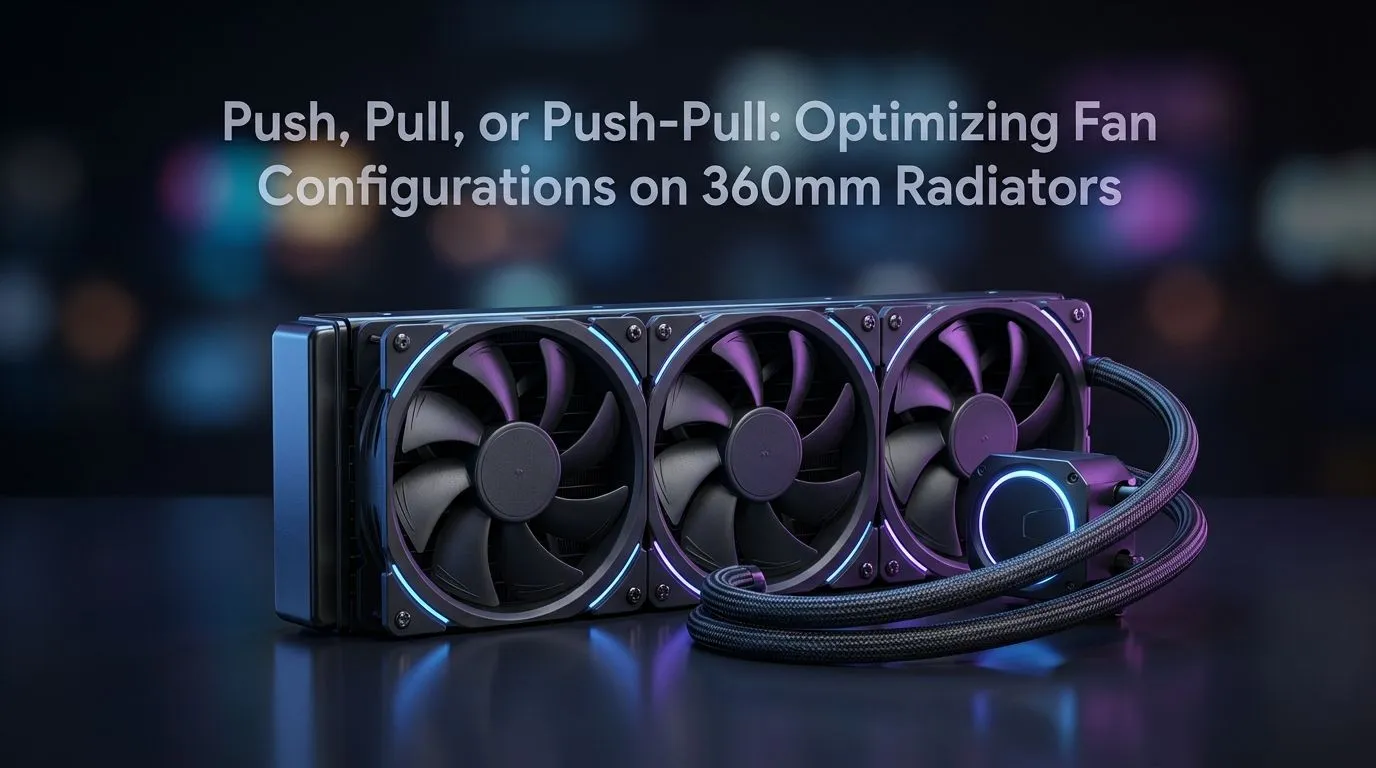
Building a high-end gaming rig in South Africa means battling our intense summer heat. You have invested in a top-tier cooling solution... but how you mount your fans matters. Getting your 360mm Radiator Fan Configuration: Push, Pull, or Push-Pull right can be the difference between a silent, icy build and a thermal-throttling nightmare. Let's find the sweet spot for your Build Lab project. 🔧
Whether you are looking to upgrade your CPU coolers or starting a fresh build, the radiator is your primary heat exchange point. The goal is simple: move heat from the liquid into the air as efficiently as possible.
The Push Configuration: Standard for a Reason
In a "Push" setup, the fans are mounted on the side of the radiator that faces the interior of the case (or the intake side). They push air through the radiator fins. This is the most common setup for a modern Liquid Cooler (AIO) because it is aesthetically pleasing.
You get to see the RGB lighting of your fans clearly. From a performance standpoint, pushing air through the fins is highly effective for high-density radiators. If you are using the high-performance fans found on CORSAIR units, you will find this setup handles almost any overclock with ease.
Pull Configuration: The Hidden Benefit
A "Pull" configuration places the fans on the opposite side of the radiator, pulling air through the fins. While performance is often within 1 or 2 degrees of a push setup, the real win here is maintenance.
Dust tends to accumulate on the radiator surface rather than getting trapped between the fan and the fins. This makes it much easier to clean with a can of compressed air. Many builders choosing value-king innovations from Deepcool prefer this for long-term reliability. It keeps the internal look clean while ensuring your hardware stays chilled during those 30-degree days in Gauteng or Durban.
Static Pressure is King ⚡
When choosing fans for any radiator configuration, look for 'Static Pressure' (mmH2O) ratings rather than just 'Airflow' (CFM). Radiator fins are dense... you need fans designed to force air through resistance, not just move it in open space.
Push-Pull: Maximum Cooling for Overclockers
If you have the space in your chassis to fit a 360mm Radiator with fans on both sides, you are entering the "Push-Pull" zone. This configuration uses six fans in total. One set pushes air in, while the other pulls it out.
Is it overkill? For a standard Ryzen 5 or Core i5, probably. But if you are pushing a Core i9 to its limits, this setup provides the highest thermal headroom. It allows you to run your fans at lower RPMs for the same cooling performance... resulting in a quieter build. If your case is too tight, you might need to settle for a smaller 240mm Radiator, but for those with the room, Push-Pull is the ultimate flex. 🚀
Investing R2,000 or more into a premium cooling solution deserves the right setup. Most South African gamers will find the standard "Push" configuration perfect for both looks and performance, but the "Pull" setup is a clever choice for those who hate cleaning dust filters every month. ✨
Ready to Find Your Perfect Match?
Choosing the right cooling configuration is the first step to a stable, high-performance PC. For maximum power, choice, and value in South Africa, our range of AIOs is hard to beat. Explore our massive range of liquid coolers and find the perfect partner for your CPU today.