Quick Answer
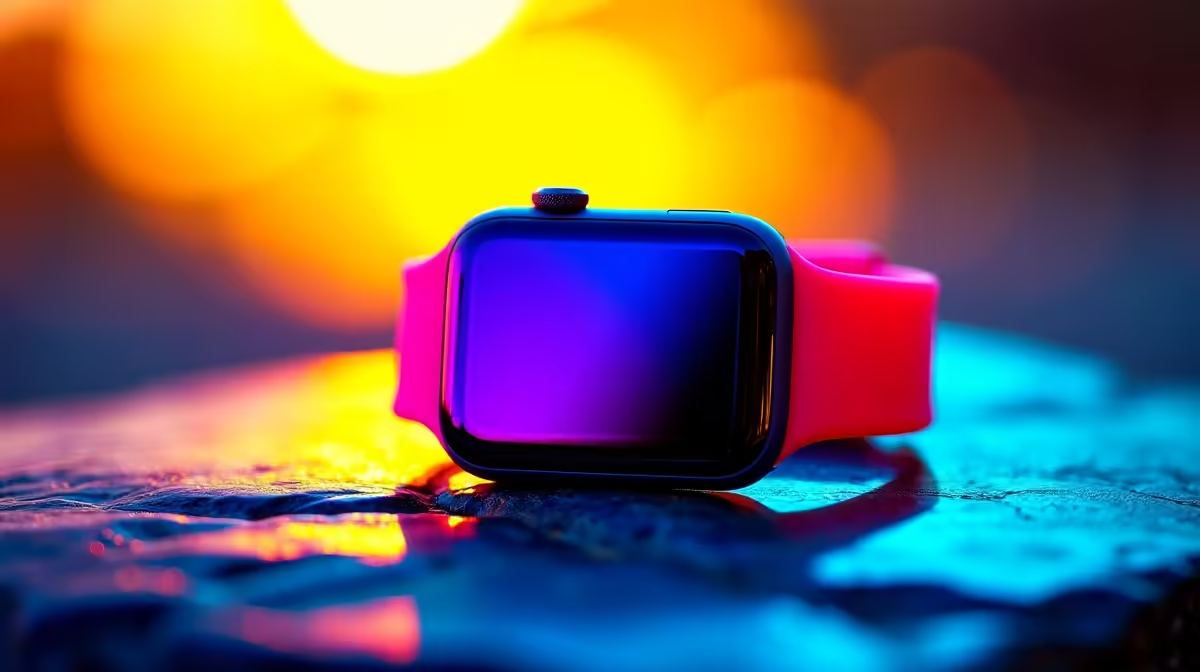
The best kids smartwatches under R1,000 in South Africa in 2026 offer GPS tracking, two-way calling, SOS alerts, and durable builds that give parents peace of mind without a premium price tag.
Why a Kids Smartwatch Makes Sense for SA Families
South African parents face a distinct set of safety challenges that make GPS-enabled kids smartwatches particularly relevant. Children travelling to school, sports practice, or friends' homes in urban areas from Johannesburg to Cape Town benefit from real-time location sharing that a smartwatch delivers without the security risk of handing a child an expensive smartphone. A smartwatch under R1,000 represents a practical middle ground - technology-enabled safety at a price point most SA families can justify.
The core functionality parents prioritise is GPS tracking paired with two-way calling. A child can press a button to call a parent directly, and parents can call the watch at any time. SOS or panic button features allow a child to trigger an alert with a single press, sending the child's GPS coordinates to pre-registered contacts - a genuinely useful safety layer for South African families where awareness of personal security is a daily reality.
Geofencing is a feature offered by several watches in this price range. Parents set a virtual boundary around a school, home, or neighbourhood, and receive an automatic notification if the watch exits that zone. This passive monitoring requires no action from the child and provides an additional layer of reassurance for working parents who cannot actively monitor the app throughout the day.
Key Features to Look for Under R1,000
Nano-SIM compatibility is essential for calling and data features to work. Most kids smartwatches in the R700 to R1,000 range use a nano-SIM slot and operate on the GSM/LTE network. South African network compatibility is generally good across Vodacom, MTN, Cell C, and Telkom for the frequency bands used by these devices - but confirm LTE band compatibility before purchasing if you are on a less common network.
Battery life is a practical concern for school-going children. A watch that needs daily charging is manageable, but one that dies by midday creates a false sense of security. Watches with 48-hour standby and at least 10-12 hours of active use cover a full school day with GPS active and several calls made. Look for watches that support quick charging via USB-C rather than proprietary connectors, which are easier to replace if the cable is lost.
Durability and water resistance matter for children who play sport, swim, or simply are not careful with their belongings. IP67 water resistance protects against splashing and rain. Rubberised or reinforced frames withstand drops better than all-plastic designs. Scratch-resistant glass over the display is worth confirming before purchasing, as a scratched screen reduces readability outdoors.
Parental control app quality varies significantly between brands. The best watches in this price range link to well-maintained companion apps with clear GPS maps, call logs, and geofence management. Some budget watches pair with apps that are unstable, poorly translated, or require a subscription for core features. Check app store reviews specifically for South African users before committing to a purchase.
Top Picks Under R1,000 for South African Kids in 2026
In the R700 to R900 bracket, the Xplora X5 Play and several well-reviewed Chinese-brand alternatives (sold under names like Wonlex or JM-Series) offer strong GPS accuracy, SOS calling, and school mode that disables non-essential features during school hours. School mode is particularly useful for SA parents whose children's schools have strict device policies - the watch remains functional as a safety tool while limiting distracting features during class.
At the R900 to R1,000 mark, watches begin to add step counting and basic health tracking, small cameras for photos (often limited resolution but fun for children), and messenger functions restricted to parent-approved contacts. The messaging restriction is a thoughtful design choice for younger children - they can communicate with family without the open-ended social exposure of a smartphone messaging app.
Brands with local warranty support or local authorised importers are preferable for SA buyers. A R800 watch that needs to be returned internationally for a warranty claim effectively offers no practical warranty. Confirm the retailer's returns and warranty policy covers the device locally before purchasing.
Setup, Safety, and Making the Most of Your Kids Smartwatch
Setting up a kids smartwatch correctly takes 20-30 minutes. Insert a nano-SIM with a data bundle - a basic 500MB monthly data plan is typically sufficient for GPS updates, calls, and messaging. Download the companion app on your smartphone, create an account, and pair the watch via Bluetooth or the app's QR code pairing process.
Establish geofences for home and school on day one. Set emergency contacts - typically both parents and one grandparent or trusted adult. Teach the child what the SOS button does and when it should be used. Explain that the watch is a safety tool rather than a toy, and set expectations around screen time during school hours.
For South African families in areas with intermittent load shedding, charge the watch overnight when power is available and ensure it starts each school day fully charged. USB-C charging makes it easy to top up from a power bank if needed, which is worth keeping in the household for this purpose.
Frequently Asked Questions
Q: Do kids smartwatches under R1,000 work on South African mobile networks?
A: Most do, but confirm the LTE bands supported. South Africa's major networks use LTE bands 1, 3, 7, and 28 primarily. Check that the watch supports at least Band 1 and Band 3 for reliable urban and suburban coverage on Vodacom or MTN.
Q: Can my child make calls from the smartwatch to any number?
A: Most kids smartwatches are designed so children can only call pre-approved contacts set by parents in the companion app. This prevents unsupervised calling and protects children from unwanted contact.
Q: What happens to GPS tracking during load shedding if my child is at school?
A: The watch operates independently of home power - it uses mobile data from its SIM card for GPS reporting. Load shedding at home does not affect the watch's GPS function as long as the watch battery is charged and the mobile network is operational.
Q: Is it safe to give a young child a watch with GPS?
A: GPS watches designed for children store only location data accessed by the parent's app - they do not have social media or open internet access. They are generally considered a safer alternative to smartphones for children who need to be reachable but are too young for unsupervised smartphone use.
Also at Evetech: Smart Watches | Graphics Card Deals
Ready to Find Your Perfect Match? Shop at Evetech