So, you're getting ready to drop some serious ZAR on NVIDIA's next-gen beast, the RTX 5070 Ti. Lekker! But before you dream of maxing out settings on the latest titles, there's a crucial question you need to answer: is your power supply up to the task? The debate is on, and it's a big one for South African builders. Let's dive deep and figure out the best PSU for the RTX 5070 Ti.
Why Your PSU Choice Matters More Than Ever
Choosing a power supply unit (PSU) isn't just about matching a number on a box. Modern graphics cards, especially high-performance ones, are known for "transient power spikes"—split-second moments where they draw way more power than their official rating. A cheap or underpowered PSU can see this spike, panic, and shut your whole system down. Not ideal in the middle of a competitive match...
While official specs for the RTX 5070 Ti are still under wraps, we can make solid predictions based on the RTX 40 series. The RTX 4070 Ti had a TDP (Thermal Design Power) of around 285W. It's safe to assume the 5070 Ti will be in a similar, if not slightly higher, ballpark. This makes the 750W vs 850W question absolutely critical.
Is 750W Enough for an RTX 5070 Ti?
For a straightforward build, a high-quality 750W PSU could be sufficient. If your PC consists of the RTX 5070 Ti, a mid-range CPU like a Ryzen 7 or Core i7, a single SSD, and standard air cooling, a 750W unit will likely handle the load. This is the budget-conscious choice, and for many gamers, it will get the job done without issues.
However, "sufficient" isn't always optimal. You'd be running closer to the PSU's maximum capacity, which can lead to less efficiency and more fan noise as it works harder to keep cool. If you go this route, make sure you invest in a quality 750W unit from a trusted brand to ensure stable power delivery.
Cable Check! 🔧
The RTX 50 series will almost certainly use the 12V-2x6 power connector, the successor to the 12VHPWR. When buying your new PSU, look for an ATX 3.0 compatible model that includes this cable natively. It's a much safer and cleaner solution than relying on bulky adapters that can clutter your case.
The Future-Proof Argument: Why 850W is the Smarter Choice
This is where we get serious. Upgrading to an 850W PSU is arguably the best decision you can make for your new rig, and here’s why:
Peace of Mind & Stability 🚀
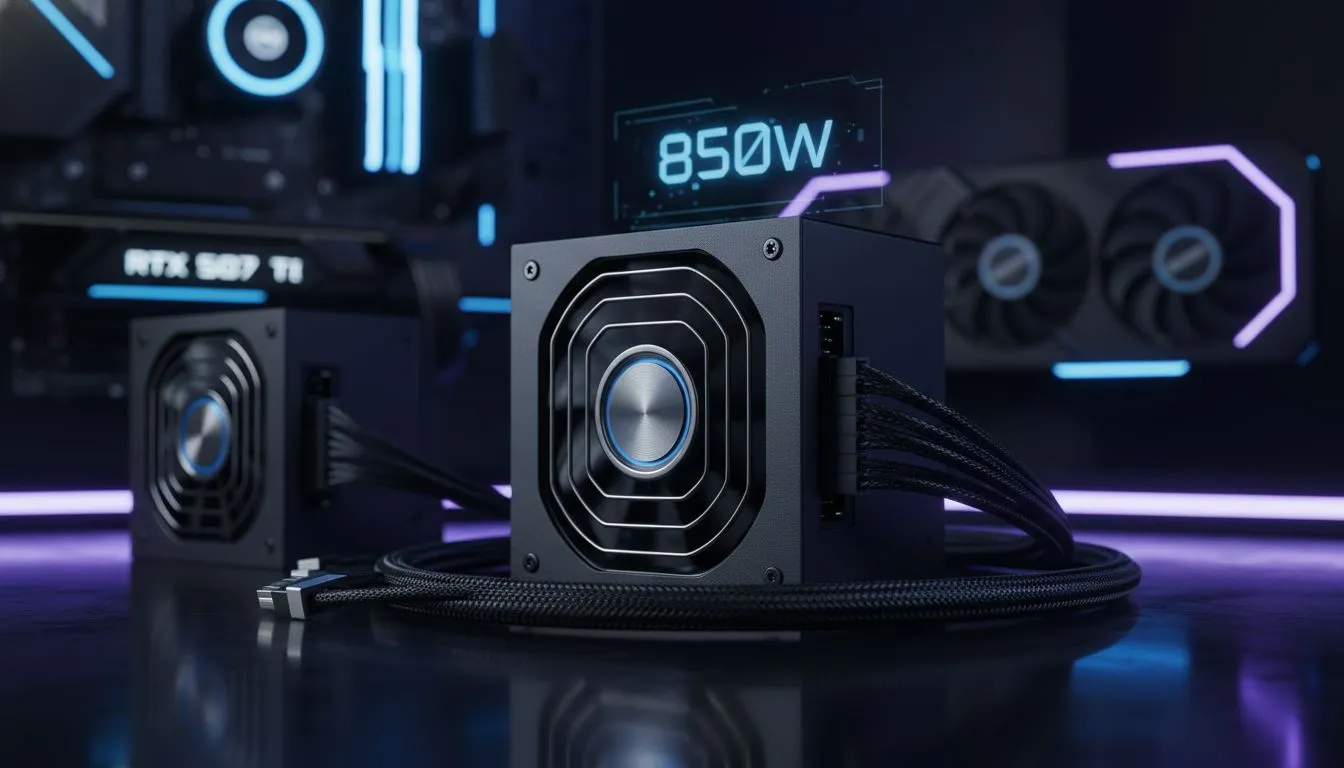
An 850W PSU gives you significant headroom. Those scary transient spikes we mentioned? An 850W unit will absorb them without breaking a sweat, ensuring rock-solid stability whether you're gaming, streaming, or rendering.
Better Efficiency
PSUs are most efficient when running at 40-60% of their maximum load. With an 850W PSU, your system will likely idle and game right in that sweet spot. This means less electricity is wasted as heat, potentially saving you a few Rands on your utility bill and leading to a cooler, quieter PC.
Room to Grow
What if you decide to upgrade to a power-hungry Core i9 CPU next year? Or add a custom water-cooling loop? An 850W PSU gives you the freedom to expand your system without having to buy another power supply. It’s a smart investment that pays off later. You'll find that brands like GAMDIAS often offer great value in this wattage range.
Beyond Wattage: The Importance of 80 PLUS Ratings
Don't just grab the first 850W box you see. The 80 PLUS rating (Bronze, Gold, Platinum, etc.) tells you how efficient the PSU is. An 80 PLUS Gold PSU is the sweet spot for most gamers, guaranteeing at least 87% efficiency under typical loads. By choosing from a range of 80 PLUS rated power supplies, you ensure you're getting a quality component that won't waste power. ✨
The Verdict: 750W or 850W for Your RTX 5070 Ti?
While a top-tier 750W PSU can work for a basic RTX 5070 Ti build, the smarter, safer, and more future-proof choice is an 850W Gold-rated PSU.
The price difference is often less than you'd think, and the benefits in stability, efficiency, and upgrade potential are massive. Think of it as insurance for your expensive new graphics card. The best PSU for the RTX 5070 Ti isn't just about providing enough power; it's about providing clean, stable power with room to spare.
Ready to Power Up Your Next-Gen Build?
Choosing the best PSU for your RTX 5070 Ti is the first step to a stable, high-performance rig. Don't let a weak power supply bottleneck your new beast. Browse our massive range of high-quality PSUs and find the perfect foundation for your build.