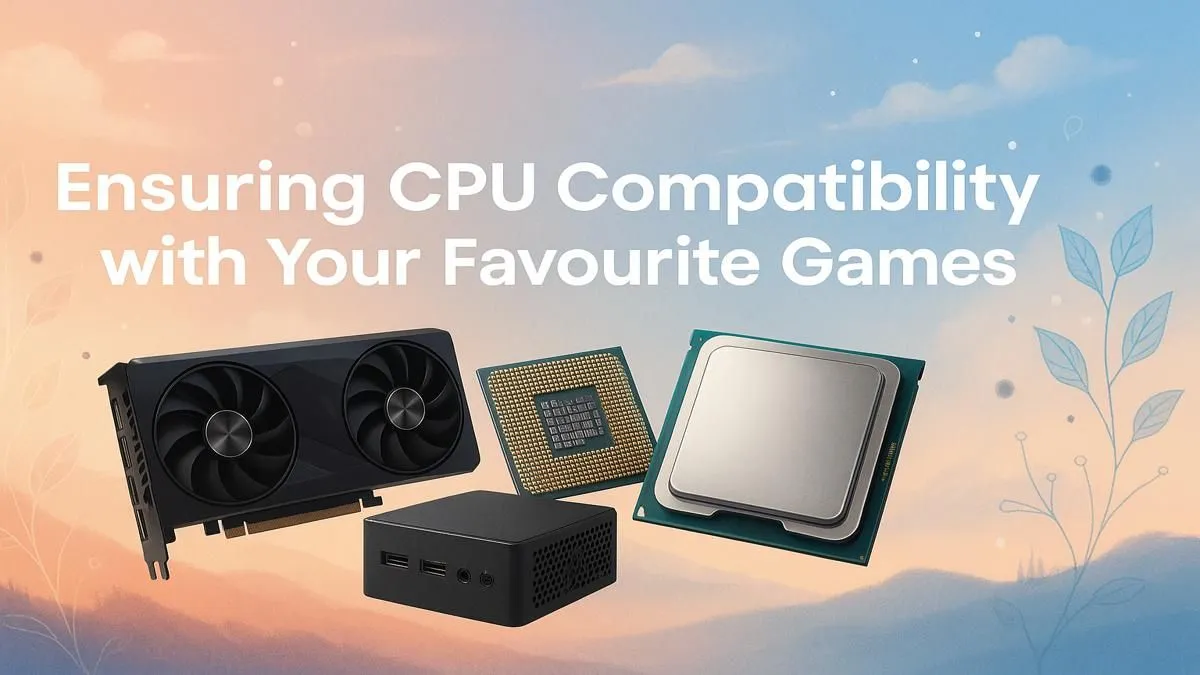
Stuck on a loading screen while your squad is already dropping in? Or maybe you're tired of that infuriating stutter when the action gets intense? We’ve all been there. Your graphics card gets all the glory, but often the real culprit behind poor performance is your processor. Understanding the CPU requirements for games isn't just for pro builders; it's the key to unlocking the smooth, high-frame-rate experience you paid for. Let's dive in. 🚀
Decoding CPU Requirements for Games
When you look at a game's store page, you'll see "Minimum" and "Recommended" specs. What do they actually mean for your CPU?
- Minimum Requirements: This is the absolute baseline to get the game running. Think low settings, probably at 1080p, with a frame rate that might dip below a stable 60 FPS. It’s playable… but not ideal.
- Recommended Requirements: This is the developer's target for a great experience. Hitting this spec usually means you can enjoy smooth 1080p or even 1440p gaming at 60 FPS or higher with medium-to-high settings.
Modern titles like Alan Wake 2 or Starfield are incredibly demanding, relying on the processor to handle complex physics, AI, and world-streaming. Failing to meet the CPU requirements for games like these will lead to bottlenecks, where your powerful GPU is just sitting around waiting for the CPU to catch up.
Cores, Threads, and Clock Speed: What Matters Most?
For years, single-core speed was king for gaming. But times have changed. While a high clock speed (measured in GHz) is still crucial for snappy performance, the number of cores and threads has become just as important.
- Cores: Think of these as individual processors on a single chip. More cores allow your PC to handle more tasks simultaneously.
- Threads: These are virtual components that help manage and organise the tasks sent to the CPU cores, improving efficiency.
- Clock Speed: This is how many cycles a core can execute per second. Higher is generally better for tasks that can't be easily split across multiple cores.
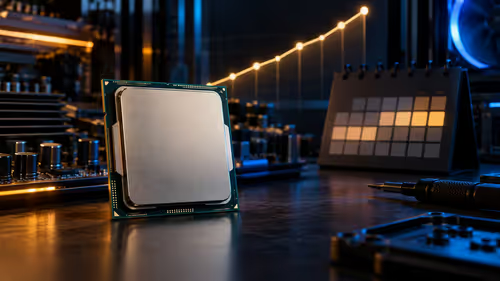
For modern gaming, a CPU with at least 6 cores and 12 threads is the sweet spot for great performance without breaking the bank. It provides enough power for the game itself, plus background tasks like Discord or streaming software. If you're looking to upgrade, browsing a wide selection of CPU processors online is the best way to compare specs and prices.
Check Your Bottleneck 🔧
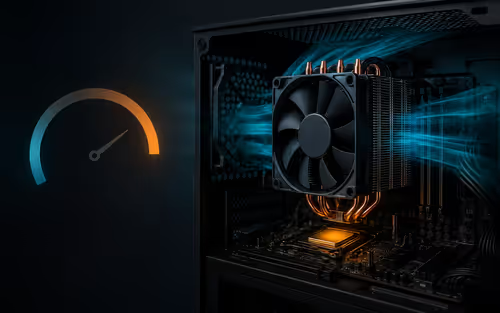
Not sure if your CPU is the problem? Use the Windows Game Bar (Win + G) while playing. Pin the Performance widget to your screen. If you see your CPU usage consistently hitting 90-100% while your GPU usage is much lower, you've found your bottleneck! It's a clear sign that your processor can't keep up.
The Big Showdown: Intel vs. AMD
The battle between Team Blue and Team Red has never been more exciting for South African gamers. Both brands offer incredible performance, but they often excel in different areas.
Intel Processors
Intel has a long history of powerful gaming performance, often leading in single-core speeds which can give them an edge in some titles. Their Core i5 and i7 series are fantastic all-rounders for gaming and productivity. If you're building a rig focused purely on squeezing out every last frame, it's always worth checking out the latest Intel CPU deals to see how they stack up. ✨
AMD Processors
AMD's Ryzen processors shook up the market with their excellent multi-core performance and value. Their X3D chips, featuring a massive L3 cache, are specifically designed for gaming and often top the performance charts. For gamers who also stream or create content, the extra cores offered by an AMD CPU can be a massive advantage, handling multiple demanding tasks with ease.
Ultimately, the best choice depends on your budget and specific needs. The good news? Competition means better prices and more power for everyone.
Is Your Processor Ready for Tomorrow's Games?
Choosing a CPU isn't just about running today's titles; it's an investment in your PC's future. As game engines evolve and new consoles push the boundaries, the processor requirements for PC games will only increase. Opting for a slightly more powerful CPU now can save you the hassle and cost of an upgrade in a year or two.
So, take another look at your rig. Is your processor truly ready for action, or is it time for a well-deserved retirement? An upgrade might just be the most significant performance boost you can make.
Ready to Unleash Your PC's True Potential?
Understanding CPU requirements for games is the first step to buttery-smooth frame rates. Don't let an old processor hold you back. Explore our massive range of CPUs and find the perfect brain for your gaming rig today.