Stuck juggling your timeline, preview window, and asset folders on a single screen? It’s a frustrating bottleneck that kills creativity and slows you down. For South African video editors, streamers, and content creators, a dual monitor setup for video editing isn't a luxury... it's a necessity. It unlocks a fluid, organised workflow that lets you focus on your craft, not on minimising windows. This guide will walk you through setting it up, step by step.
Why Go Dual? The Workflow Boost for Editors
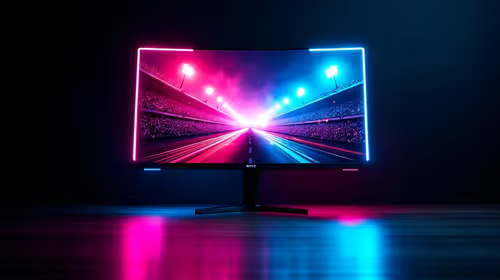
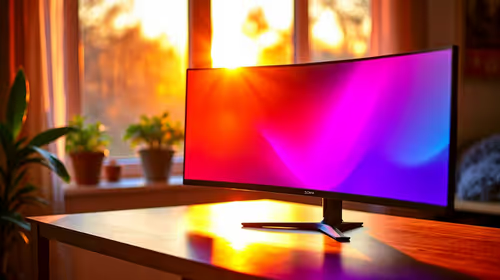
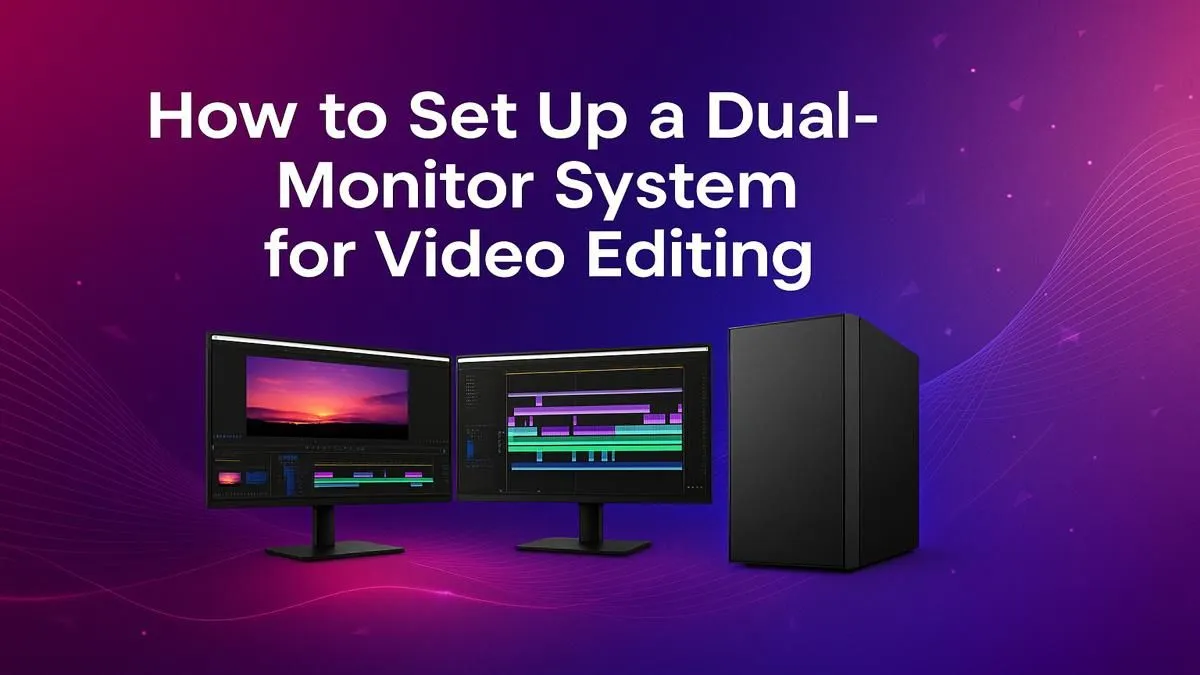
The primary benefit of a dual monitor setup for video editing is simple: space. Spreading your software across two screens dramatically declutters your digital workspace. Imagine your primary monitor holding your timeline and editing controls, while your second monitor displays a full-screen, uncompressed preview of your footage. No more squinting at a tiny preview window or constantly toggling full-screen mode.
This separation allows for faster, more precise edits, especially for colour grading and effects work. Of course, driving two high-resolution displays requires a capable machine. A powerful CPU is essential, and many editors find the performance offered by modern Intel-based PCs to be an excellent foundation for a demanding editing rig.
Choosing Your Displays: What to Look For
Not all monitors are created equal, especially for video work. Here’s what to prioritise:
- Resolution & Size: Aim for at least a 27-inch monitor with a 1440p (QHD) resolution. For serious 4K editing, a 4K (UHD) monitor is the goal, allowing you to view your footage at its native resolution.
- Colour Accuracy: This is crucial. Look for a monitor with an IPS panel that covers at least 99% of the sRGB colour space. For professional work, wider gamuts like DCI-P3 or Adobe RGB are even better.
- Connectivity: Ensure the monitors have the right inputs (DisplayPort is generally preferred over HDMI for higher refresh rates and resolutions) to match your PC's outputs.
Your graphics card does the heavy lifting here. A solid GPU is non-negotiable for a smooth editing experience across two screens. Both NVIDIA GeForce gaming PCs and the latest AMD Radeon gaming PCs offer excellent options with multiple display outputs capable of handling demanding video loads.
Your Step-by-Step Guide to the Perfect Dual Monitor Setup 🔧
Getting your dual monitor workspace running is straightforward. Let's break it down.
Step 1: Check Your PC and Connect
Before you buy, check the back of your PC. Identify the available video ports on your graphics card—they'll likely be a mix of DisplayPort and HDMI. Make sure you have enough ports for the monitors you plan to use. If your PC is a bit old, it might be time for an upgrade to handle the extra workload. Exploring AMD Ryzen PC deals can give you a massive performance leap without breaking the bank. Once you have your monitors, power them down, connect them to the correct ports on your graphics card, and then turn everything on.
Step 2: Configure Your Displays in Windows
Windows should automatically detect the second monitor. Right-click on your desktop and select "Display settings".
- Identify: Click the "Identify" button. A number will appear on each screen so you know which is which.
- Arrange: Drag and drop the monitor icons at the top of the settings window to match their physical position on your desk. This ensures your mouse moves naturally between them.
- Extend: Scroll down to the "Multiple displays" dropdown menu and select "Extend these displays". This creates one large, continuous desktop.
- Set Primary: Select the monitor you want as your main display (where your taskbar and icons will appear) and check the box that says "Make this my main display".
Step 3: Optimise Your Editing Software
Now for the fun part! Open your video editing software (like DaVinci Resolve, Adobe Premiere Pro, or Final Cut Pro). In the program's settings, you can configure which panels appear on which screen. A classic setup is to have your timeline, tools, and bins on your primary monitor, with a clean, full-screen video preview sent to the secondary monitor. ✨
If you find your current system is struggling to keep up, exploring some of the latest pre-built PC deals can be the quickest way to get an optimised machine ready for a professional workflow.
Productivity Pro Tip ⚡
On Windows, use the PowerToys FancyZones utility to create custom snap layouts. It's a lifesaver for managing multiple apps, letting you perfectly organise your timeline, preview window, and asset folders for video editing. You can create a template that launches your entire workspace with one click.
A proper dual monitor setup for video editing is one of the best investments you can make in your productivity. It streamlines your process, reduces frustration, and ultimately lets you create better content, faster.
Ready to Build Your Ultimate Editing Bay? A dual monitor setup is only as good as the machine powering it. If your current PC is holding you back, it's time for an upgrade. Explore our range of powerful Workstation PCs, built to handle demanding creative workloads with ease.