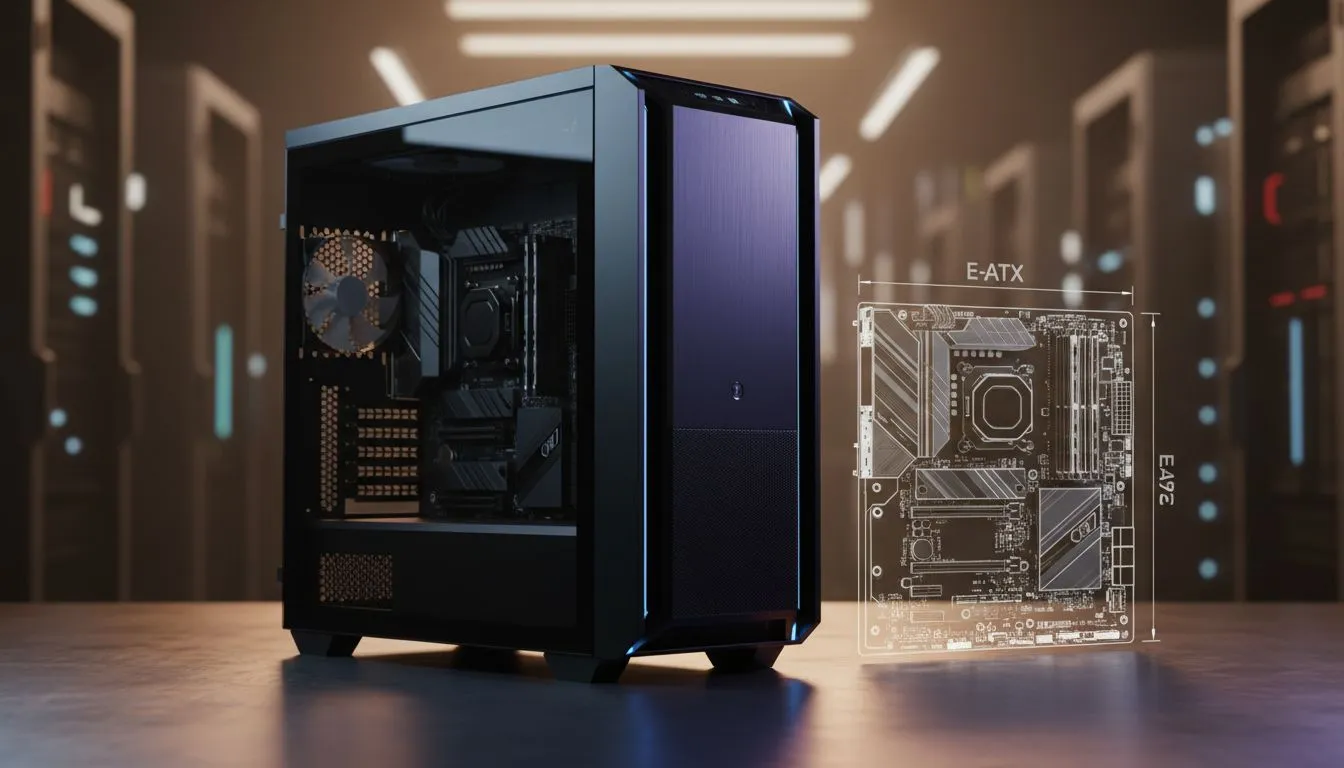
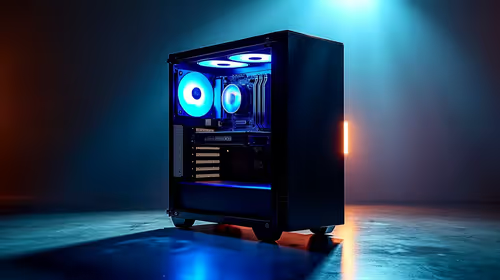
Building a powerhouse PC in South Africa requires more than just picking the fastest CPU. You need a home for those components. If you are eyeing a workstation-grade motherboard, an E-ATX case is your best bet for a stress-free assembly. These larger chassis offer the space and compatibility needed for massive GPUs and complex cooling loops. Let’s explore why going big is often the smartest choice for your build.
Understanding E-ATX Case Dimensions
When you start browsing the massive selection of computer cases available, the terminology can get confusing. Extended ATX, or E-ATX, is not a strictly defined single size. Most standard ATX boards measure 305 x 244 mm. E-ATX boards can stretch that width up to 330 mm.
Choosing an E-ATX chassis ensures you are not struggling to plug in side-mounted SATA cables or 24-pin power connectors. These cases provide the necessary clearance to prevent the motherboard from overlapping with cable management grommets. It makes the difference between a clean, professional-looking interior and a messy tangle of wires.
Compatibility Pro Tip ⚡
Always check the specific motherboard width in millimetres. While E-ATX is a standard, some cases only support boards up to 280mm wide while others go full 330mm. Checking this first saves you a return trip to the courier.
E-ATX Case: Space and Compatibility Explained
The primary reason to opt for a larger chassis is the sheer flexibility it offers for future upgrades. High-end builds often require thick radiators for liquid cooling or massive graphics cards that take up three or four slots. An E-ATX footprint usually translates to a deeper and wider internal cavity.
For those who value Swedish minimalism and silent operation, Fractal Design PC cases offer some of the best E-ATX layouts on the market. They often feature modular interiors. You can move drive cages or remove panels to fit custom water-cooling reservoirs without hitting your motherboard. This extra breathing room is vital for maintaining the longevity of your components. 🔧
Thermal Benefits and Airflow Management
Larger cases do not just fit more hardware... they also manage heat more effectively. A cramped mid-tower can suffer from "hot spots" where air gets trapped between the GPU and the side panel. In a spacious E-ATX environment, there is more air volume to circulate.
If you want RGB flair without breaking the bank, Gamdias gaming cases provide excellent value and impressive airflow designs. Many of these models support multiple 140mm fans or even dual 360mm radiators. This setup ensures your high-end components stay cool under heavy South African summer loads. ⚡
Budget-conscious builders can even find Gamdias cases under R1500 that punch well above their weight. These options often include mesh front panels and pre-installed fans. You get the benefits of a larger internal volume without a massive price tag. 🚀
Final Considerations for Your Build
Before you commit, remember to measure your desk space. E-ATX cases are significantly taller and deeper than standard towers. They are heavy... especially once you fill them with a power supply and a custom loop. However, the ease of installation and the superior thermal performance make them the gold standard for enthusiasts. ✨
Ready to Build Your Dream Rig?
Finding the right chassis is the first step toward a cooler, quieter, and more powerful PC. Explore our massive range of computer cases and find the perfect home for your high-end hardware today.