So, you’re ready to build the ultimate PC… a liquid-cooled masterpiece that turns heads and keeps your temps frosty during those intense gaming sessions in Mzansi. But then you hit the first major crossroad: hardline vs soft tubing. This single choice defines your build's aesthetic, budget, and the amount of swear-jar-worthy frustration you might endure. 🔧
This 2025 custom water cooling guide cuts through the noise to help you decide which path is right for your rig.
Soft Tubing: The Flexible & Forgiving Choice
When it comes to custom water cooling, soft tubing is the friendly starting point. Think of it as the practical, reliable bakkie of the PC building world. Made from flexible materials like PVC or EPDM rubber, it’s incredibly forgiving. Miscalculate a run by a centimetre? No problem, the tube’s flex will sort you out.
This flexibility makes installation a breeze. You simply cut the tube to the approximate length and secure it with compression fittings or barbs with clamps. It’s faster, requires fewer specialised tools, and is much kinder to your wallet. For many builders, the simplicity and ease of maintenance make it the clear winner, allowing them to get a custom loop running without the steep learning curve. While it might not have the razor-sharp aesthetic of hardline, a well-planned soft tube build can still look fantastic, especially with vibrant coolants. If you're just starting your journey into advanced cooling, exploring all the available CPU coolers is a great first step.
Hardline Tubing: The Ultimate Aesthetic Statement
This is the stuff of PC building dreams. ✨ Hardline tubing, typically made from PETG or Acrylic, offers crystal-clear, perfectly straight runs and precise 90-degree bends that look like they belong in a science fiction movie. There's no denying it: a well-executed hardline build is the pinnacle of PC aesthetics. It screams precision, planning, and dedication.
But that beauty comes at a cost... and not just in Rands. Building with hardline tubes is a craft. It requires a heat gun, bending mandrels, deburring tools, and a healthy dose of patience. Each bend must be heated, shaped, and cooled perfectly. One mistake and you start over. For those who love a challenge and want a showpiece PC, mastering hardline tubing is an incredibly rewarding experience. Top-tier components from brands like CORSAIR often feature in these elite builds for a reason.
Hardline Bending Pro Tip ⚡
Always cut your hardline tube a little longer than you think you need. Bending consumes material, and it's much easier to trim a tube that's too long than to stretch one that's too short. Also, use a silicone insert during bending to prevent the tube from kinking or collapsing on itself. Patience is key!
Key Differences: Hardline vs Soft Tubing at a Glance
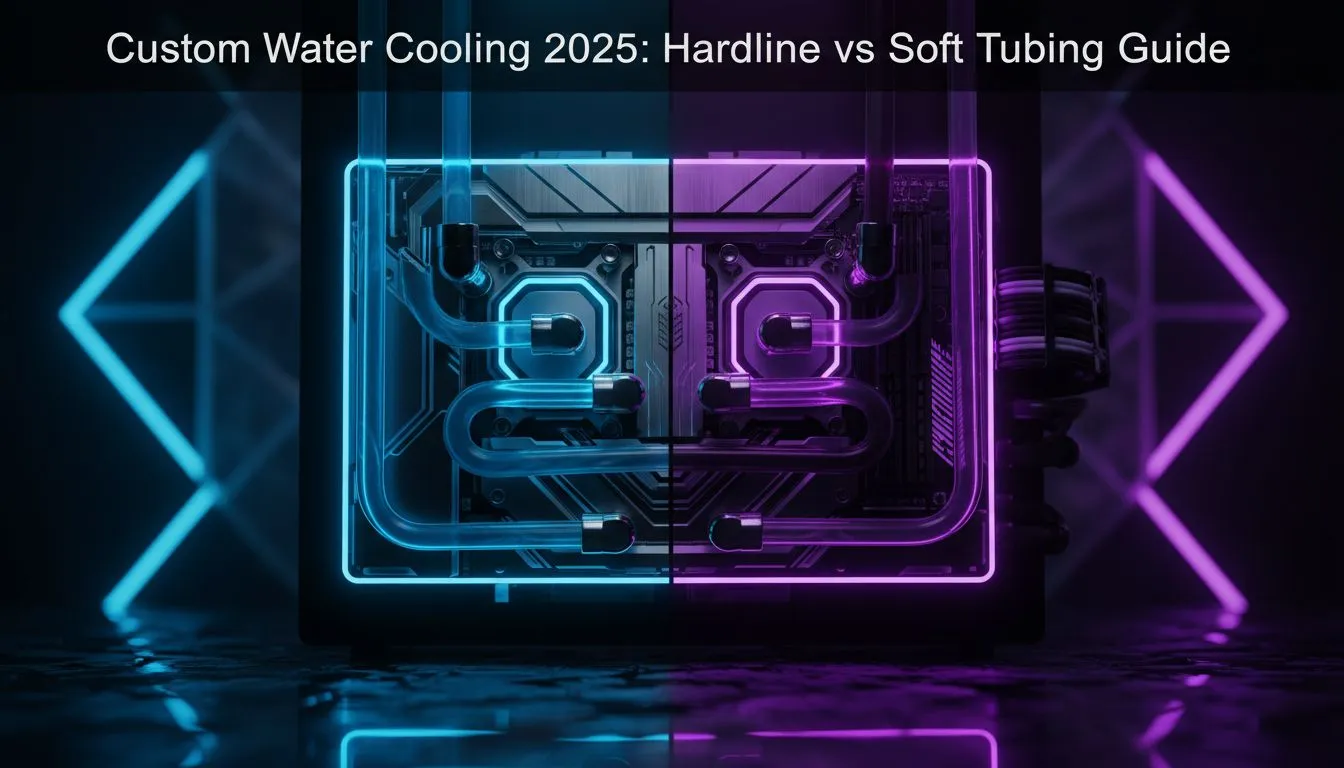
Let's break down the core debate of hardline vs soft tubing into the factors that matter most for your build. While thermal performance between the two is virtually identical, the building experience is worlds apart.
Installation & Difficulty
- Soft Tubing: Beginner-friendly. The process is quick and forgiving. Perfect for your first custom loop.
- Hardline Tubing: Advanced. Requires specialised tools, skill, and patience. Expect to waste a few tubes learning the process.
Aesthetics & Visual Appeal
- Soft Tubing: Functional and can look great, but prone to gentle, sagging curves over long runs.
- Hardline Tubing: Unmatched. Delivers clean, professional, and rigid lines for a true showpiece build.
Cost & Maintenance
- Soft Tubing: Generally cheaper for both tubes and fittings. Maintenance is simpler as tubes can be easily removed.
- Hardline Tubing: More expensive. Draining and modifying the loop can be complex, sometimes requiring partial disassembly. If you want high-end cooling without this level of complexity, a top-tier 360mm Radiator AIO is an excellent alternative.
Not Ready for a Custom Loop? No Worries!
The truth is, custom water cooling is a major commitment. If the hardline vs soft tubing debate feels overwhelming, you have fantastic alternatives that deliver incredible performance. Modern All-In-One (AIO) coolers offer a plug-and-play liquid cooling experience, giving you many of the thermal benefits without the hassle of bending tubes and mixing coolants. You can find a massive selection of powerful Liquid Cooler (AIO) options right here in South Africa.
And let's not forget the king of reliability. A high-performance air cooler can often match or even beat mid-range liquid coolers in performance, with zero risk of leaks and a simpler installation. 🚀
Ready to Chill Your Rig? Whether you're diving into your first soft tube build or looking for a powerful AIO to simplify your life, the perfect cooling solution is waiting. Explore our massive range of CPU coolers and find the perfect hardware to keep your PC cool and quiet.