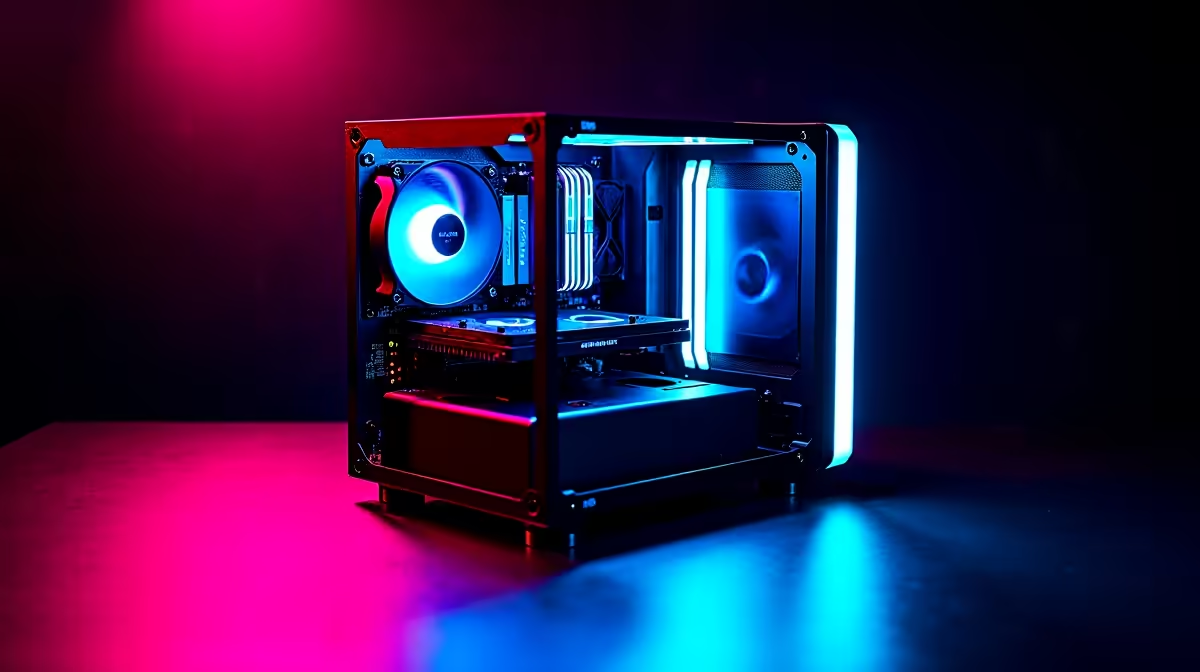
Building a gaming rig in South Africa often feels like a delicate balancing act. You want next-gen performance, but the Rand dictates your reality. That is exactly why learning how to budget in ZAR for a future-ready mATX build with DDR5, fast networking, and NVMe storage is an absolute must. Compact builds save you money without sacrificing the power you need to dominate your favourite titles.
Why mATX is the Ultimate Sweet Spot ⚡
Let us be honest... full tower cases and massive ATX boards look great. But they also eat into your precious graphics card budget. Going the Micro-ATX route is the smartest way to optimise your ZAR. These boards offer all the PCIe slots and connectivity most gamers will ever need.
By choosing a smaller form factor, you immediately free up cash for better core components. If you want to see the variety available, you can browse a massive selection of top-tier motherboards that fit perfectly into a compact chassis. Smaller boards mean smaller cases, which further reduces your shipping and hardware costs.
Funding Your DDR5 and NVMe Upgrades
When planning your budget, you need to prioritise speed. DDR5 is no longer a luxury... it is the new standard. It delivers the massive bandwidth required by modern CPUs to prevent bottlenecks in demanding titles. To get the most out of your rig, you should allocate a solid portion of your funds to high-speed RAM. You can easily find the perfect DDR5 memory kits to give your system that snappy, responsive feel.
Next up is storage. Do not even think about spinning hard drives in 2024. A Gen 4 NVMe SSD is essential for fast load times and quick bootups. When loadshedding hits and your UPS only gives you minutes to save your game, a blazing-fast drive is a literal lifesaver.
Budgeting Pro Tip 🔧
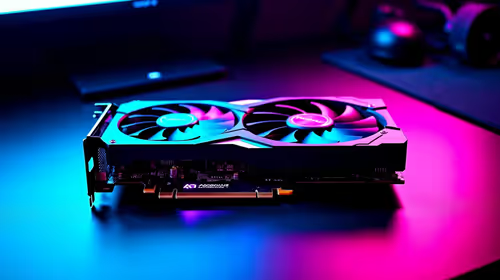
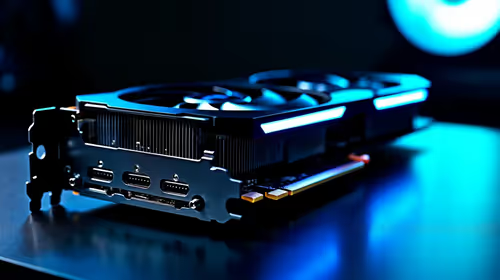
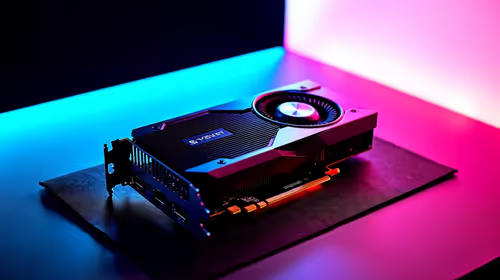
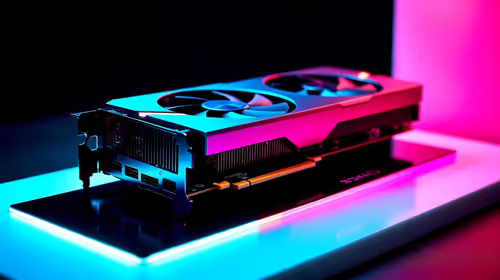
When plotting out your ZAR allocation, aim to spend roughly 30 to 40 percent of your total budget on the GPU. By saving money on an mATX case and motherboard, you can comfortably bump up your graphics tier for significantly better 1440p performance.
Securing Fast Networking Without Breaking the Bank
Lag is the enemy of every competitive gamer in South Africa. When you budget in ZAR for a future-ready mATX build with DDR5, fast networking, and NVMe storage, you must look for boards with built-in Wi-Fi 6E or 2.5GbE LAN. This ensures your connection remains stable during intense ranked matches.
The good news is that you do not need to pay premium prices for these networking features anymore. Keep a close eye on daily tech specials to snatch up premium components at heavily discounted prices.
Bringing Your Dream Build to Life 🚀
Building your own PC is incredibly rewarding. However, sometimes the math just makes more sense when you buy a pre-configured system. If you want to skip the assembly process and still get insane value, you can explore some of the best gaming PC deals available locally. Whether you build it yourself or buy it ready to plug and play, a smart mATX strategy ensures your hard-earned Rands go much further.
Ready to Build Your Compact Powerhouse? Maximising your ZAR doesn't mean compromising on performance. Whether you are hunting for individual components or a fully assembled beast, we have you covered. Explore our incredible desktop specials and start your next-gen gaming journey today.