Dropping thirty grand in ZAR on a massive new rig is thrilling... until you realise half your premium components are sitting idle. If you want to build an AM5 DDR5 gaming PC around an E-ATX motherboard without wasting features, you need a solid plan. Many South African gamers buy oversized boards purely for the aesthetics. Let us look at how to actually harness all that raw power.
Unleashing the True Power of E-ATX ⚡
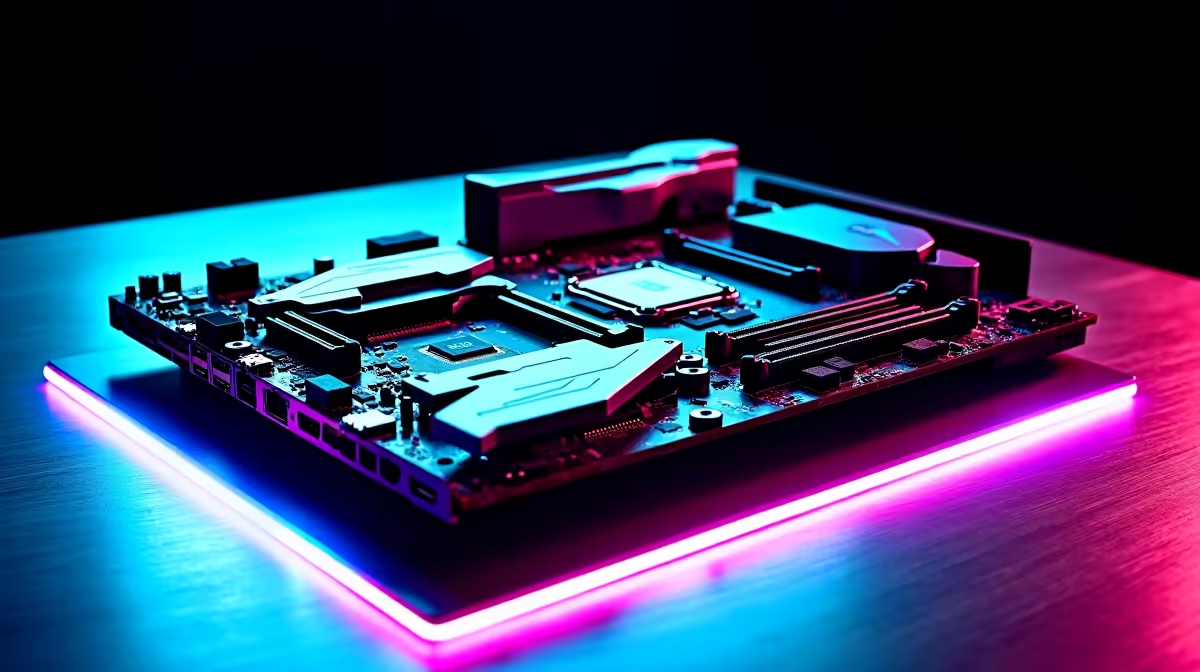
When browsing modern motherboards, the Extended ATX form factor stands out like an absolute beast. It is significantly wider than standard ATX. This extra PCB space gives manufacturers room for extreme power delivery systems. It also allows for more M.2 slots and robust cooling armour.
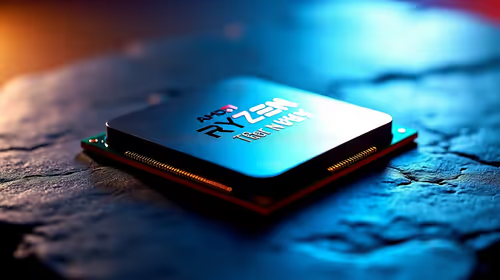
While some local creators might lean towards high-end ASUS Intel motherboards for specific Thunderbolt 4 workflows, the AMD AM5 platform offers incredible gaming longevity. Pairing a flagship Ryzen processor with premium ASUS AMD motherboards ensures you get massive VRM heatsinks. This translates to stable boost clocks during intense gaming sessions. Do not buy an E-ATX board just to run a budget CPU... it is designed to push top-tier silicon to the absolute limit.
Maximising Your DDR5 and Storage Potential 🚀
An E-ATX board usually features four reinforced DIMM slots and up to five M.2 NVMe slots. To avoid wasting these premium features, you must populate them wisely. Start by investing in high-speed DDR5 memory kits that are specifically tuned for AMD EXPO profiles. Running a 6000MHz CL30 RAM kit is currently the sweet spot for AM5 performance.
Next, take full advantage of those storage slots. Dedicate one blazing-fast Gen5 NVMe drive purely for your operating system and heavy competitive games. You can then use more affordable Gen4 drives in the remaining slots for your bulk media storage. This keeps your system lightning-fast without blowing your entire budget on a single drive.
Case Clearance Tip 🔧
Always check your chassis specifications before buying an E-ATX board. Many standard mid-tower cases claim E-ATX support but end up covering the cable routing grommets. Look for a dedicated full-tower case to keep your cable management clean and airflow optimal.
Cooling and Expansion Done Right
What is the point of a 20-phase power design if you skimp on your cooling solution? These massive boards are built for extreme thermal loads. You should mount a high-quality 360mm or 420mm AIO liquid cooler. This will keep your thermals perfectly in check... even during those sweltering South African summer heatwaves.
Furthermore, utilise the extra PCIe lanes. E-ATX boards offer superb spacing for massive 40-series graphics cards. They also leave enough breathing room to install internal capture cards or dedicated sound gear. If balancing all these high-end components sounds like too much manual labour, you can always skip the headache. Simply hunt for the best gaming PC deals where our experts have already optimised the hardware for you.
Ready to Build Your Ultimate AM5 Rig? Picking the right components is the first step to gaming supremacy. For maximum power, choice, and value in South Africa, Evetech has you covered. Explore our premium AM5 motherboard range and start planning your dream E-ATX build today.