Quick Answer
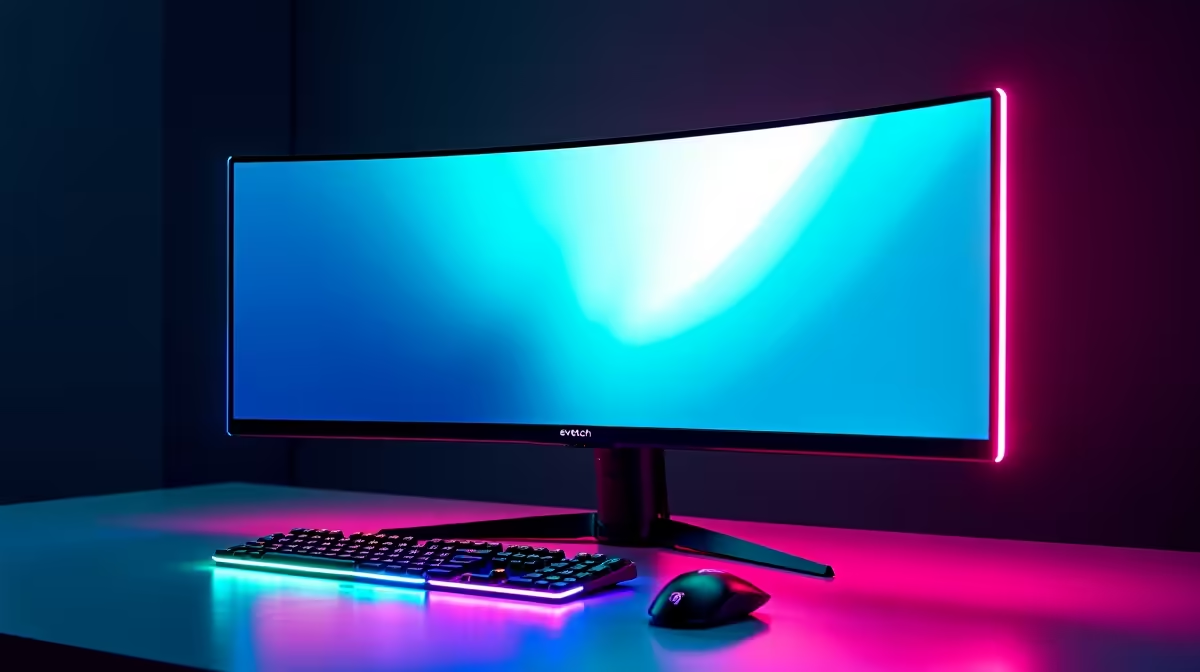
Input lag after this change is nearly always sync settings or USB/wireless behaviour, not a defective part. Turn on Nvidia Reflex / AMD Anti-Lag, keep VSync off (use VRR + a frame cap instead), and set mouse and keyboard polling to 1000Hz (1ms). A 240Hz panel needs ~240 fps to feel its best; below that, VRR keeps motion clean down to about 48 fps.
The settings that actually move latency
Enable a low-latency mode (Nvidia Reflex, AMD Anti-Lag) in supported games, run G-Sync/FreeSync with a frame cap a few fps under your refresh rate, and avoid traditional VSync, which adds a frame or more of delay. Open Windows 11 Settings > System > Display > Advanced display and confirm the refresh rate is set to the panel's full rating, not a default 60Hz. Verify the cable carries the mode you want - DisplayPort 1.4 or HDMI 2.1 for high refresh at high resolution - and enable G-Sync/FreeSync in the GPU control panel.
Check the input chain end to end
Set your mouse and keyboard to a 1000Hz polling rate and plug them into rear USB ports rather than a front hub. Wireless peripherals add a few milliseconds; a quality 2.4GHz dongle is fine, but move it off a crowded hub and update its firmware. Disable monitor overdrive/processing modes and HDR while testing, since panel processing can add perceptible delay.
Measure it, do not guess
Use a repeatable aim or menu test so you can feel the difference each change makes, and only swap hardware once the settings are proven. On a high-refresh panel, the most responsive setup is VRR on, low-latency mode on, VSync off, and a cap a few fps under refresh. This avoids buying around the wrong problem - the fix is usually free.
FAQ
Why does my setup feel laggy after the upgrade?
A new part often re-enables VSync or a high-latency sync default. Switch to VRR plus a frame cap and turn on Reflex/Anti-Lag, then retest before assuming the hardware is faulty.
Do VSync and VRR add input lag?
Traditional VSync can add a frame or more of delay; G-Sync/FreeSync with a frame cap just under your refresh is far more responsive. Keep in-game VSync off and let VRR handle tearing.
Will a faster mouse or monitor from Evetech help?
Only after the free settings fixes are exhausted; a 1000Hz mouse and a low-latency panel help, but Reflex and correct sync settings matter more. Confirm the gain with a repeatable test before upgrading.
- enable Nvidia Reflex or AMD Anti-Lag, set VRR on with VSync off, and cap frames a few fps under your refresh (e.g. 141 on 144Hz). Then set peripherals to 1000Hz polling.