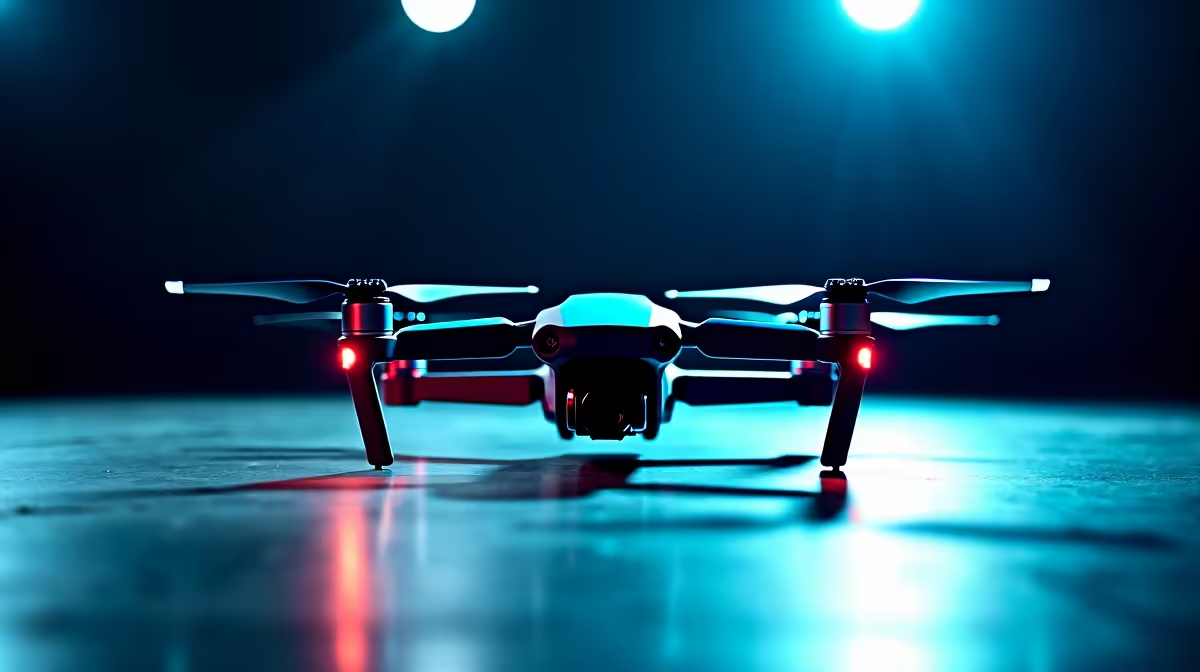
Footage that survives a heavy colour grade starts at the sensor, not in the edit. The best camera drones for video shoot 4K at 60 frames per second in 10-bit flat profiles like D-Log M, capturing the dynamic range you need to grade clean, professional sequences across South Africa's coastlines, mountains, and travel locations. Picking the right one comes down to sensor size, weight class, and the kind of footage you actually want to deliver.
Quick Answer
A serious video drone records 4K at 60fps in a 10-bit log profile such as D-Log M, which preserves the dynamic range that makes footage gradable. For SA shooters, the right pick depends on sensor size, the platform's weight, and whether you prioritise low-light performance or portability.
Why 10-Bit and Log Matter
The single biggest jump in drone video quality is moving from standard 8-bit capture to 10-bit log. An 8-bit file holds far fewer colour values, so pushing the grade quickly bands the sky and crushes shadow detail. A 10-bit D-Log M file records a flat, low-contrast image that looks dull straight off the drone but holds enormous latitude, letting you lift shadows, recover highlights, and set a precise look in the grade.
This is exactly what professional SA landscape and travel content needs. Bright skies over the Cape coastline, deep shadow in a gorge, harsh midday sun on the Highveld, these high-contrast scenes are where flat 10-bit footage earns its keep. While you plan a kit, the smart home and appliances category at Evetech is worth a look for the connected gear that often shares a creator's workflow.
What Separates the Best Video Drones
Sensor size
The sensor is the heart of image quality. Larger sensors gather more light, which means cleaner footage at dusk and dawn, better dynamic range, and shallower depth where you want it. A bigger sensor is the priority if your work leans on golden-hour landscapes or low-light coastal scenes. Smaller-sensor drones still shoot excellent 4K but show more noise as the light fades.
Frame rate and resolution
4K at 60fps is the standard to target. The higher frame rate lets you deliver crisp 60fps motion or slow footage down smoothly to half speed in a 30fps timeline, which is invaluable for sweeping reveals over terrain. Some platforms push to higher resolutions or frame rates, useful headroom if you reframe or crop in post.
Weight and portability
Weight shapes how and where you fly. Lighter drones are easier to travel with and pack for a shoot across the country, while heavier platforms tend to carry larger sensors and steadier flight in wind. Coastal SA shooting often means breezy conditions, so a drone that holds position in wind protects your footage.
Colour profile support
D-Log M and similar 10-bit profiles are what make footage truly gradable. Confirm the profile and bit depth before buying, because this is the spec that determines how far you can push a grade without the image falling apart.
Key Models Worth Knowing in 2026
The DJI Mini 5 Pro sits at 249.9g and delivers a 1-inch sensor with 4K at 60fps and D-Log M support, making it the benchmark compact video drone. It reaches up to 52 minutes on an extended battery, which removes the constant battery-swapping that kills a shoot's rhythm. Despite its weight, the 1-inch sensor punches well above the compact class in dynamic range.
The DJI Air 3S steps over 250g to pair a 1-inch main sensor with a 3x medium telephoto, giving you two focal lengths in one airframe. That telephoto reach is particularly useful for SA coastal and wildlife scenarios where flying close is not possible or permitted. It records 4K at up to 60fps in D-Log M across both cameras, and the omnidirectional obstacle sensing makes it a forgiving platform in wooded or complex environments.
The DJI Mavic 4 Pro is the professional benchmark: a 4/3-inch Hasselblad sensor recording 6K at 60fps with 10-bit log, 51 minutes of rated flight time, and a tri-camera setup that covers wide, medium and telephoto in a single flight. For SA landscape and commercial work where latitude and resolution both matter, it is the top of the consumer market.
Stabilisation, Wind and the SA Environment
Mechanical gimbal stabilisation is what separates usable aerial video from shaky clips. A 3-axis gimbal physically compensates for pitch, roll and yaw as the drone responds to wind, so the frame stays locked even when the aircraft is moving. For South Africa's often breezy coastlines and the open Highveld, a drone that holds its gimbal steady in a cross-wind is not a luxury, it is the baseline requirement.
Beyond the gimbal, the drone's weight and motor power affect how much wind it can push against before the airframe itself starts to drift into the frame. Heavier platforms carry stronger motors and hold position more confidently in gusty conditions, which is why coastal and mountain shooters often move up from the compact class even if they value portability for travel.
Plan shoots around the wind window. In Cape Town particularly, early morning is calmer, with the South-Easter picking up through the day. Knowing your drone's wind rating and building a margin into your flight plan keeps the footage stable and the aircraft safe.
Matching a Drone to Your Work
If you shoot polished travel and landscape pieces where grading flexibility is everything, prioritise a larger sensor and full 10-bit D-Log M capture, and accept the extra size and cost. If you value packing light and flying often, a compact 4K/60 drone with solid colour support delivers most of the quality in a far more portable body. For run-and-gun social content, portability and quick setup may outweigh the last increment of dynamic range.
Whatever you choose, the footage is only half the job. A capable editing machine to handle 10-bit 4K timelines completes the workflow, and the best-selling accessories at Evetech cover plenty of the supporting gear, from storage to peripherals, that a video creator leans on.
Frequently Asked Questions
Why does 10-bit D-Log M matter for drone video?
It records a flat image with far more colour data and dynamic range than 8-bit. That latitude lets you grade aggressively, recovering shadows and highlights, without banding or detail loss.
Is 4K at 60fps necessary for video drones?
It is the standard to target. The higher frame rate gives smooth 60fps motion or clean slow-motion when conformed to 30fps, both useful for sweeping aerial reveals.
Does sensor size really change drone footage quality?
Yes. Larger sensors capture more light, delivering cleaner low-light footage and better dynamic range. For dawn, dusk, and high-contrast scenes, sensor size is a top priority.
What should SA landscape shooters prioritise?
Dynamic range and grading flexibility, so a larger sensor with full 10-bit log capture. Wind resistance also matters for coastal and mountain conditions common across South Africa.
Do I need a powerful PC to edit drone footage?
For 10-bit 4K timelines, yes. A capable CPU, generous RAM, and a GPU with enough VRAM keep playback smooth and exports fast when working with high-bit-depth footage.