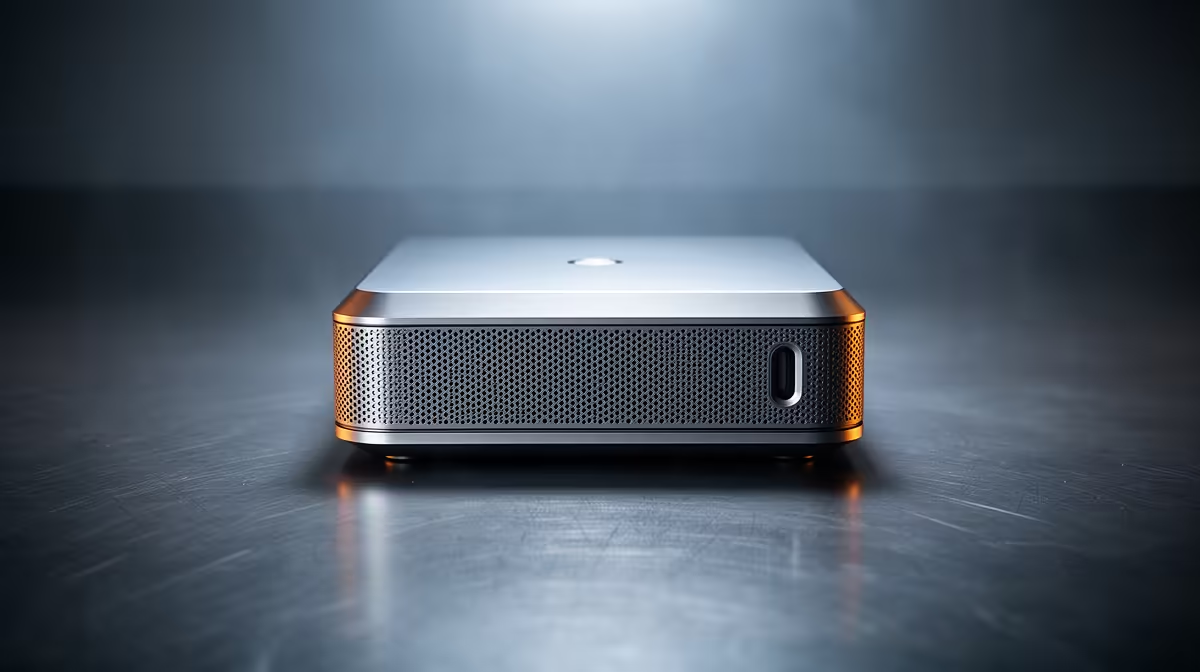
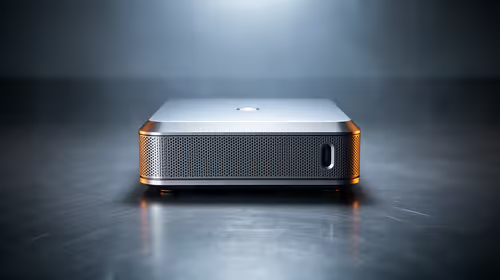
Intel's N150 mini PCs are the 2026 successor to the wildly popular N100, and the Twin Lake refresh is exactly that: a refresh, not a reinvention. The chip keeps the same four-core layout and ultra-low power envelope, then nudges the clocks up where it counts, which is enough to make the N150 the new default for cheap, quiet little machines.
Quick Answer
The Intel N150 lifts the turbo clock to 3.6 GHz versus the N100's 3.4 GHz, and raises the integrated graphics to 1.0 GHz versus 0.75 GHz. That delivers roughly a 5 to 10 percent CPU gain and a noticeably larger graphics uplift over the N100, all within the same 6W power envelope. It is a worthwhile step up, not a generational leap.
What actually changed
The N150 is still a four-core, four-thread chip on the same efficient platform as the N100, with the same 6 watt power rating and 6MB of cache. Intel's changes are targeted. The single-core turbo rises by 200 MHz to 3.6 GHz, which sharpens responsiveness in everyday tasks like browsing, document work, and light multitasking. The bigger story is graphics: the integrated GPU clock jumps by a third, from 750 MHz to 1.0 GHz, which translates to a meaningfully smoother experience in the GPU-bound work these machines actually do, such as driving a desktop, light photo editing, and video playback.
The performance you can expect
In CPU terms, expect a modest 5 to 10 percent improvement over the N100 in general use, the kind of difference you feel as slightly snappier rather than transformative. The graphics side sees the larger gain, with the higher iGPU clock giving roughly a third more graphical performance on paper. Crucially, both chips share the same hardware video engine, so the N150 decodes 4K H.264, H.265, VP9, and AV1 just as smoothly as the N100, making it just as capable as a media box or home theatre PC.
Why the N150 is the one to buy now
There is a quiet bonus beyond the clocks. Because the N150 is the current model, the mini PCs built around it tend to ship with more generous configurations than the N100 units they replace. Where many N100 boxes came with 8 GB of memory, N150 machines commonly arrive with 16 GB as standard, alongside fast solid-state storage. That memory bump often does more for real-world feel than the clock increase itself, since 16 GB lets you keep more browser tabs and apps open without slowdown. For a budget machine, that configuration upgrade is a genuine reason to pick the newer chip.
Who an N150 mini PC suits
This is the machine for anyone who wants a tiny, silent, low-power computer for browsing, office work, streaming, light home-server duties, or as a media centre wired to a TV. It is not a gaming PC and it is not for heavy creative work, and pushing it there will disappoint. Within its lane, though, the N150 is excellent value and runs cool and quiet around the clock. If you are choosing between an older N100 unit and a current N150 one at a similar price, the newer chip and its typically better memory and storage make the decision easy. Browse the mini PC range at Evetech to compare current N150 configurations, and the most popular compact systems on the best sellers list show what other buyers are picking for these small, do-it-all builds.
Frequently Asked Questions
Is the Intel N150 much faster than the N100?
Not dramatically. The N150 offers roughly a 5 to 10 percent CPU improvement and a larger graphics gain thanks to its higher iGPU clock. It is a worthwhile refresh, but do not expect a generational leap; the two chips share the same core architecture.
Can an N150 mini PC handle 4K video?
Yes. The N150 has the same hardware video engine as the N100 and smoothly decodes 4K content in H.264, H.265, VP9, and AV1. That makes it an excellent low-power media centre or home theatre PC.
Is an N150 mini PC good for gaming?
No, not for modern gaming. The integrated graphics suit desktop use, video, and very light or older titles only. If gaming is your goal, you need a machine with a dedicated graphics card rather than an N150 mini PC.
How much RAM do N150 mini PCs come with?
Many N150 machines ship with 16 GB as standard, a step up from the 8 GB common in older N100 units. That extra memory often improves day-to-day responsiveness more than the chip's higher clock speed does.
Want a tiny, quiet, low-power PC for everyday use? Check the N150 mini PCs at Evetech and pick a configuration sized to how you will actually use it.