Quick Answer
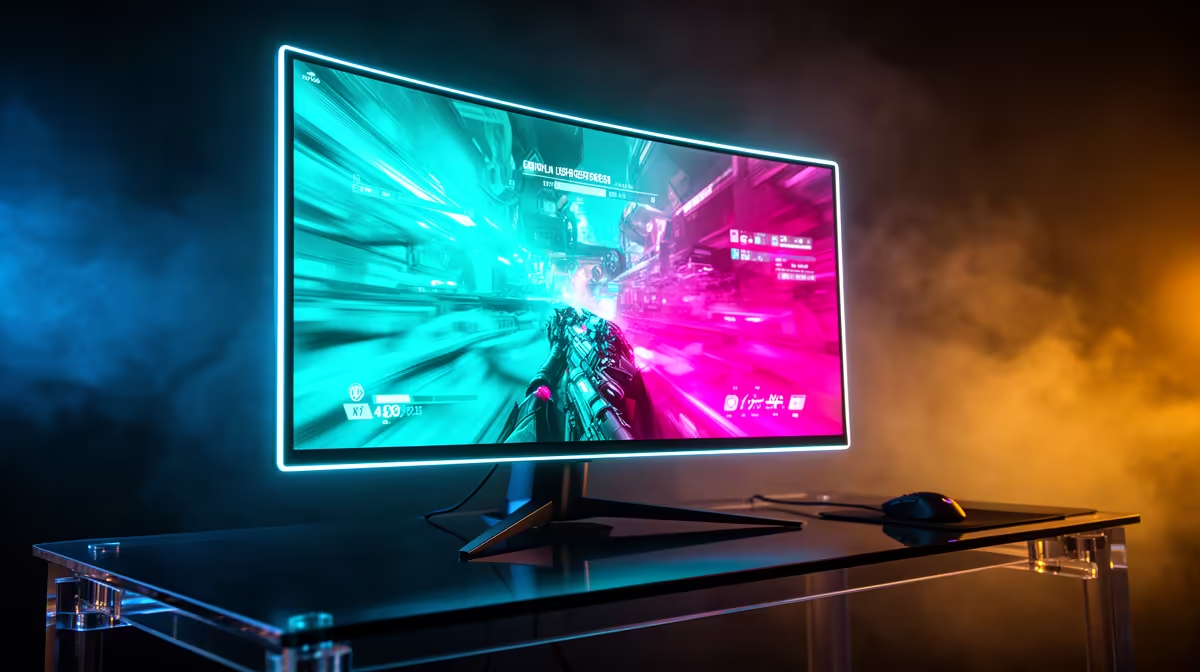
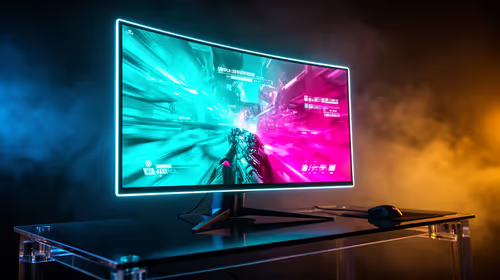
240Hz monitors are mainstream in SA esports because competitive PCs can now hold 200-240 fps in titles such as Valorant, Counter-Strike 2, and Fortnite for Mbombela players. Use a realistic budget around R4,000-R12,000, then judge the buy by real fps, latency, compatibility, and local support rather than the biggest number on the spec sheet.
Why this matters for SA buyers
Samsung Odyssey G4, MSI G274QPX, and ASUS TUF Gaming VG259QM are useful references; the key is pairing the screen with a Ryzen 5 7600, Ryzen 7 7800X3D, or recent Core i5 and a GPU that keeps frame drops under control. The practical win is not only the headline feature; it is how that feature behaves in a normal South African setup with local stock, courier delivery, hot rooms, fibre quality, and mixed work-and-gaming use. A good choice should improve daily use without forcing a weak power supply, poor cooling, or an awkward desk layout.
Specs to check first
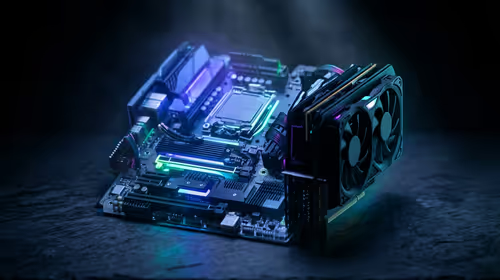
Start with the measurable limit in the current setup. For gaming, that usually means 60 fps as the comfort floor, 144 fps for high-refresh play, and 200-240 fps for serious esports screens. For platform parts, check motherboard support, 32GB RAM, a 1TB NVMe SSD, cooling clearance, and the ports your monitor or peripherals need. Named reference parts help anchor the choice, but current Evetech stock and warranty terms should decide the final shortlist.
Buyer guidance for Mbombela
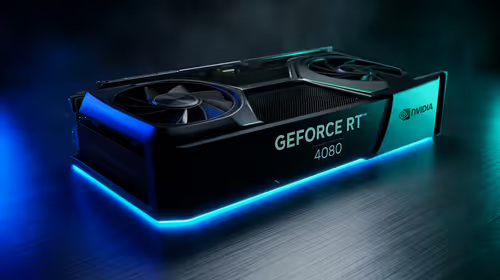
Match the part to the games, software, and desk you already use. A GeForce RTX 4060-class card, Ryzen 5 7600-class CPU, DDR5-6000 memory kit, or 1440p 165Hz monitor can be excellent value when it fixes the actual bottleneck. For Mbombela shoppers, courier timing, desk size, fibre quality, and warranty support matter as much as the headline spec. If the upgrade does not change daily comfort, frame consistency, storage space, or connection stability, keep the spend for the part that does.
FAQ
Is 240Hz better than 144Hz for every gamer?
Yes, when it solves a real bottleneck in the setup. If the current PC, router, or monitor cannot expose the feature, spend the budget on the weaker part first.
What fps should a 240Hz monitor target?
Use the target workload as the guide. For esports, smooth 144-240 fps matters; for office work, reliability and ports matter; for storage, capacity and sustained speed matter.
Should buyers choose 1080p or 1440p at 240Hz?
Compare the total build cost, not one part in isolation. A slightly cheaper component is not good value if it forces weak cooling, limited warranty cover, or a short upgrade path.